Will 100 Squats a Day Do Something? Here’s What Really Happens
Doing 100 squats a day won't give you instant results, but over time it builds strength, mobility, and daily movement habits. Here's what really happens after 30 days.
read moreWhen we talk about leg strength, the power generated by your quadriceps, hamstrings, glutes, and calves to move your body through space. It's not just about lifting heavy weights—it's about how well your body supports you in walking, running, climbing stairs, or even standing up from a chair. Strong legs are the foundation for almost every sport and daily activity. Whether you're a runner, a rugby player, or someone who just wants to stay active into your 60s, your legs do the heavy lifting—literally.
Muscle recovery, the process your body uses to repair and rebuild tissue after physical stress. It's what lets you train again without breaking down. If you’re pushing your legs hard, you need to give them time to heal. That’s why daily workouts aren’t always better—some of the best athletes, like the runners featured in our posts, train smart, not just hard. And athletic performance, how effectively your body executes physical tasks like sprinting, jumping, or changing direction. It doesn’t come from just doing squats. It comes from balancing strength, mobility, and rest. Your legs need more than just weight training—they need proper form, nutrition, and recovery.
Gym schedule, a structured plan for when and how often you train different muscle groups. A good leg routine doesn’t mean hitting them every day. Most elite athletes, from XC runners to rugby players, train legs 2–3 times a week with rest in between. That’s because muscles grow when you rest—not when you’re sweating. If you’re always sore, you’re not getting stronger—you’re just wearing out.
Look at the posts here: you’ll find real stories from people who built leg strength without burning out. Some walked a marathon without running. Others trained for years to finish a race like Oprah did. Rugby players rely on explosive leg power to tackle and break through lines. Runners stay lean not because they avoid food, but because their legs demand efficiency. And yes—some of them switched from shoes to barefoot running to rebuild foot strength from the ground up.
You don’t need to be an Olympian to benefit from stronger legs. You just need to know how to train them right. Below, you’ll find practical advice from people who’ve been there—how to avoid overtraining, how to recover properly, and how to make leg strength work for your life, not against it.
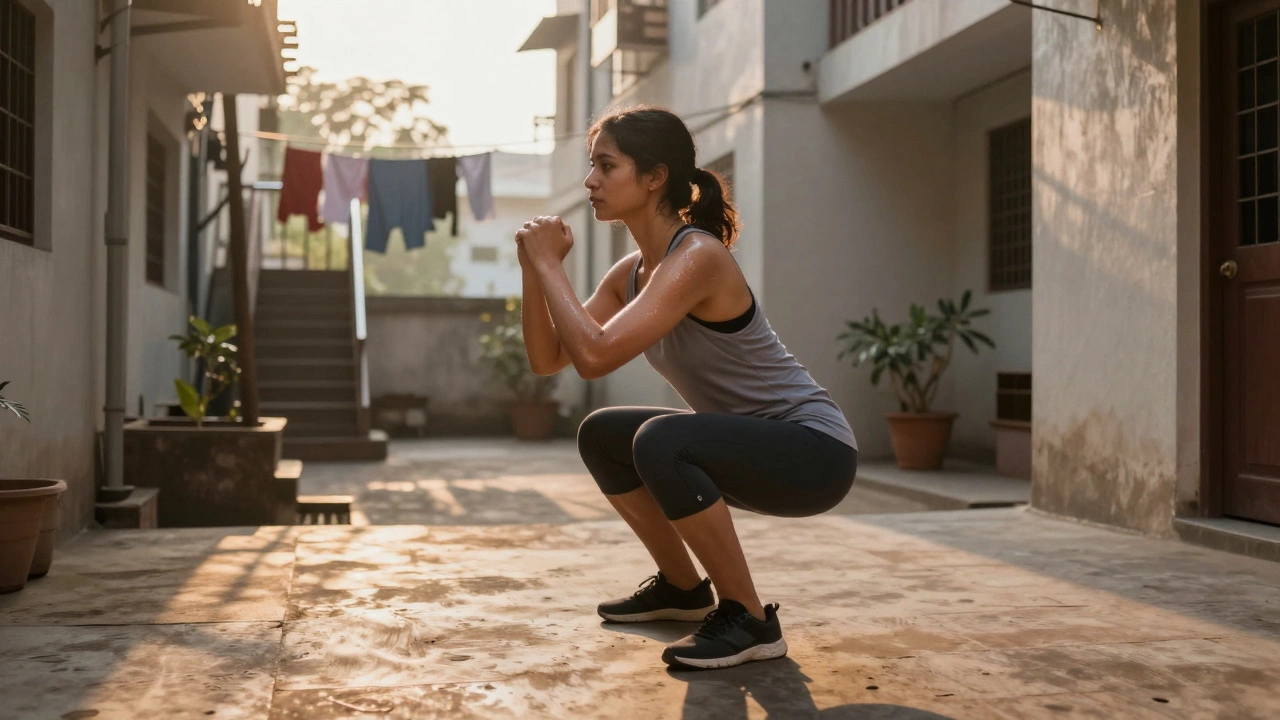
Doing 100 squats a day won't give you instant results, but over time it builds strength, mobility, and daily movement habits. Here's what really happens after 30 days.
read more