Rugby Origin: How the Game Began and Why It Still Matters
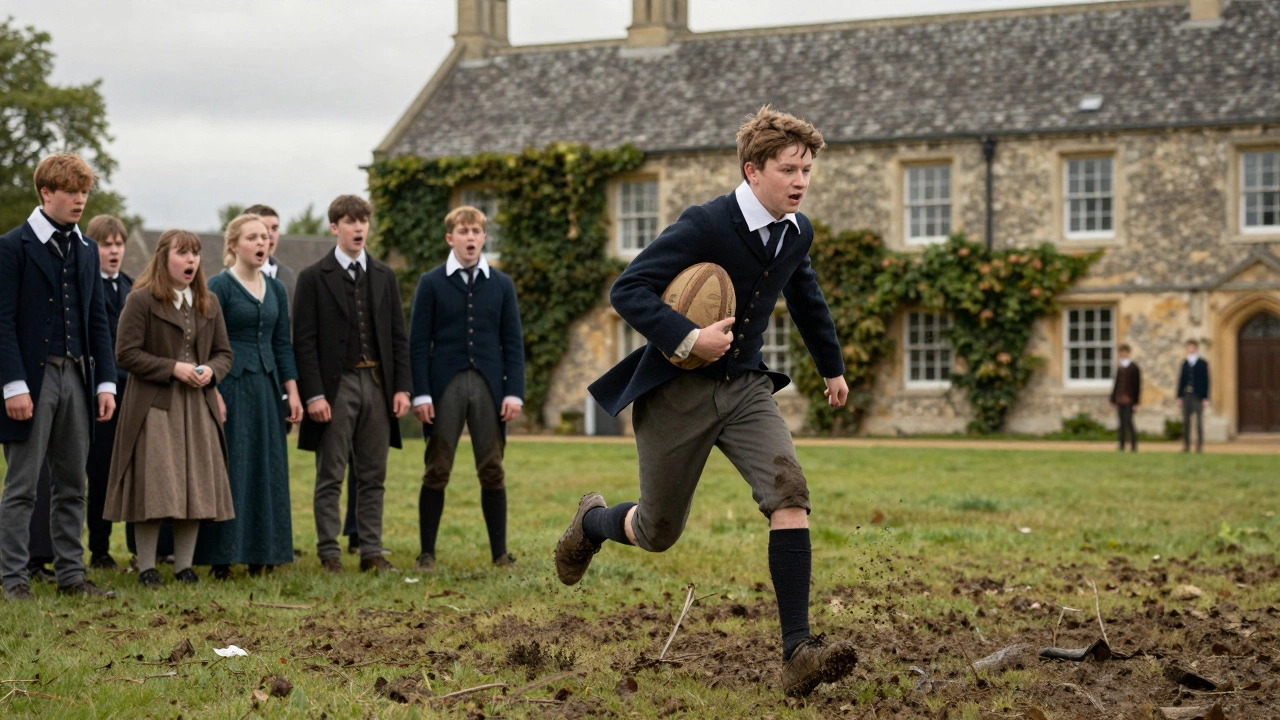
When you hear the word rugby, a full-contact team sport that evolved from football in 19th-century England. Also known as rugby football, it’s a game built on physicality, strategy, and tradition. But where did it actually come from? The story begins not in a professional stadium, but in a quiet English schoolyard in 1823. Legend says William Webb Ellis, a student at Rugby School, picked up the ball during a football match and ran with it—breaking the rules of the time. That moment, whether true or not, became the symbolic birth of a new game. What started as a local variation of football soon spread across Britain and beyond, turning into the sport we recognize today.
One of the most unique parts of rugby is the try, the primary way to score points by grounding the ball in the opponent’s in-goal area. The term didn’t come from excitement—it came from opportunity. In early rugby, touching the ball down behind the goal line didn’t earn points. It just gave you a chance—a try—to kick for goals. Over time, the try itself became worth more than the kick, and the name stuck. Today, a try is worth five points, and it’s the heart of every attacking move. This isn’t just history; it’s why rugby feels different from other sports. The rules evolved from practical play, not boardroom decisions. You can still see that spirit in a jackal, a player who legally steals the ball right after a tackle. It’s raw, fast, and requires guts. That’s rugby: no fancy tech, just skill, timing, and courage.
And it’s not just about the rules. The culture around rugby runs deep. Countries like New Zealand, South Africa, and Wales don’t just play the game—they live it. National pride, school rivalries, and community identity are tied to every match. Even today, you’ll find kids in Fijian villages playing with a ball made of tied-up cloth, just like the first players did. The sport didn’t need TV deals or sponsorships to take root. It spread because people loved it. That’s why understanding its origin matters. It’s not about nostalgia. It’s about seeing why rugby still feels so real, so human, even in the age of million-dollar contracts and global tournaments.
What you’ll find in the posts below isn’t just facts. It’s the stories behind the game—the moments that shaped it, the words that define it, and the people who kept it alive. From how a try became the center of the sport, to why certain countries dominate, to what it really takes to play at the highest level. This isn’t just a history lesson. It’s a look at what makes rugby different, and why it still holds so much power.