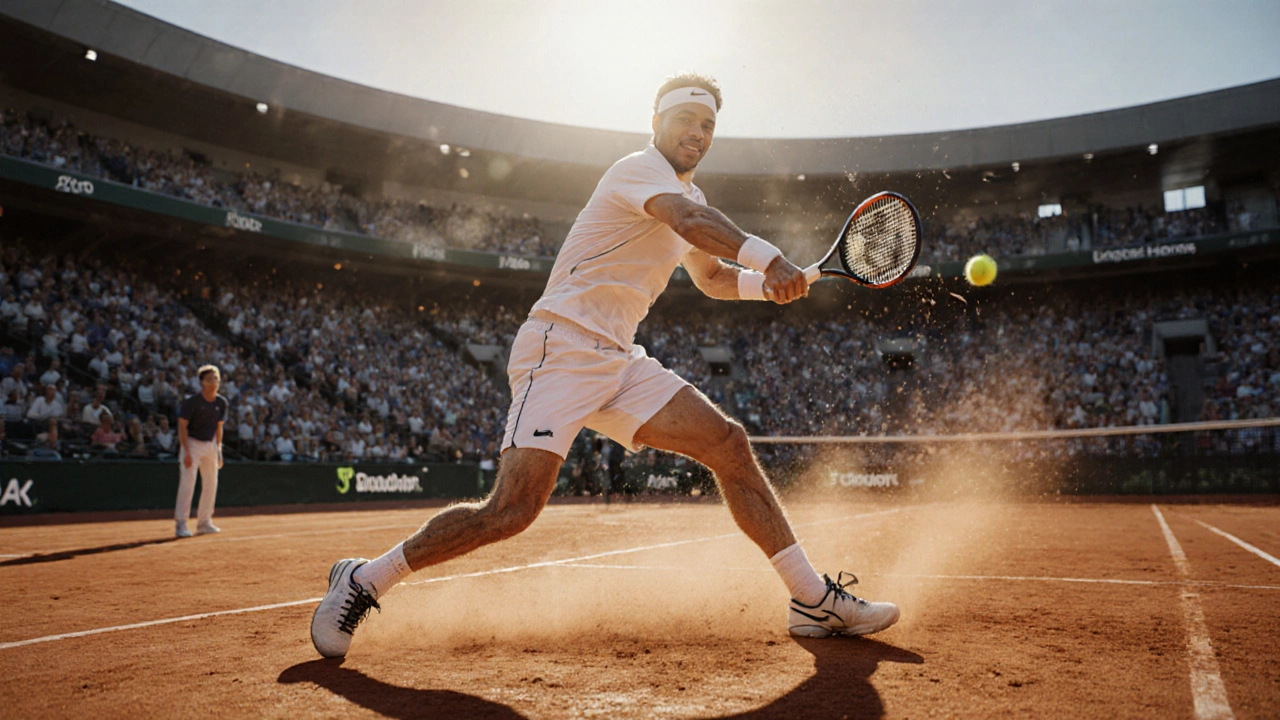
Tennis Court Positioning: Where to Stand and Why It Matters
When you play tennis, tennis court positioning, the strategic placement of a player on the court during play to maximize control and minimize opponent advantages. It's not just about where you stand—it's about how you control space, time, and rhythm. Great players don’t just hit better shots; they make you move to where they want you to be. Whether you’re at the baseline, near the net, or recovering after a serve, your position decides whether you’re reacting—or commanding.
Good tennis court positioning starts with understanding the tennis court layout. The baseline, service boxes, alleys, and center mark aren’t just lines—they’re boundaries that define your options. Standing too far back gives your opponent time to attack. Standing too close leaves you vulnerable to lobs. The sweet spot? Usually a few feet behind the baseline, centered unless you’re anticipating a wide shot. And when you move forward? You don’t just charge the net—you time it so your opponent has to hit a high-percentage pass or risk a weak reply.
Positioning also ties into tennis footwork. You can’t be in the right spot if your steps are slow or unbalanced. Top players use small, quick adjustments—half-steps, shuffles, crossover steps—to stay ready. They don’t wait for the ball to come to them; they read the opponent’s racquet angle, body tilt, and spin to predict where it’s going. That’s why doubles players often split the court like a chessboard—one covers the net, the other holds the baseline, and both shift together like a single unit.
And it’s not just about defense. Your position on the court sets up your offense. If you’re deep behind the baseline, you’re forcing yourself to hit power shots. If you’re inside the baseline, you can dictate play with volleys and drop shots. The best players switch between these zones fluidly. They know when to stay back to absorb pace, and when to rush forward to end the point. It’s not luck—it’s learned positioning.
Even your return of serve depends on where you stand. Stand too close to the line, and you’ll get jammed. Stand too far back, and you’ll never get to that short ball. Pros adjust based on the server’s tendencies—wide, body, or down the T—and they position themselves before the serve even happens. It’s the first move in the mental chess match.
What you’ll find in these posts isn’t just theory. You’ll see real breakdowns of where elite players stand during key moments, how court dimensions affect strategy, and how footwork turns good positioning into winning points. Whether you’re new to the game or trying to sharpen your edge, understanding tennis court positioning is the quiet secret behind every great match.