Sports Equipment Material Analyzer
Select your sport and specific equipment part to reveal the underlying chemical engineering.
Analysis Result
You probably don't think about chemistry when you lace up your running shoes or grip a tennis racket. You just want the gear to work. But every piece of modern sports equipment is essentially a carefully engineered chemical compound. The bounce in your basketball, the stiffness of your golf club, and the cushioning under your feet all come down to specific polymers and resins. If you're wondering what chemical is used in sports equipment, the answer isn't one single substance-it's a whole family of materials designed for performance.
Let's break down the actual stuff your gear is made of. We'll look at the foams that absorb impact, the fibers that provide strength, and the rubbers that give you grip. This isn't just trivia; understanding these materials helps you choose better gear and maintain it longer.
The Cushioning Agents: Polyurethane and EVA
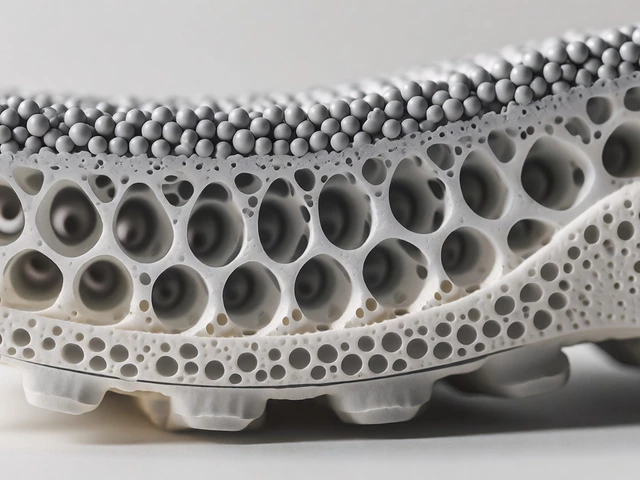
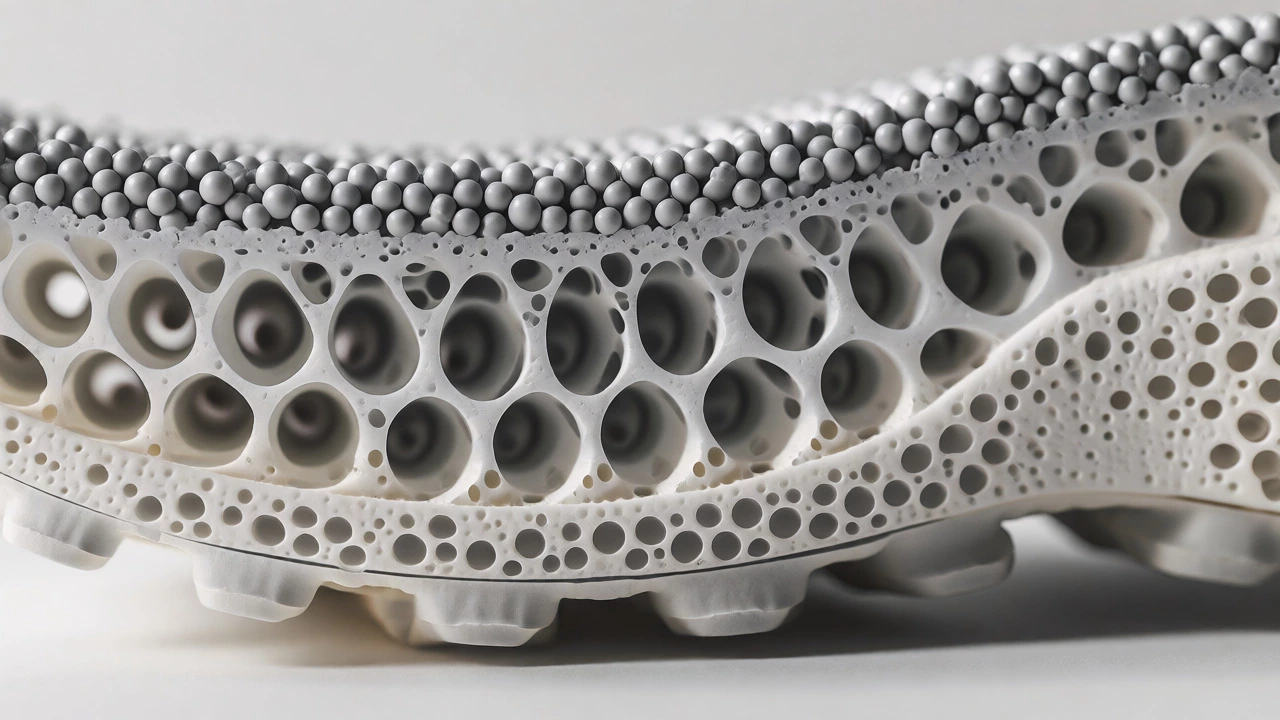
Start with what touches the ground most often: your footwear. The midsole of almost every modern athletic shoe relies on two main chemical families: Ethylene-Vinyl Acetate (EVA) and Thermoplastic Polyurethane (TPU).
EVA Foam is a lightweight, flexible polymer material widely used for its shock-absorbing properties. It’s cheap, easy to mold, and provides decent comfort. Think of the soft, squishy feel of older running shoes or yoga mats-that’s likely EVA. However, standard EVA breaks down relatively quickly. After about 300-500 miles, the cellular structure collapses, and you lose that protective bounce.
To fix this, brands developed advanced versions like Nike’s ZoomX or Adidas’ Boost, which use different chemical structures. Thermoplastic Polyurethane (TPU) is a durable polymer known for high elasticity and resistance to abrasion. When expanded into pellets (like Adidas Boost), TPU offers superior energy return compared to traditional EVA. It doesn’t compress permanently as fast, meaning your shoes last longer and keep giving back more energy with each step.
- EVA: Best for budget-friendly gear, casual wear, and low-impact activities like yoga.
- TPU: Ideal for high-performance running and training where durability and energy return matter.
- Nitrogen-infused foams: Some newer technologies inject nitrogen gas into the foam matrix to reduce weight and increase responsiveness.
Strength and Stiffness: Carbon Fiber and Epoxy Resins
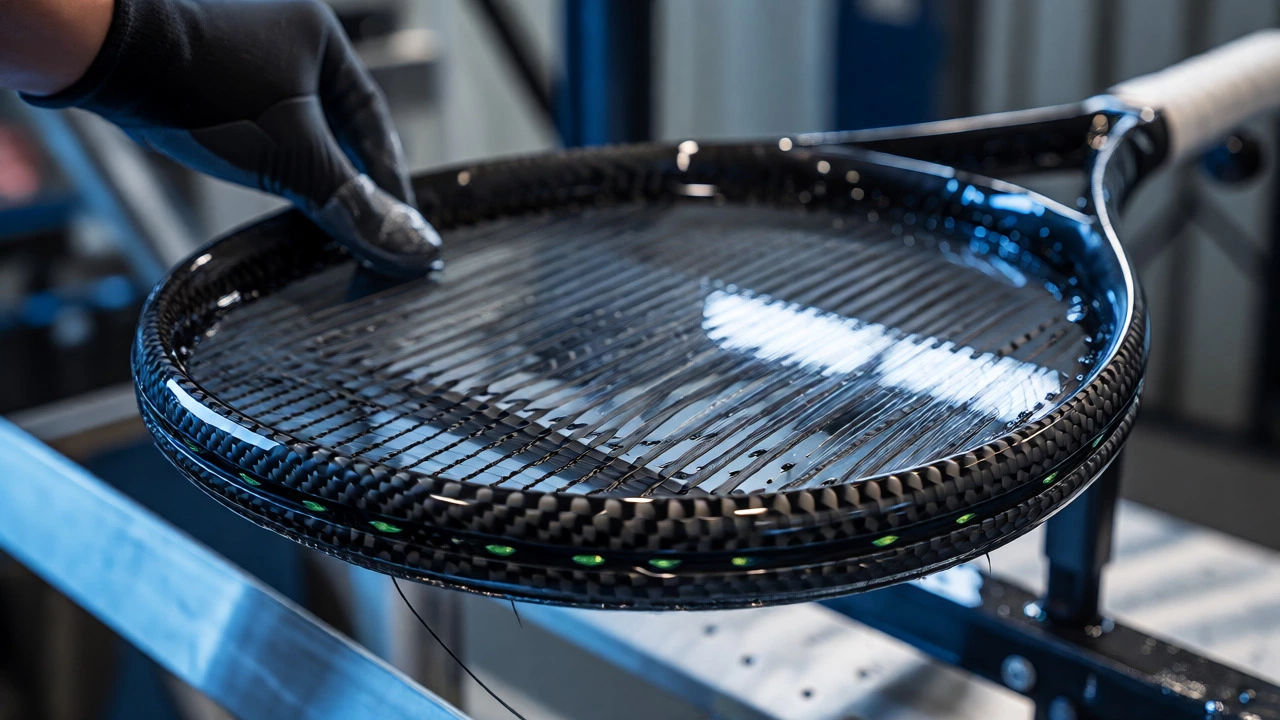
If cushioning is about softness, structural integrity is about hardness. This is where carbon fiber enters the picture. You’ve seen it in high-end bicycles, hockey sticks, and tennis rackets. But carbon fiber itself is just a thread. To make it useful, it needs a binder-a chemical glue called a resin.
Carbon Fiber Reinforced Polymer (CFRP) is a composite material consisting of carbon fibers embedded in a plastic resin matrix. The fibers provide tensile strength (resistance to being pulled apart), while the resin transfers loads between the fibers and protects them from environmental damage.
The most common resin used here is epoxy. Epoxy Resin is a thermosetting polymer formed by reacting an epoxide resin with a polyamine hardener. Unlike glues that dry out, epoxy undergoes a chemical reaction called curing. Once cured, it becomes incredibly rigid and resistant to heat and chemicals. This is why your expensive tennis racket doesn’t warp when left in a hot car, whereas cheaper aluminum ones might.
Why does this matter to you? Because the ratio of carbon fiber to resin determines how "lively" the equipment feels. Too much resin makes the gear heavy and sluggish. Too little makes it brittle and prone to snapping. High-end manufacturers spend millions perfecting this chemical balance.
| Material | Primary Chemical Component | Best For | Key Attribute |
|---|---|---|---|
| Aluminum Alloy | Aluminum + Copper/Magnesium | Baseball bats, entry-level bikes | Ductility (bends before breaking) |
| Steel | Iron + Carbon | Weightlifting bars, goals | High tensile strength |
| Carbon Fiber Composite | Carbon Fibers + Epoxy Resin | Racing bikes, rackets, poles | High stiffness-to-weight ratio |
Grip and Durability: Natural vs. Synthetic Rubber
Traction is everything. Whether you’re sprinting on a track or dribbling a soccer ball, friction saves you from slipping. Historically, natural rubber was the go-to. Today, synthetic rubbers dominate because they can be tuned chemically for specific conditions.
SBR (Styrene-Butadiene Rubber) is the most widely produced synthetic rubber, used extensively in tire treads and sports shoe outsoles. It offers a good balance of grip, wear resistance, and cost. If you buy mid-range sneakers, the black rubber sole is likely SBR.
For higher performance, manufacturers use specialized compounds. Nitrile Rubber is a synthetic rubber copolymer of acrylonitrile and butadiene, prized for its oil and fuel resistance. You’ll find this in gloves used for weightlifting or handling oily balls, ensuring they don’t degrade quickly.
Another critical area is artificial turf. Modern fields aren’t just plastic grass; they’re filled with granules. These infills are often made from recycled SBR rubber crumb or newer thermoplastic elastomers (TPE). The choice of chemical affects player safety. Old-style SBR infills could get extremely hot in direct sunlight, causing burns. Newer coated infills use polymer coatings to reflect heat, keeping the surface cooler and safer.
Ball Sports: Bladders and Casings
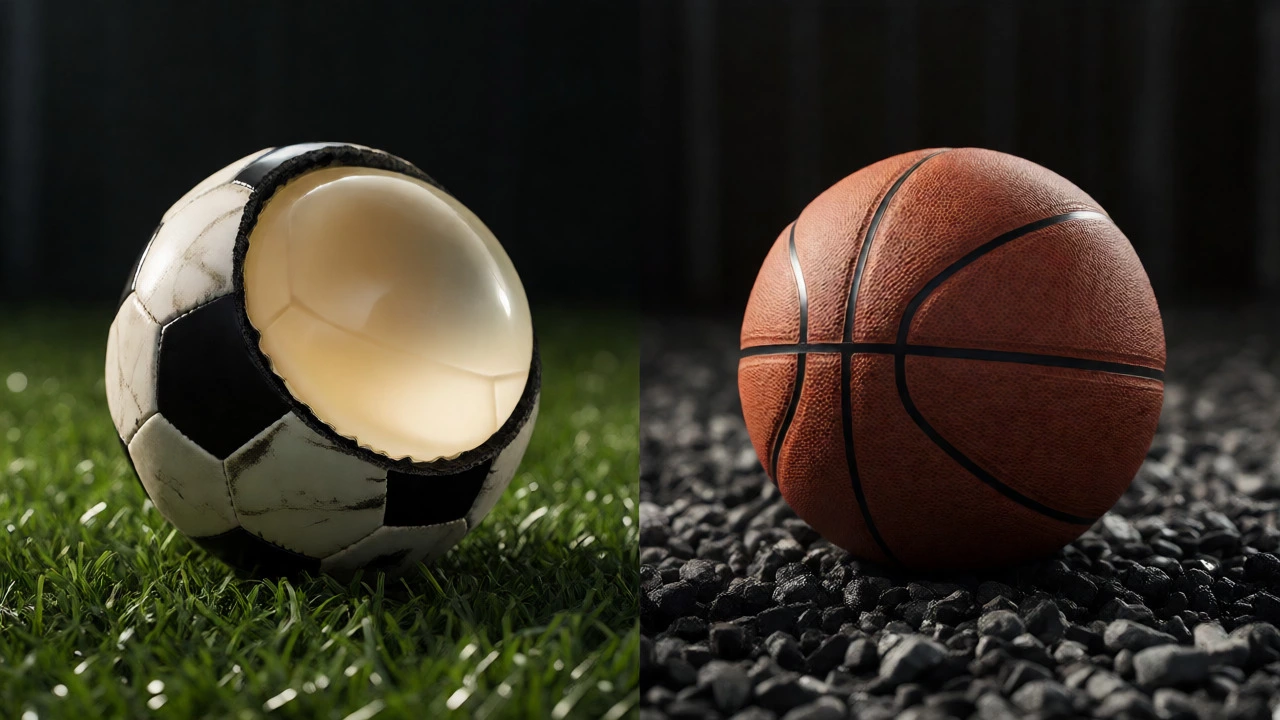
Balls seem simple, but their internal chemistry dictates how they fly and bounce. Inside a soccer ball or basketball, there’s a bladder-the part that holds air. Then there’s the casing-the outer layer you touch.
Traditional bladders were made from latex. Natural Latex is a milky colloid drawn from the Hevea brasiliensis tree, valued for its exceptional elasticity and rebound capabilities. Balls with latex bladders offer the best touch and bounce consistency. However, latex is porous. Air leaks out over time, requiring frequent re-inflation.
To solve the leakage issue, many recreational balls now use Butyl Rubber. This is a synthetic rubber copolymer of isobutylene and isoprene, known for its low permeability to gases. Butyl bladders hold air for weeks without needing a pump. The trade-off? They feel stiffer and have less responsive bounce than latex. Pro athletes usually prefer latex despite the maintenance hassle because the performance difference is noticeable.
The outer casing has shifted too. While leather is still iconic for basketballs, most outdoor soccer balls use synthetic polyurethane (PU) or PVC panels. PU is softer and water-resistant, making it ideal for wet conditions. PVC is cheaper and tougher, suited for rough surfaces like concrete courts.
Swimming and Apparel: Chlorine Resistance
If you swim regularly, you know the smell of chlorine. It kills bacteria, but it also attacks the elastic in your swimsuit. Standard nylon or spandex degrades quickly when exposed to chlorinated water repeatedly.
This led to the development of PBT (Polybutylene Terephthalate). This is a type of polyester fiber specifically engineered to resist chlorine degradation and maintain shape retention. Brands like Speedo and Arena use PBT blends in their competitive swimwear. Unlike regular lycra, PBT doesn’t stretch out after a few months of daily practice. It also dries faster and resists UV damage from pool lights or outdoor sun.
Similarly, wetsuits rely on Neoprene. Technically called polychloroprene, this is a family of synthetic rubbers produced by emulsion polymerization of chloroprene. Neoprene contains tiny bubbles of nitrogen trapped within the rubber matrix. These bubbles provide insulation by trapping body heat. Higher-quality neoprene uses smaller, more uniform bubbles, offering better warmth with less bulk.
Care and Longevity: Protecting Your Chemical Investments
Knowing what chemicals are in your gear helps you clean and store it properly. Heat and UV light are enemies of most polymers. Leaving your carbon fiber bike frame or foam-cushioned shoes in a hot trunk accelerates the breakdown of the resin and foam cells. The chemical bonds weaken, leading to delamination or permanent compression set.
Here are some practical tips based on material science:
- Avoid Solvents: Never clean foam midsoles with harsh solvents like acetone. It can dissolve the adhesive holding the layers together. Use mild soap and water instead.
- Store Rackets Properly: Keep tennis and badminton rackets away from extreme heat. The epoxy resin can soften slightly at very high temperatures, potentially warping the frame if strung tightly.
- Rinse Swimwear: Always rinse PBT or Lycra suits with fresh water immediately after swimming. Chlorine continues to eat away at fibers even after you leave the pool if not washed off.
- Inflate Correctly: Check the PSI recommended for your ball. Over-inflating stresses the latex or butyl bladder, increasing the risk of rupture. Under-inflating causes excessive flexing, which generates heat and weakens the material.
Understanding the chemistry behind your sports equipment transforms you from a passive consumer into an informed user. You realize that the "magic" in high-tech gear is actually precise molecular engineering. Next time you pick up a racket or tie your shoes, remember: you’re interacting with complex polymers, resins, and elastomers working together to enhance your game.
Is carbon fiber heavier than steel?
No, carbon fiber composites are significantly lighter than steel. While steel has a density of around 7.8 g/cm³, carbon fiber composites typically range from 1.4 to 1.6 g/cm³. This means a component made of carbon fiber can be up to five times lighter than a similar steel part, though it is generally more expensive to produce.
Why do my running shoes lose cushioning so fast?
Most running shoes use EVA foam, which suffers from "compression set." This is a physical phenomenon where the closed-cell foam structure collapses permanently under repeated pressure. Over time, the air pockets inside the foam crush and fail to spring back, resulting in a flat, uncomfortable ride. Advanced TPU-based foams resist this process better, lasting longer.
Can I use regular glue to fix broken sports equipment?
It depends on the material. Superglue (cyanoacrylate) works well for small cracks in plastics or ceramics but lacks flexibility. For load-bearing parts like bicycle frames or racket joints, structural epoxy is required because it cures into a rigid, strong bond that can handle stress. Flexible adhesives are needed for rubber parts to allow movement without cracking.
Are synthetic balls worse than leather ones?
Not necessarily. Synthetic materials like polyurethane (PU) offer consistent performance regardless of weather conditions. Leather absorbs water, changing its weight and shape, which can affect flight in rain. Synthetics remain stable and require less maintenance. However, professional players often prefer genuine leather for its unique tactile feedback and ability to mold to their hand over time.
What is the safest material for gym flooring?
Rubber flooring, particularly virgin rubber or high-quality recycled SBR, is considered safe and durable. It provides excellent shock absorption for weights and reduces noise. Ensure the rubber is free from volatile organic compounds (VOCs) by checking for certifications like Greenguard. Avoid cheap vinyl mats which may contain phthalates and degrade faster under heavy equipment.