Golf History Trivia Challenge
Think you know where golf really started? Take this quick quiz to separate fact from fiction.
Loading question...
You’re standing on a manicured green, watching a white ball roll toward a hole no wider than your palm. It feels like a timeless ritual, but have you ever stopped to ask: what country invented golf?
The short answer is Scotland. But the real story is messier, more fascinating, and involves angry priests, banned sports, and shepherds hitting pebbles into rabbit holes. If you think golf started with rich men in blazers sipping tea, you’re missing the gritty truth. Let’s clear up the confusion once and for all.
Quick Summary / Key Takeaways
- Scotland is the birthplace: Modern golf originated in eastern Scotland during the Middle Ages (15th century).
- Not just one game: Early versions resembled "shinny" or hockey more than today's sport.
- St Andrews is iconic: The Old Course at St Andrews is considered the "Home of Golf," though it wasn't the first course ever.
- Dutch claim debunked: While the Dutch played "kolven," they didn’t create the modern rules or the concept of the hole.
- Royal influence: King James II of Scotland actually tried to ban golf because archery was more important for national defense.
The Real Origin Story: Scotland in the 1400s
Forget what you heard about the Dutch. Yes, the Netherlands had a game called Kolven that involved hitting a ball with a curved stick. But here’s the kicker: Kolven was played on frozen canals and didn’t involve a hole. You hit the ball against a post or a target. That’s not golf; that’s early street hockey.
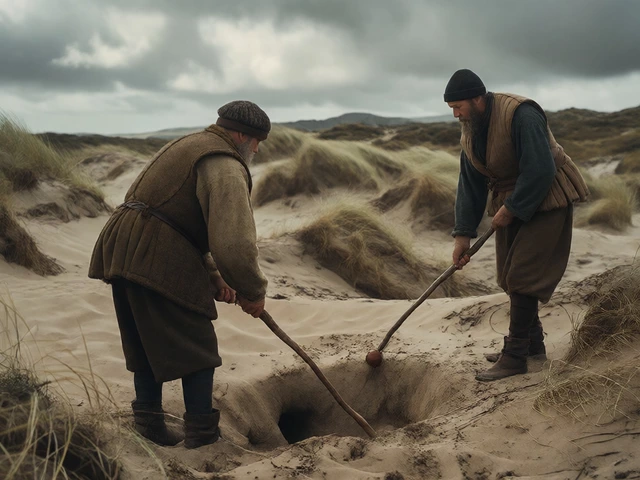
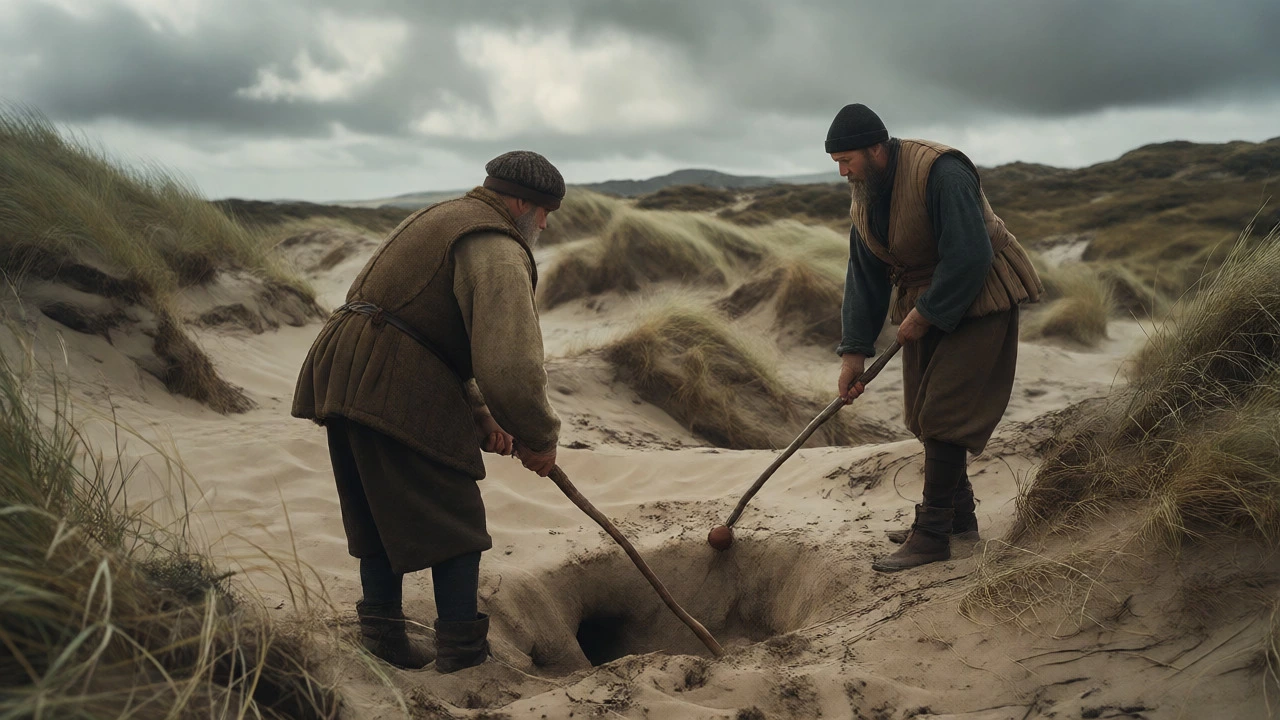
Golf as we know it-hitting a ball into a specific hole using progressively fewer strokes-was born in the sandy coastal areas of eastern Scotland. Why there? Because the land was useless for farming. These areas, known as linksland, were covered in dunes and natural hollows made by rabbits. Shepherds and locals realized they could use these natural depressions as targets. They started hitting stones or balls into them with sticks. It was cheap, fun, and addictive.
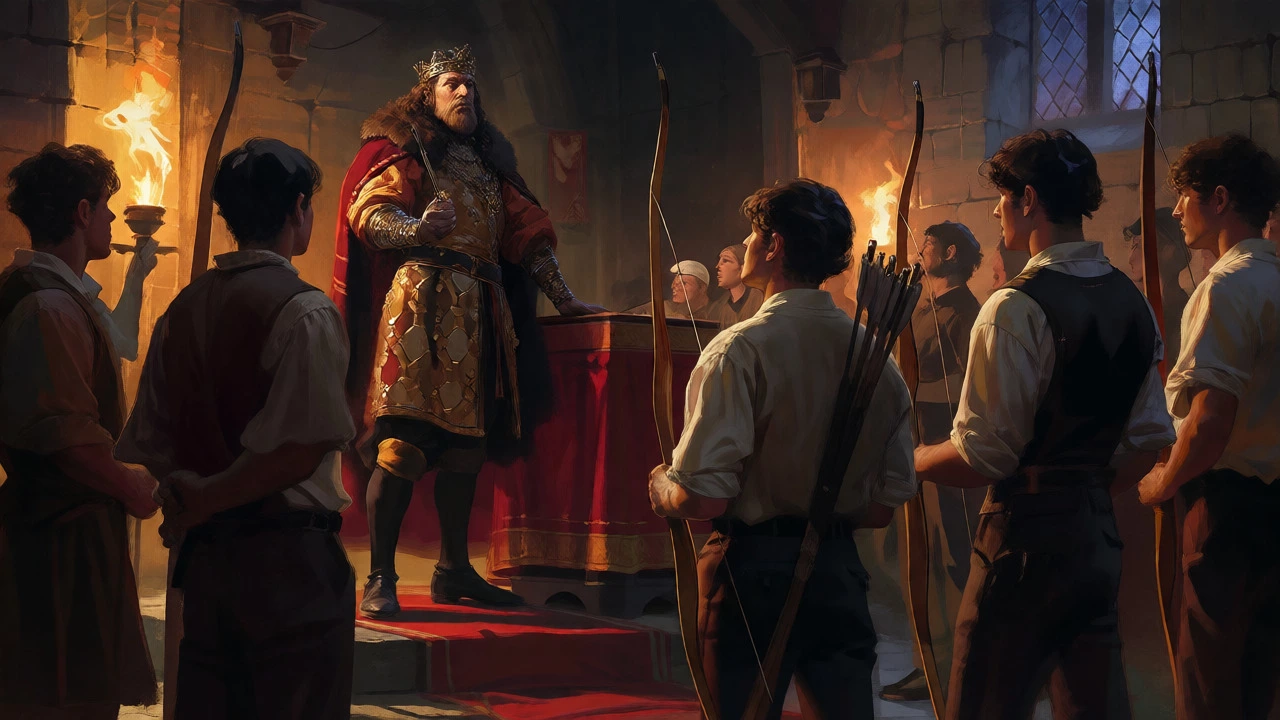
The first written record isn’t a rulebook. It’s a complaint. In 1457, King James II of Scotland passed an act banning golf and football. Why? Because young men were skipping archery practice. Archery was crucial for defending the kingdom against England. If everyone was busy chasing a little white ball, nobody was learning to shoot arrows. This tells us two things: golf was already popular enough to be a problem, and it was definitely being played in Scotland before anywhere else in a recognizable form.
Why Not France or China?
People love to argue this point. You’ll hear claims about China’s Chuiwan, a game from the Song Dynasty (960-1279 AD). Chuiwan did look like golf. Players used clubs to hit a ball into cups on a course. Sounds familiar, right?
But here’s the disconnect: There is no evidence that Chuiwan traveled to Europe and evolved into golf. The games died out separately. Chuiwan faded away in China, while golf exploded in Scotland. Historians agree that while China may have invented a *similar* game, Scotland invented the *lineage* of the modern sport. We play by rules derived from Scottish traditions, not Chinese ones.
France also gets mentioned because of Jeu de Paume and other stick-and-ball games. Again, these were court games, often played indoors or in enclosed courts. They lacked the outdoor, variable-terrain element that defines golf. Scotland’s unique geography-the wind, the sand, the uneven lies-is what shaped the sport’s strategy. You can’t replicate those conditions in a French palace garden.
St Andrews: The Home of Golf
If Scotland is the country, then St Andrews is the spiritual capital. People call it the "Home of Golf," but that title is symbolic. Was it the very first place people played? Probably not. People likely played on various links around Fife and East Lothian earlier.
However, St Andrews became the center of gravity for three reasons:
- Standardization: In 1754, the Society of St Andrews Golfers was formed. They wrote down the first official rules. Before this, every local club had its own weird customs. One town might say a water hazard counts as one stroke; another might let you drop without penalty. St Andrews unified the chaos.
- The 18-Hole Standard: Originally, courses had varying numbers of holes-some had 22, some 12. At St Andrews, the course naturally had 12 holes, but players played each one twice, making 18. When other clubs copied St Andrews’ layout, the 18-hole round became the global standard. If you’re playing 18 holes today, thank the layout of the Old Course.
- Prestige: Royal patronage helped. Mary Queen of Scots was famously accused of playing golf shortly after her husband’s murder. Whether true or propaganda, it linked the sport to royalty and gave it social cachet.
How Golf Spread to the World
Scotland kept golf to itself for centuries. Then, the British Empire happened. As Scottish soldiers, traders, and diplomats traveled, they brought their clubs and habits with them. Golf courses began popping up in India, South Africa, Australia, and Canada in the 19th century.
The United States caught on later. The first permanent golf club in America was founded in 1888 in Yonkers, New York. But it was the 1900s that saw the explosion. American money met Scottish tradition. Americans built bigger, fancier clubs. They introduced new technologies-steel shafts replaced hickory, and eventually, graphite took over. But the soul of the game remained Scottish. Even today, the governing bodies are split between The R&A (based in St Andrews) and the USGA (United States Golf Association), reflecting this historical tension and partnership.
Comparing Early Games vs. Modern Golf
To really understand why Scotland gets the credit, look at the differences between the precursors and the modern game. It’s not just about the name; it’s about the mechanics.
| Feature | Scottish Golf (Origins) | Dutch Kolven | Chinese Chuiwan |
|---|---|---|---|
| Objective | Hole the ball in fewest strokes | Hit ball against target/post | Hole ball in cup |
| Surface | Natural linksland (sand/grass) | Frozen canals/streets | Courtyards/parks |
| Equipment | Wooden clubs, feather-stuffed leather balls | Curved wooden stick, hard rubber ball | Bamboo clubs, silk-filled balls |
| Rules | Standardized by R&A (1754) | Local variations, no global body | Imperial court rules, died out |
| Legacy | Direct ancestor of modern golf | Influenced field hockey | No direct link to modern golf |
This table shows why the Scottish version won. It had the most adaptable format. Playing on varied terrain meant you needed different clubs and strategies. That complexity is what makes golf so engaging today. Kolven was too simple. Chuiwan was too rigid.
Common Myths About Golf’s Invention
Let’s bust a few myths that pop up in bar conversations.
Myth 1: Mary Queen of Scots invented golf.
She loved it, sure. But she didn’t invent it. She played it in the 1560s, long after the 1457 ban. She’s a famous player, not the creator.
Myth 2: The first golf ball was made of wood.
Nope. Early balls were made of hardwood, yes, but they broke easily. Then came the "featherie"-a leather pouch stuffed with boiled goose feathers. These were expensive and dangerous to make (workers risked injury stuffing wet leather). The gutta-percha ball in the 1840s changed everything by making golf affordable.
Myth 3: Golf was always a gentleman’s sport.
Initially, it was a working-class game. Shepherds and fishermen played it. It only became associated with elites when royalty got involved. The snobbery came later, not at the start.

Why Does This Matter Today?
You might wonder, "Who cares where it started? I just want to lower my handicap." Fair point. But knowing the roots changes how you view the game.
When you struggle with a bunker shot, remember: bunkers weren’t designed traps. They were natural rabbit holes. The challenge comes from nature, not human malice. When you respect the links, you play better. Also, understanding that the rules were standardized in 1754 helps you appreciate why certain penalties exist. They weren’t arbitrary; they were compromises between competing local customs.
Plus, if you’re traveling for golf, visiting Scotland is a pilgrimage. Walking the Old Course at St Andrews isn’t just playing golf; it’s walking in the footsteps of the people who defined the sport. Every divot, every wind gust, connects you to that 15th-century shepherd hitting a stone into a hole.
Frequently Asked Questions
Did the Dutch invent golf?
No, the Dutch did not invent modern golf. They played a similar game called "Kolven," which involved hitting a ball against a target rather than into a hole. While Kolven shares some similarities with golf, it lacks the fundamental objective of holing out in the fewest strokes. Most historians agree that Scotland developed the distinct form of golf we recognize today.
Is St Andrews the first golf course in the world?
St Andrews is not necessarily the first physical golf course, but it is widely regarded as the "Home of Golf." People likely played informal rounds on various linkslands in Scotland before St Andrews became organized. However, St Andrews was the first place to standardize the rules and the 18-hole format, making it the most influential site in golf history.
Why was golf banned in Scotland?
King James II of Scotland banned golf in 1457 because it was distracting young men from practicing archery. Archery was essential for military defense at the time. The king wanted able-bodied men ready for war, not playing games. The ban was largely ignored and eventually lifted as attitudes shifted.
Did China invent golf before Scotland?
China had a game called "Chuiwan" that resembled golf, dating back to the Song Dynasty. However, there is no historical evidence that Chuiwan influenced the development of European golf. The games evolved independently. Therefore, while China may have had a similar activity earlier, Scotland is credited with inventing the lineage of the modern sport.
What was the first golf ball made of?
The earliest golf balls were made of solid wood, such as boxwood or beech. These were heavy and prone to breaking. Later, the "featherie" ball was created, consisting of a leather casing stuffed with wet goose feathers. When dried, the feathers expanded, making the ball hard and fast. This was replaced by the cheaper gutta-percha ball in the mid-19th century.
Next Steps for Golf History Buffs
If you’re hooked on the history, don’t stop here. Dig deeper into the evolution of equipment. How did hickory shafts change swing mechanics? What role did the Industrial Revolution play in making clubs affordable? Or, plan a trip to the UK. Visit the British Museum or the National Museum of Scotland to see original featherie balls. Seeing the artifacts brings the dry dates to life.
And next time someone asks you "What country invented golf?", you can give them the nuanced answer. It’s Scotland, but it’s also a story of rebellion against kings, adaptation to nature, and global spread through empire. Now go hit some balls.