Golf Origins Quiz
Loading question...
Quiz Completed!
You scored 0 out of 0
You’ve probably heard the argument at least once. A friend insists that golf started in Scotland. Another swears it’s a Chinese invention. Someone else brings up medieval Netherlands. Who actually created golf? The short answer is: nobody knows for sure. There was no single inventor with a patent application or a signed declaration. Instead, the game evolved over centuries through several distinct cultures before settling into the form we recognize today.
Understanding who created golf isn’t just about trivia. It shapes how we view the sport’s traditions, its etiquette, and even why the rules are written the way they are. When you look at the history, you see a story of migration, adaptation, and standardization. Let’s break down the competing claims to see where the truth lies.
The Scottish Claim: The Birthplace of Modern Golf
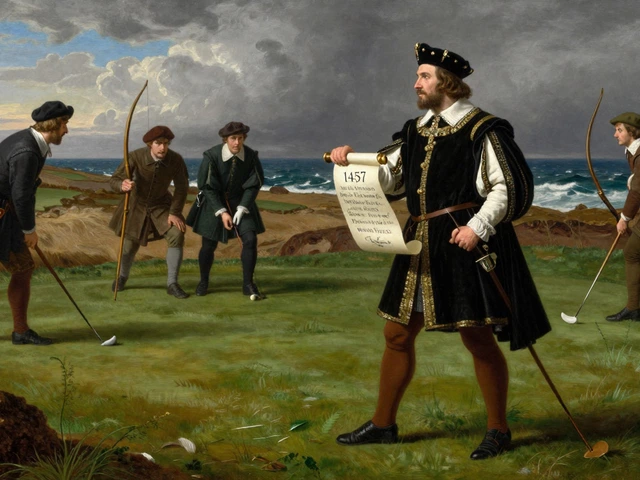
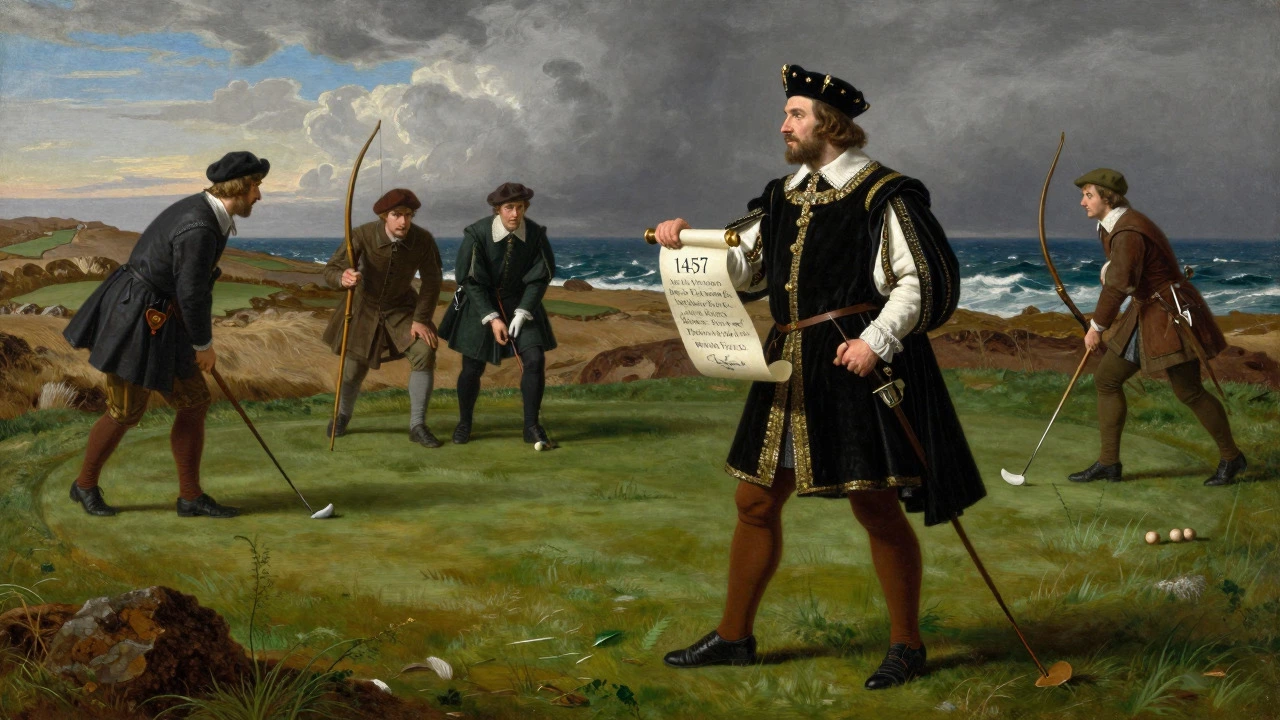
If you ask most people, especially those in the English-speaking world, they will point to Scotland. And for good reason. Scotland is widely recognized as the home of modern golf. The earliest recorded reference to the game comes from an Act of Parliament passed by King James II of Scotland in 1457. The king banned golf, calling it a distraction from archery practice, which was vital for national defense. This ban proves that the game was already popular enough to be considered a problem.
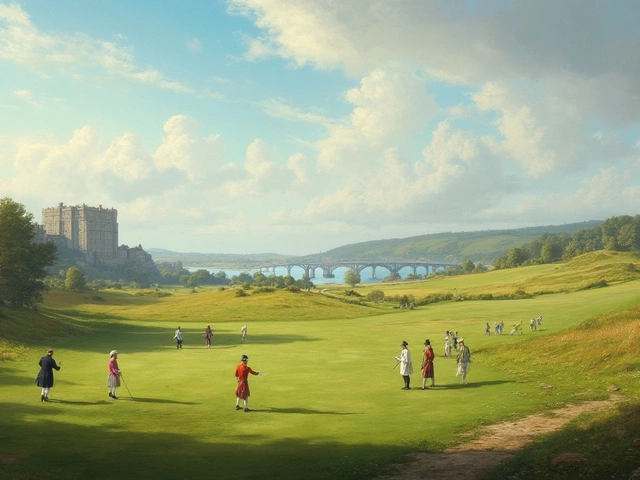
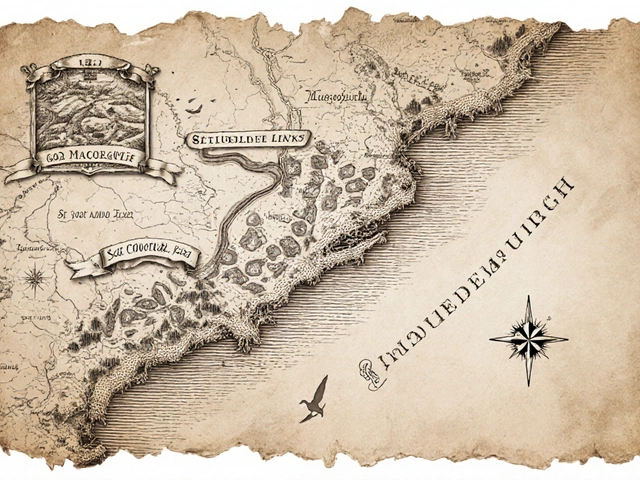
But banning it didn’t stop the players. In fact, the ban was repealed in 1502 by King James IV, who apparently enjoyed the game himself. By the late 18th century, the game had taken root in Edinburgh and St Andrews. The Society of St Andrew's Golfers, founded in 1754, later became the Royal and Ancient Golf Club of St Andrews (R&A). This organization played a crucial role in codifying the rules of golf. They established standards for club design, ball construction, and course layout that spread globally.
St Andrews remains significant because it set the template for the 18-hole format. Before this, courses varied wildly in length and hole count. The R&A’s influence ensured that when golfers traveled, they could play on any course with a shared understanding of the game. This standardization is why Scotland holds such a strong claim to being the birthplace of the sport as we know it.
The Dutch Connection: Kolf and the Northern Roots
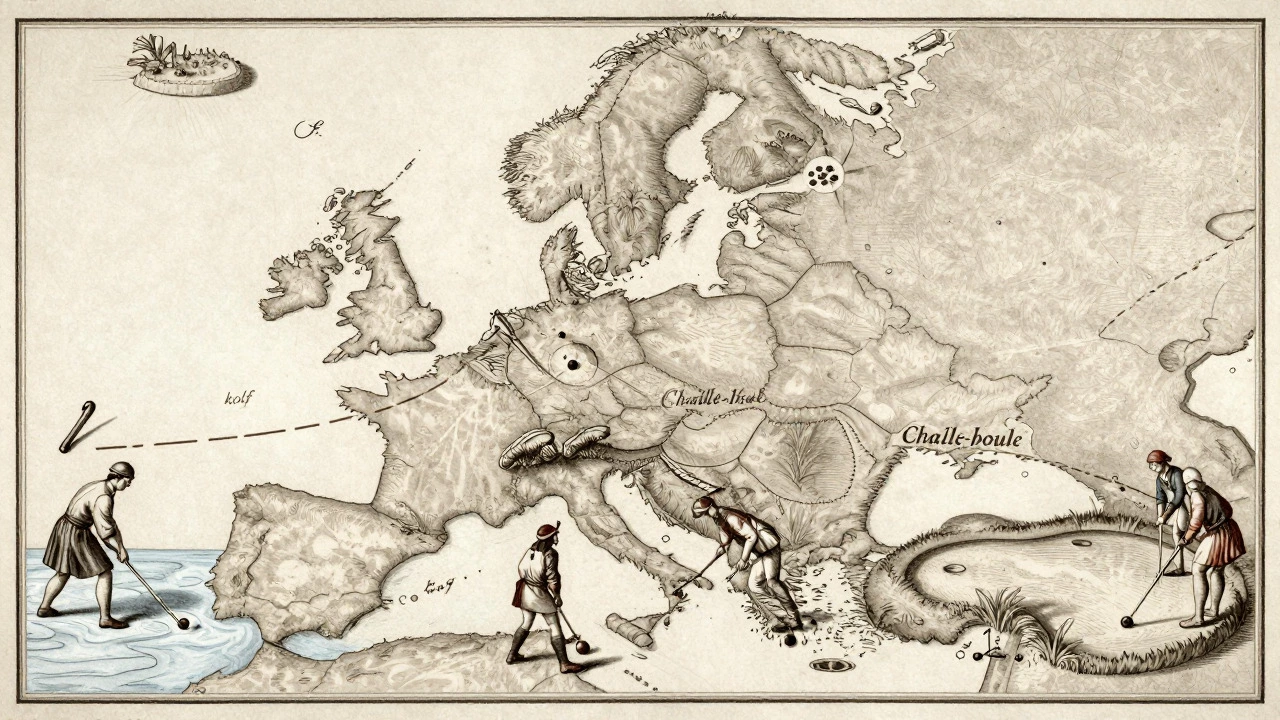
While Scotland gets the glory for modern rules, historians often point north to the Netherlands. The Dutch had a game called "kolf" (which means club) that predates the Scottish records. References to kolf appear in documents from the 13th century, well before the 1457 Scottish ban. Players used curved sticks to hit a ball toward a target, often playing on frozen canals or open fields.
The connection between kolf and golf is linguistic and mechanical. The word "golf" likely derives from the Middle Dutch word "kolf." More importantly, the mechanics were similar. Both games involved striking a small object with a club toward a specific goal. However, there is a key difference. Kolf was typically played on flat surfaces without holes in the ground. You hit the ball to a marker, then moved to a new spot. Golf, as developed in Scotland, introduced the concept of hitting into a hole dug into the earth.
Did the Dutch create golf? Not exactly. They created a precursor that influenced the development of the sport. Trade routes between the Low Countries and Scotland were active during the medieval period. It is highly probable that Scottish merchants or sailors encountered kolf and adapted it to their local terrain, adding the hole element to challenge themselves further. This evolution transformed a flat-ground skill game into a strategic course-based sport.
Ancient China: Cuju and the Ball Games
Some sources claim that golf originated in ancient China with a game called "Cuju." Cuju translates to "kick ball" and dates back to the Han Dynasty, around 206 BC to 220 AD. Soldiers played Cuju to maintain physical fitness. They kicked a leather ball stuffed with hair or feathers through a small opening in a net suspended high above the ground.
While Cuju is fascinating, it shares very little with golf. It is more akin to soccer or football than to a club-and-ball game. The primary difference is the equipment. Golf requires a club; Cuju relies entirely on footwork. Additionally, the objective in Cuju was accuracy in kicking through a hoop, whereas golf involves distance control and precision into a hole. While Cuju demonstrates that humans have always enjoyed ball games, linking it directly to golf is a stretch. It shows a parallel evolution of recreational sports rather than a direct lineage.
Other European Precursors: Chaille-boule and Pagan
Scotland and the Netherlands weren’t the only places with stick-and-ball games. In France, a game called "chaille-boule" was played in the 14th century. Players used clubs to hit a ball toward a target. Similarly, in England, a game known as "pagan" or "camping" existed. These games were often banned alongside golf in Scotland because they were seen as disruptive to military training.
These variations highlight a broader trend across Europe. During the Middle Ages, many cultures developed games involving striking objects with sticks. The common thread was leisure and competition. However, none of these games developed the complex rule sets, course architecture, and global governing bodies that define modern golf. They remained localized pastimes without the structural evolution seen in Scotland.
How the Rules Were Standardized
The transition from a folk game to a structured sport happened in the 18th and 19th centuries. Initially, each golf club wrote its own rules. This led to confusion and inconsistency. To solve this, the Royal and Ancient Golf Club of St Andrews took the lead in harmonizing regulations. In 1875, the R&A published a unified set of rules that most clubs adopted.
This standardization was critical for the sport’s growth. It allowed for inter-club competitions and eventually international tournaments. The first Open Championship, held in 1860 at Prestwick Golf Club in Scotland, was a milestone. It brought together top players from different regions under a single set of guidelines. As the British Empire expanded, so did golf. Colonies in India, South Africa, Australia, and North America adopted the Scottish model, cementing its dominance.
In the United States, the United States Golf Association (USGA) was formed in 1894 to govern the sport. Today, the USGA and the R&A jointly oversee the Rules of Golf, ensuring consistency worldwide. This collaborative governance structure reflects the sport’s dual heritage: rooted in Scotland but managed globally.
| Game | Origin | Key Equipment | Primary Objective | Relation to Golf |
|---|---|---|---|---|
| Golf (Modern) | Scotland | Clubs, Ball, Holes | Hit ball into hole in fewest strokes | Direct descendant |
| Kolf | Netherlands | Curved Stick, Ball | Hit ball to target on flat surface | Linguistic and mechanical precursor |
| Cuju | China | Leather Ball, Hoop | Kick ball through hoop | Distant relative, no direct link |
| Chaille-boule | France | Club, Ball | Hit ball toward target | Parallel development |
Why the Origin Matters Today
Knowing who created golf helps us appreciate the sport’s culture. The emphasis on honesty and self-policing in golf stems from its early days as a gentleman’s game in Scotland. Players were expected to call penalties on themselves, fostering a unique ethical framework. This tradition persists today, distinguishing golf from many other sports.
Additionally, the historical context explains the sport’s resistance to rapid change. Because the rules were codified so long ago, modifications are met with skepticism. Any change to the Rules of Golf undergoes extensive testing and consultation. This conservatism preserves the integrity of the game while allowing for necessary updates, such as adjustments to equipment technology.
For modern golfers, understanding the origins adds depth to every round. When you walk onto a course, you’re participating in a tradition that spans centuries and continents. Whether you’re playing on a links course in Scotland or a resort course in Florida, you’re following a path laid out by those early innovators who turned a simple pastime into a global phenomenon.
Common Misconceptions About Golf’s Origins
One common myth is that golf was invented by monks. Some stories suggest that Scottish monks played a version of the game using crooks and stones. While monks did engage in various physical activities, there is no concrete evidence linking them directly to the creation of golf. This tale likely emerged from romanticized views of medieval life.
Another misconception is that golf was exclusively an elite sport from the beginning. While early participants in Scotland included nobility, the game was also popular among commoners. The bans issued by kings reflect its widespread appeal across social classes. Over time, golf became associated with wealth due to the cost of land and equipment, but its roots are far more democratic.
Finally, some believe that golf has remained unchanged since its inception. In reality, the game has evolved significantly. Clubs have changed from wooden persimmon heads to metal drivers. Balls have gone from feather-stuffed leather spheres to multi-layered synthetic designs. Course architecture has become more sophisticated, incorporating bunkers, water hazards, and varied greens. Recognizing this evolution highlights golf’s adaptability and enduring appeal.
Who is officially credited with creating golf?
No single person is credited with creating golf. It evolved from earlier stick-and-ball games, particularly kolf from the Netherlands, and was formalized in Scotland. The Royal and Ancient Golf Club of St Andrews played a key role in standardizing the rules.
Is golf older than cricket?
Yes, golf is generally considered older than cricket. The earliest recorded references to golf date back to the 15th century in Scotland, while cricket’s origins are less clear but likely emerged in the 16th or 17th century in England.
Why was golf banned in Scotland?
Golf was banned in Scotland in 1457 by King James II because it was seen as a distraction from archery practice, which was essential for national defense. The ban was lifted in 1502 when King James IV, a fan of the game, repealed it.
What is the oldest golf course in the world?
The Old Course at St Andrews in Scotland is widely regarded as the oldest golf course in the world. It has been in continuous use since the 15th century and is known as the "Home of Golf."
Did the Chinese invent golf?
While ancient China had a game called Cuju that involved kicking a ball, it is not directly related to golf. Golf’s immediate precursors are European, particularly the Dutch game of kolf and Scottish adaptations.
When did golf become popular in the United States?
Golf began to gain popularity in the United States in the late 19th century. The first nine-hole course was built in Newport, Rhode Island, in 1890, and the USGA was formed in 1894 to govern the sport.