Brazil Education Knowledge Check
Loading question...
Quiz Completed!
Keep learning about the fascinating complexities of Brazilian education!
The Big Picture: Literacy and Basic Schooling
To understand the foundation, we have to look at Literacy is the ability to read and write, a primary metric for basic educational attainment. In Brazil, the literacy rate is surprisingly high, hovering around 93% to 94% for the adult population. If you look at the surface, it seems like everyone can read a newspaper. But there's a catch: functional illiteracy. This is where a person can technically decode words but can't summarize a simple text or do basic math needed for a job.
The Ministry of Education (MEC) has pushed hard to ensure that almost every child enters primary school. Most Brazilians today have completed "Ensino Fundamental" (Elementary/Middle School). However, the drop-off happens during "Ensino Médio" (High School). Many teenagers leave school early to help their families earn money, which creates a ceiling on their long-term earning potential.
The Great Divide: Public vs. Private
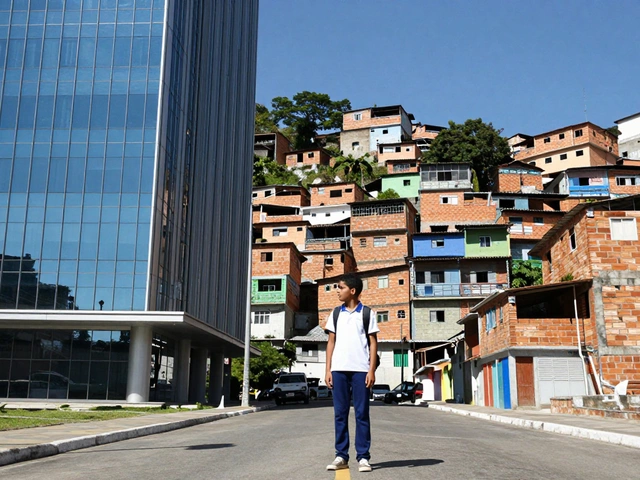
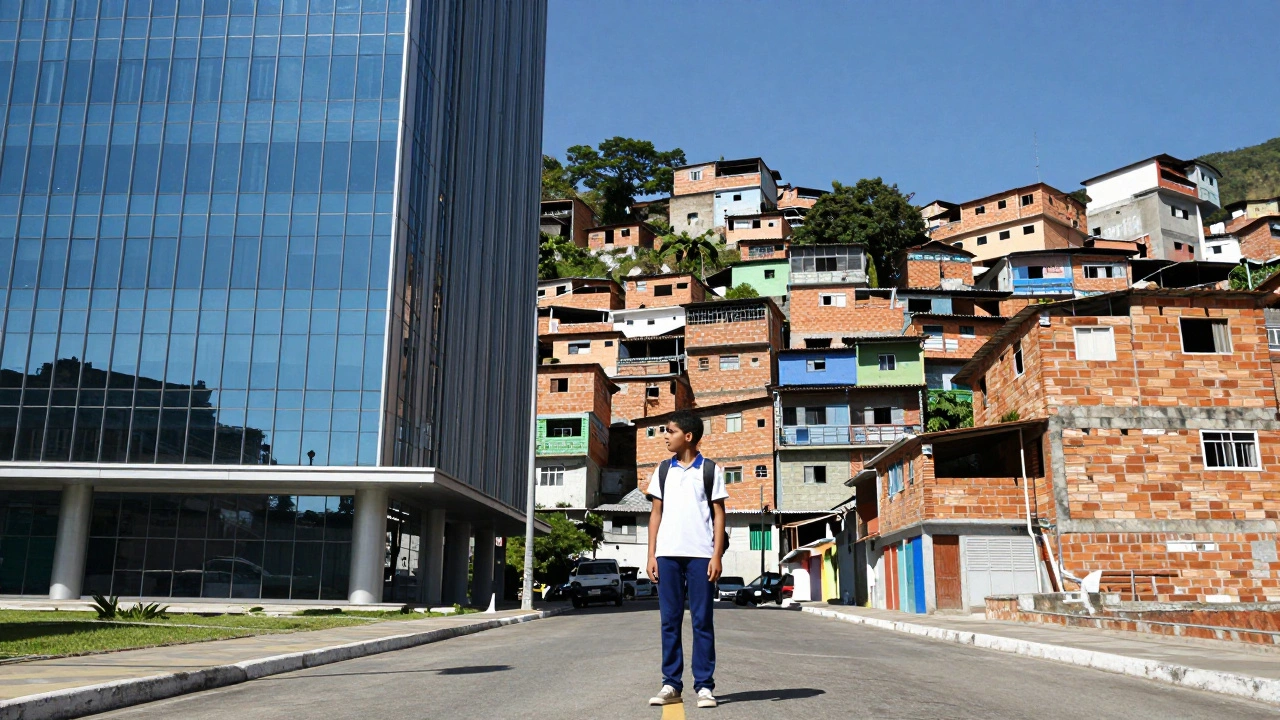
If you want to know why some Brazilians are world-class engineers and others struggle with basic literacy, you have to look at the school type. In Brazil, there is a massive gap between public and private education. Private schools are often elite institutions where students learn multiple languages, including English and Spanish, and prepare for the toughest exams.
Public schools, while free, are often underfunded and plagued by strikes or poor infrastructure. This creates a weird paradox: the students who most need a high-quality public education are often the ones getting the lowest quality. This isn't just a fluke; it's a systemic issue that keeps social mobility low. If you attend a top-tier private school in Rio de Janeiro, your chances of entering a prestigious university are exponentially higher than someone from a rural public school in the Northeast.
| Feature | Public Education | Private Education |
|---|---|---|
| Cost | Free (Tax-funded) | High Tuition Fees |
| Infrastructure | Variable (often lacking) | High-end facilities |
| University Access | Harder (via quotas) | Easier (via preparation) |
| Student Demographics | Lower to Middle Class | Middle to Upper Class |
Higher Education and the "Vestibular" Hurdle
University education in Brazil is highly valued but incredibly competitive. The Vestibular is a competitive entrance exam used by Brazilian universities to select students. It's one of the most stressful events in a young Brazilian's life. If you don't pass the vestibular or the ENEM (National High School Exam), your path to a degree is essentially blocked unless you pay for a private college.
Here is the interesting part: Brazil's public universities, like the University of São Paulo (USP), are actually better and more prestigious than most private ones. Because they are free and high-quality, the competition to get in is fierce. This means the most "educated" Brazilians-the doctors, lawyers, and scientists-often come from the public university system, but they usually got into those schools because they attended expensive private high schools.
In recent years, the government introduced quotas to balance this. These are reserved spots for students from public schools or specific ethnic backgrounds. It's a bold move to break the cycle of poverty, and it's slowly changing the face of the Brazilian academic elite.

Regional Disparities: The North-South Gap
You can't talk about Brazilian education without talking about geography. If you go to the South or Southeast (states like São Paulo and Santa Catarina), you'll find literacy and graduation rates that mirror those of Southern Europe. The economy is stronger, and the schools are generally better managed.
However, if you head to the Northeast or the North (like the Amazon region), the numbers dip. Poverty is higher, and schools are harder to reach. Some children in the interior of the North might travel hours by boat just to get to a classroom. This geographical divide means that "most Brazilians" isn't a helpful phrase; you have to ask "most Brazilians *where*?"
Vocational Training and the Labor Market
Not everyone wants a PhD, and Brazil has recognized this through the SENAI (National Service for Industrial Training). This system is world-renowned for turning out highly skilled technicians in mechanics, electronics, and industrial design. For many, a certification from SENAI is more valuable than a generic degree from a low-tier private university because it leads directly to a job in the massive industrial belts of the country.
The labor market reflects this. There is a huge demand for specialized technical skills, but a surplus of lawyers and administrators. This mismatch shows that while people are becoming "more educated" in terms of years spent in school, they aren't always becoming "better educated" for the actual needs of the economy.

The Future of Learning in Brazil
Brazil is currently in a transition phase. There's a massive push toward digitalization. During the pandemic, the gap widened, but it also forced a leap in EdTech. Now, you see more students using online platforms to study for the ENEM, bypassing the need for an expensive prep course (cursinho). This is democratizing knowledge in a way that bricks-and-mortar schools never could.
The focus is shifting toward "critical thinking" and "emotional intelligence," though these are mostly buzzwords in private schools. In public schools, the struggle is still about basic resources-making sure there's a roof on the building and a teacher in the room. But the trend is positive. More Brazilians have degrees today than at any other point in history.
Is the education system in Brazil good?
It depends on the sector. Private schools and top public universities are world-class. However, the general public basic education system struggles with funding, quality, and high dropout rates in high school.
What is the literacy rate in Brazil?
The official literacy rate is around 93-94%, but this doesn't account for functional illiteracy, where people can read but not fully comprehend complex texts.
What is the ENEM exam?
The ENEM (Exame Nacional do Ensino Médio) is a standardized test taken by high school students to gain admission to higher education institutions in Brazil.
Are public universities in Brazil free?
Yes, federal and state universities in Brazil are free and often the most prestigious in the country, though getting into them requires passing a very difficult exam.
Do most Brazilians speak English?
No. Only a small percentage of the population (around 5% to 10%) is fluent in English, mostly those who attended private schools or worked in international business.
What to do next?
If you are an educator looking to work in Brazil, start by researching the difference between the municipal and state systems. If you are a business owner hiring Brazilian talent, look for candidates who have graduated from the public university system (like USP or UNICAMP) or those with SENAI certifications-they usually have the strongest technical foundations.
For those interested in the sociology of education, look into the "Bolsa Família" program and how it tied cash transfers to school attendance. It's one of the most successful social experiments in the world for getting kids back into the classroom, and it explains why the primary enrollment numbers are so high today.