Sports Equipment Checklist Builder
Your Equipment List
Essentials (Must-Haves)
Performance & Comfort
Pro Tip for this Sport:
...
Walk into any sporting goods store, and you’re hit with a wall of choices. Rackets, bats, balls, pads, nets, cones-it’s overwhelming if you don’t know what belongs to which sport. You might think you just need a ball and some shoes, but most sports require specific tools to play safely and effectively. The right **sports equipment** isn’t just about following the rules; it’s about performance and preventing injury.
We often group everything under 'gear,' but the reality is much more segmented. A tennis racket serves a completely different purpose than a hockey stick, even though both are used to hit an object. Understanding these distinctions helps you buy the right items, maintain them properly, and get the most out of your training sessions. Let’s break down examples of sports equipment by category so you can see exactly what fits where.
Ball Games and Racket Sports
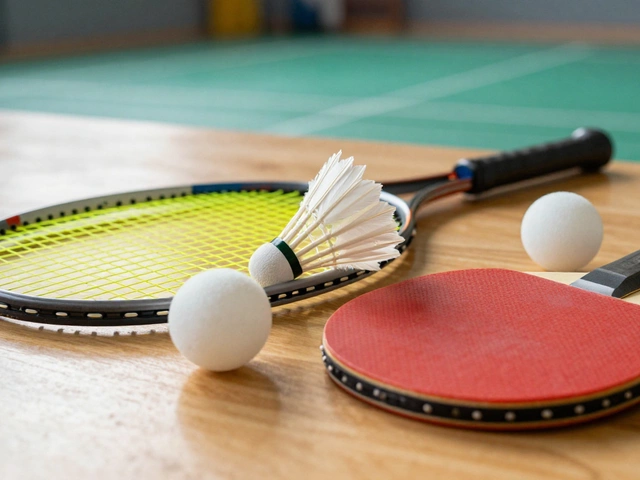
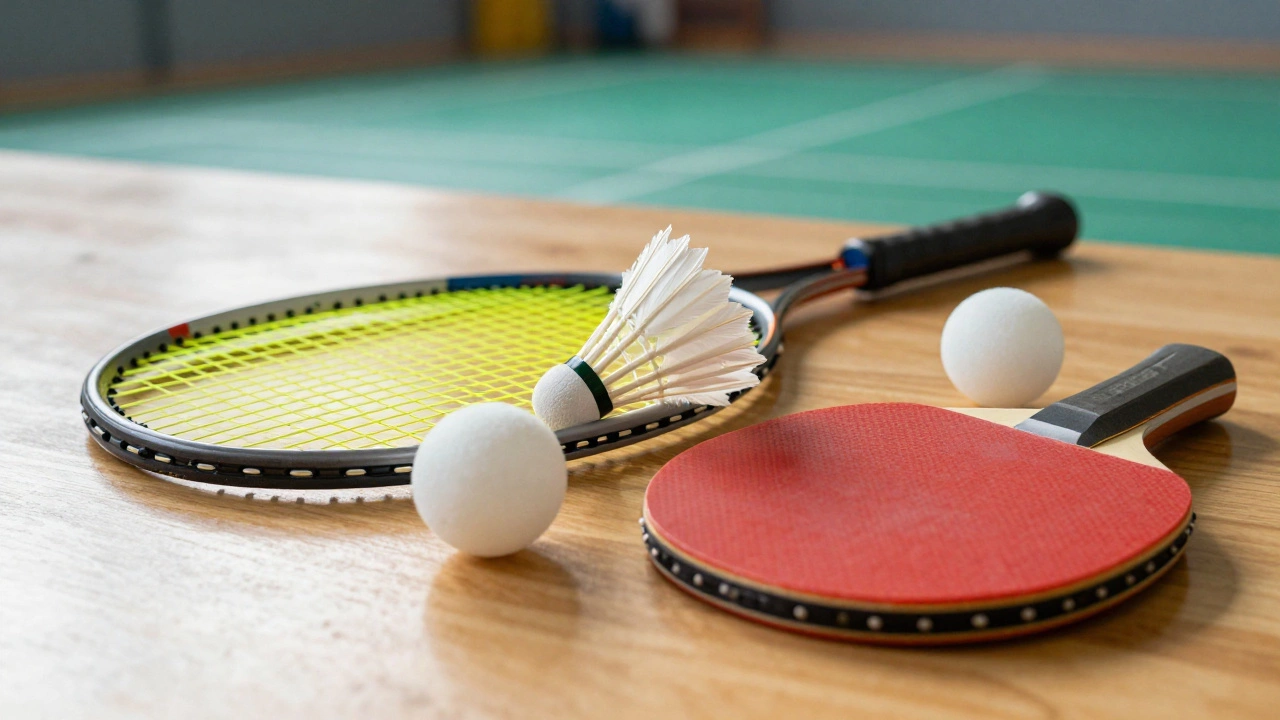
The core piece of equipment here is the racket or paddle. In tennis, you have a strung racket made of graphite or carbon fiber. In badminton, the racket is lighter, and the projectile is a shuttlecock, not a ball. Table tennis uses smaller paddles with rubber surfaces. Beyond the hitting implement, you need the ball itself. Tennis balls are pressurized rubber covered in felt, while ping pong balls are lightweight plastic spheres.
- Tennis: Strung racket, pressurized rubber ball, net, court lines.
- Badminton: Lightweight racket, feathered or plastic shuttlecock, high net.
- Squash: Short-handled racket, hollow rubber ball, enclosed glass-walled court.
- Table Tennis: Paddle with rubber grip, celluloid ball, table with net.
Don't forget footwear. Court shoes differ from running shoes because they provide lateral support for side-to-side movements, which running shoes lack. Using the wrong shoes on a hard court can lead to ankle sprains.
Team Sports: Football, Soccer, and Basketball
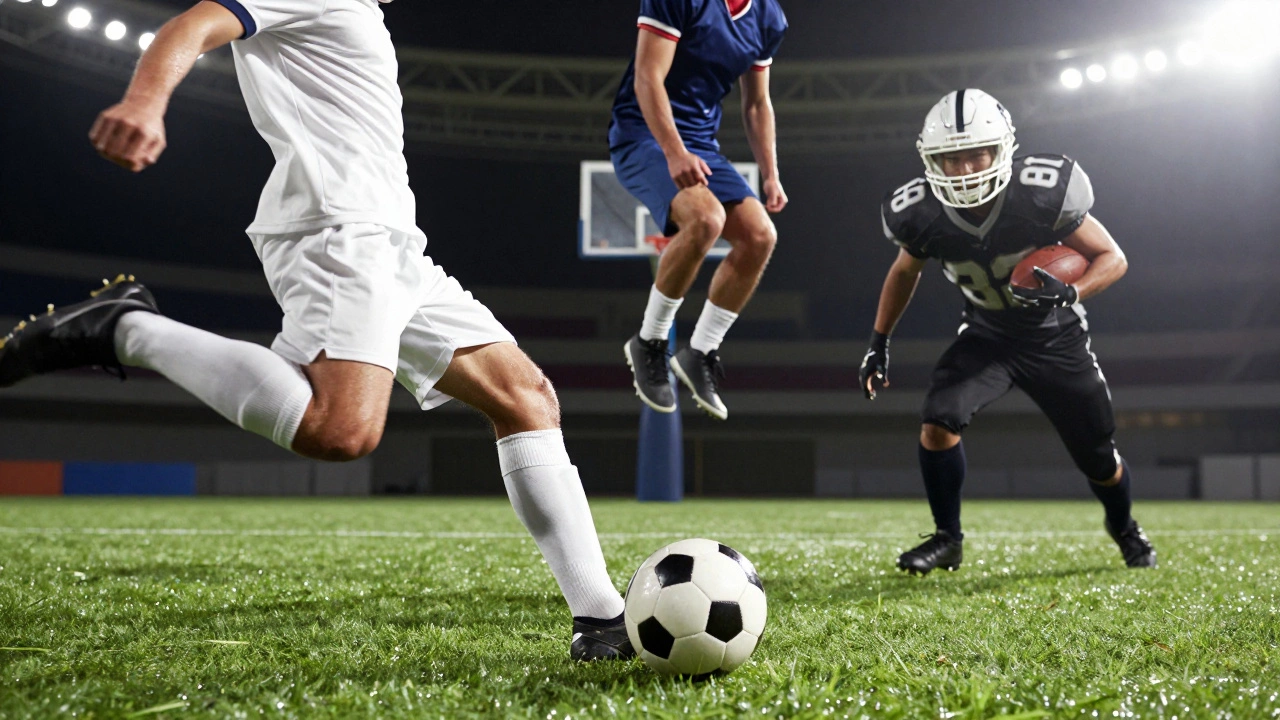
Team sports require equipment that facilitates group dynamics and physical contact. Soccer (football) is unique because it requires minimal personal gear-just a ball, goals, and shin guards. The focus is on footwork and teamwork rather than holding implements.
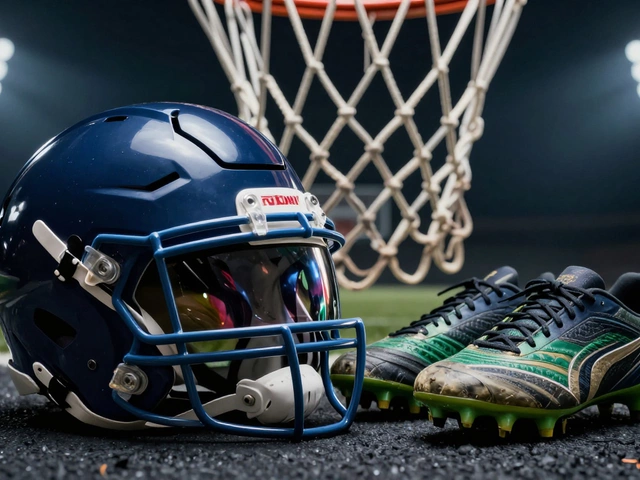
Basketball, on the other hand, relies on a heavy rubber ball designed for bouncing and gripping. The primary equipment is the hoop and backboard, but players need high-top sneakers for ankle support due to the jumping involved. American football is a whole different beast. It requires extensive protective gear.
| Sport | Primary Object | Protective Gear | Key Apparel |
|---|---|---|---|
| Soccer | Size 5 Ball | Shin Guards | Cleats (Studs) |
| Basketball | Leather/Rubber Ball | Ankle Braces (Optional) | High-Top Sneakers |
| American Football | Prolate Spheroid Ball | Helmet, Shoulder Pads, Gloves | Cleats, Jersey |
| Hockey (Ice) | Puck | Helmet, Skates, Stick, Pads | Skating Pants, Gloves |
Notice the difference in protection. Soccer players wear light shin guards, while American football players wear helmets and shoulder pads. This reflects the level of physical impact expected in each game. Buying cheap cleats for soccer might save money upfront, but proper studs are essential for traction on grass or turf to prevent slipping during sudden direction changes.
Combat Sports: Boxing and Martial Arts
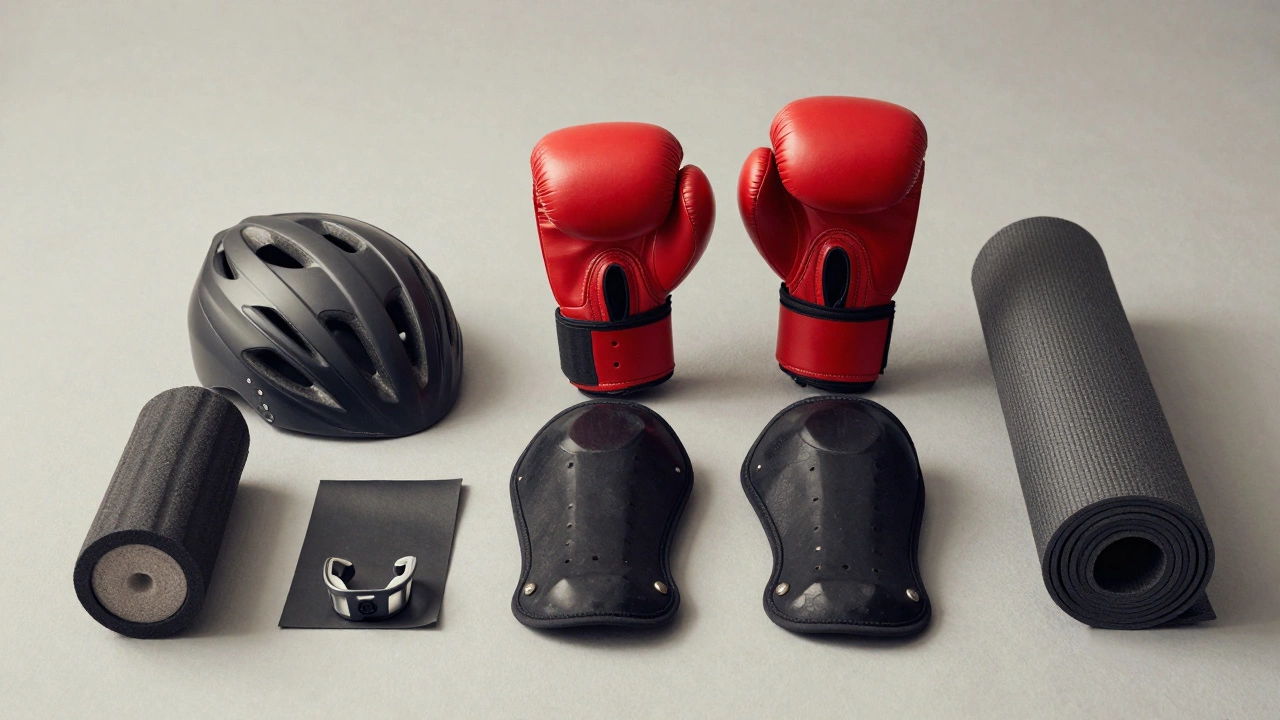
Combat sports prioritize safety above all else. You cannot box without gloves, and you shouldn't spar without a mouthguard. The equipment here is designed to absorb shock and protect vital areas.
- Gloves: Boxers use padded gloves ranging from 8oz (training) to 10-12oz (sparring/fighting). Larger gloves offer more padding but less speed.
- Mouthguards: Custom-fitted mouthguards protect teeth and reduce concussion risk by cushioning the jaw.
- Headgear: Used in sparring to protect against cuts and blunt force trauma.
- Heavy Bag: A large, sand-filled or water-filled bag for practicing power punches.
- Speed Bag: A small, air-filled bag mounted on a platform to improve rhythm and hand-eye coordination.
In martial arts like Judo or Brazilian Jiu-Jitsu, the 'equipment' is mostly apparel. The Gi (uniform) is thick cotton designed to withstand gripping and pulling. Without a proper Gi, you risk tearing regular clothes or injuring your partner's skin during throws and holds.
Water Sports: Swimming and Surfing
Water changes how equipment functions. Buoyancy, drag, and temperature become key factors. Swimming is one of the simplest sports regarding gear, but the quality matters immensely.
Swimmers need goggles that seal tightly to prevent water leakage and eye irritation. Caps reduce drag and keep hair out of the face. For lap swimming, kickboards help isolate leg muscles, and pull buoys allow swimmers to focus on their upper body technique. Surfing requires a board, a leash (to keep the board attached to your ankle), and wax (for grip). Wetsuits are essential in colder waters to retain body heat.
Diving adds another layer. Scuba divers need tanks, regulators, buoyancy control devices (BCDs), and fins. Each piece has a life-saving function. A regulator allows you to breathe compressed air underwater, while the BCD helps you float or sink at will. Never compromise on fit here; ill-fitting gear can be dangerous.
Cycling and Outdoor Endurance
Cycling equipment ranges from the bike itself to tiny accessories that make a big difference. The bicycle is the central entity, but what you put on it matters. Helmets are non-negotiable for safety. They absorb impact energy during crashes.
Other essential cycling gear includes:
- Padded Shorts: Reduce friction and pressure on sensitive areas during long rides.
- Gloves: Protect hands from blisters and absorb shock from road vibrations.
- Lights: Front white and rear red lights are mandatory for night riding visibility.
- Repair Kit: Spare tube, pump, and tire levers to fix flats on the go.
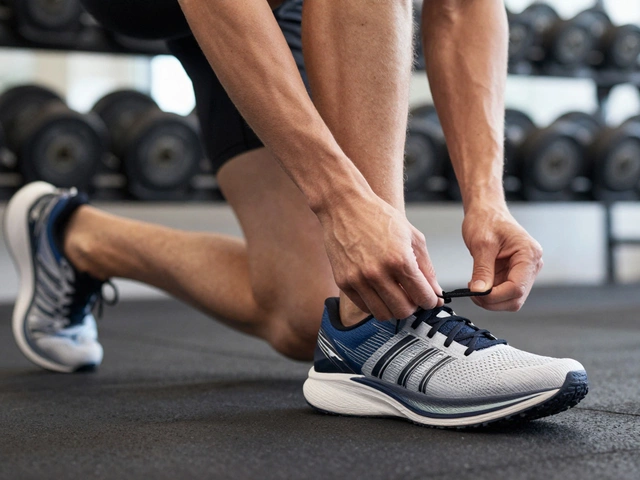
Running is similar in simplicity but differs in specificity. Running shoes are engineered for gait analysis. Some runners overpronate (feet roll inward), while others supinate (roll outward). Getting the right shoe based on your foot strike prevents knee and hip pain. Hydration belts or armbands allow runners to carry water without stopping.
Golf and Precision Sports
Golf is a sport of precision where equipment directly influences distance and accuracy. A golfer carries a set of clubs, each designed for a specific shot type.
- Drivers: Long shafts for maximum distance off the tee.
- Irons: Numbered 3 through 9 for varying distances and angles.
- Wedges: High loft for short, high-arcing shots near the green.
- Putter: Used on the green to roll the ball into the hole.
Balls also vary. Two-piece balls are durable and good for beginners, while multi-layer balls offer better spin control for advanced players. Tees hold the ball up for drives, and divot tools repair the grass after iron shots. Golf shoes have soft spikes or nubs for stability during the swing.
Fitness and Gym Equipment
If you're working out indoors, the equipment shifts to resistance and cardio machines. Free weights like dumbbells and barbells allow for natural movement patterns. Kettlebells combine strength and cardio elements.
Machines like treadmills, ellipticals, and stationary bikes provide low-impact cardio options. Resistance bands are versatile, portable tools for rehabilitation and strength training. Yoga mats provide cushioning and grip for floor exercises. Foam rollers help with muscle recovery by releasing tension in tight fascia.
Choosing the right gym equipment depends on your goals. If you want to build muscle, free weights are superior. If you want to lose weight with joint-friendly exercise, ellipticals or rowing machines are excellent choices. Always check the condition of shared gym equipment before use-look for frayed cables or loose bolts.
Safety First: Universal Protective Gear
Regardless of the sport, certain safety items are universal. Helmets protect the head in cycling, skateboarding, hockey, and baseball. Knee and elbow pads are crucial for skating and rollerblading. Mouthguards are standard in contact sports. Eye protection is vital in racquetball, squash, and shooting sports.
Investing in certified safety gear is worth every penny. Look for standards like CPSC (Consumer Product Safety Commission) or ASTM (American Society for Testing and Materials) certifications. Cheap knock-offs may look the same but fail to absorb impact correctly.
Maintenance and Care
Equipment lasts longer when cared for. Clean your yoga mat after each use to prevent bacteria buildup. Dry your running shoes away from direct heat to preserve the glue and foam. String your tennis racket regularly-dead strings lose power and feel. Sharpen ice skates before every season. Lubricate bicycle chains to prevent rust and ensure smooth pedaling.
Storage matters too. Keep leather goods like boxing gloves or golf clubs in cool, dry places. Moisture breeds mold and mildew, which can ruin expensive gear. Use ventilation bags instead of sealed plastic containers.
What is the most important piece of sports equipment?
Safety equipment is always the most important. This includes helmets for head-contact sports, mouthguards for combat sports, and proper footwear for impact activities. Without these, you risk serious injury regardless of skill level.
Do I need professional-grade equipment as a beginner?
Not necessarily. Start with mid-range equipment that offers good durability and comfort. Professional gear is expensive and may be overkill until you master the basics. However, never compromise on safety gear like helmets or shoes.
How often should I replace my sports equipment?
It depends on usage. Running shoes last 300-500 miles. Tennis strings need restringing every 3-6 months depending on play frequency. Helmets should be replaced after any significant impact, even if no damage is visible. Check manufacturer guidelines for specific timelines.
Can I use generic equipment for multiple sports?
Some overlap exists, like using general athletic shoes for casual games. However, specialized equipment performs better. Court shoes differ from running shoes, and golf clubs are tuned for specific shots. Using generic gear may limit performance and increase injury risk.
Where should I buy sports equipment?
Reputable sporting goods stores, official brand websites, and authorized retailers ensure authenticity and warranty coverage. Avoid counterfeit products from unknown online sellers, as they may lack safety certifications and quality control.