Sports Equipment Selection Guide
Imagine stepping onto a court or field without the right tools. You might feel exposed, unsafe, or simply unable to perform at your level. That is exactly why understanding Sports Equipment matters. It is not just about owning shiny objects. It is about having the functional bridge between your physical effort and the sport itself. Many people confuse gear with props, but true equipment serves a critical purpose: protection, performance enhancement, and game regulation.
We often see gear scattered around gyms, parks, and stadiums. Yet, when someone asks for examples of sports equipment, they usually mean more than just a ball. They want to know the full ecosystem of items that enable movement and competition. Let us break down these tools by their function and the sports they define. From the protective padding in contact sports to the precision instruments in racquet games, every piece has a story.
The Foundation of Team Sports Gear
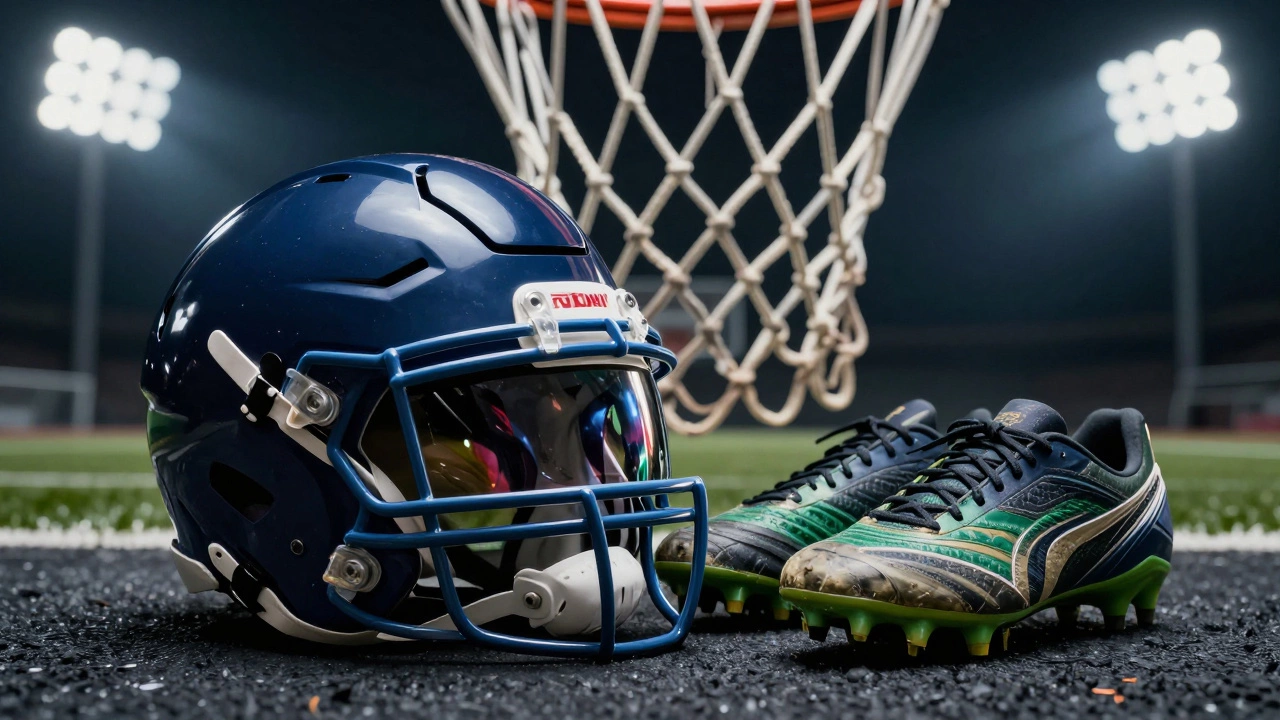
Team sports dominate the conversation about equipment because they require high levels of coordination and safety standards. Take American Football, for instance. The core items include the football itself, which is designed with aerodynamics to travel through the air smoothly. However, the athlete wears far more. The A helmet is a hard shell device designed to protect the head from impact injuriesHelmet is non-negotiable. Without it, concussions would be frequent occurrences rather than rare events. Additionally, shoulder pads distribute force across the upper body, allowing players to block tackles while keeping bones intact.
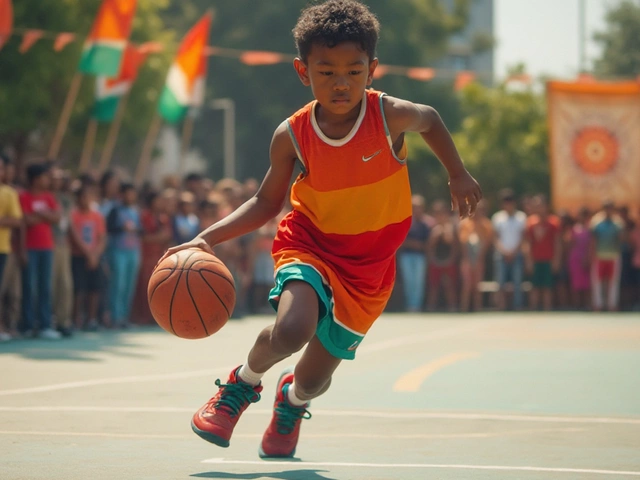
In other leagues, the focus shifts to footwear. Soccer players rely on cleats to maintain traction on grass. These shoes have studs on the soleplate that dig into the turf. If you try to run in flat-soled sneakers on a wet pitch, you will slide uncontrollably. The equipment dictates how you move. Similarly, in basketball, the Basketball Hoop and the Basketball are the primary fixtures. While there isn't much wearable gear compared to football, the shoes are specialized. They offer ankle support to prevent rolls and cushioning for the repetitive jumping involved in the game.
Racquet and Bat-Based Tools
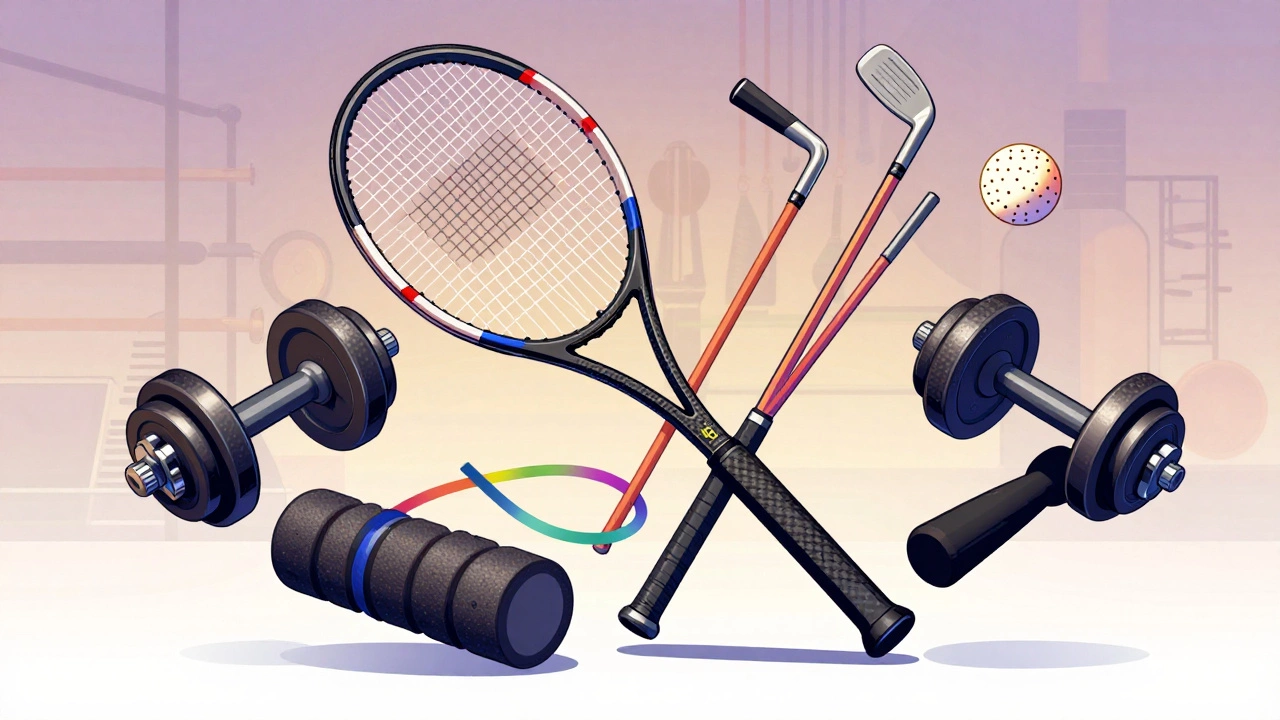
When we move to precision sports, the equipment becomes an extension of the human hand. In tennis, the Tennis Racket is a complex tool made of carbon fiber or aluminum frames. Historically, wood was used, but modern materials allow for greater power with less weight. The strings on the racket are tuned to specific tension levels. If the tension is too loose, control suffers. Too tight, and the strings snap under stress. The tennis ball also falls into this category. It is pressurized rubber covered in felt, designed to bounce predictably on concrete or clay courts.
Golf presents another layer of complexity. A golfer does not carry just one stick. They carry a bag filled with irons, woods, and putters. Each clubhead is shaped differently. Drivers are large, meant to hit the ball off the tee for maximum distance. Putters have flat faces designed for rolling the ball on green grass. The balls themselves are engineered with dimples. These small divots reduce air resistance, allowing the ball to fly further than a smooth sphere would. This shows how equipment engineering directly impacts the outcome of the sport.
Strength and Conditioning Essentials
Fitness training relies heavily on external loads to build muscle and endurance. When you think of a gym, the first image is likely a Dumbbell. These handheld weights come in various sizes, measured in pounds or kilograms. They allow for unilateral training, meaning you work one arm at a time to fix strength imbalances. Kettlebells are similar but feature a handle offset from the center of mass. This design changes the balance mechanics, forcing stabilizer muscles to engage more actively during swings.
Beyond free weights, machines play a massive role. Resistance machines isolate specific muscle groups like legs or back. They guide the movement path so beginners do not injure themselves. For cardio, the stationary bicycle is standard. It mimics outdoor riding without wind resistance. Treadmills offer running on a moving belt, protecting joints from pavement impact while tracking speed and distance electronically. These tools quantify progress, which is a vital part of modern fitness culture.
| Sport Type | Key Equipment Example | Primary Function |
|---|---|---|
| Ball Sports | Soccer Ball | Kickable projectile |
| Racquet Sports | Tennis Racket | Strike implement |
| Contact Sports | Hockey Stick | Puck control |
| Combat Sports | Boxing Gloves | Hand protection |
| Cycling | Bicycle Helmet | Cranial safety |
Protective Gear and Safety Standards
Safety equipment often gets overlooked until an injury happens. In cycling, the Bicycle Helmet is mandatory in many jurisdictions for good reason. The polycarbonate shell absorbs impact, while the foam lining crushes to dissipate energy. Skateboarders wear wrist guards and knee pads. These items prevent scrapes and fractures when the rider falls off the board. Even in yoga, equipment provides stability. The Yoga Mat offers grip on slippery floors and cushioning for the spine during inversions.
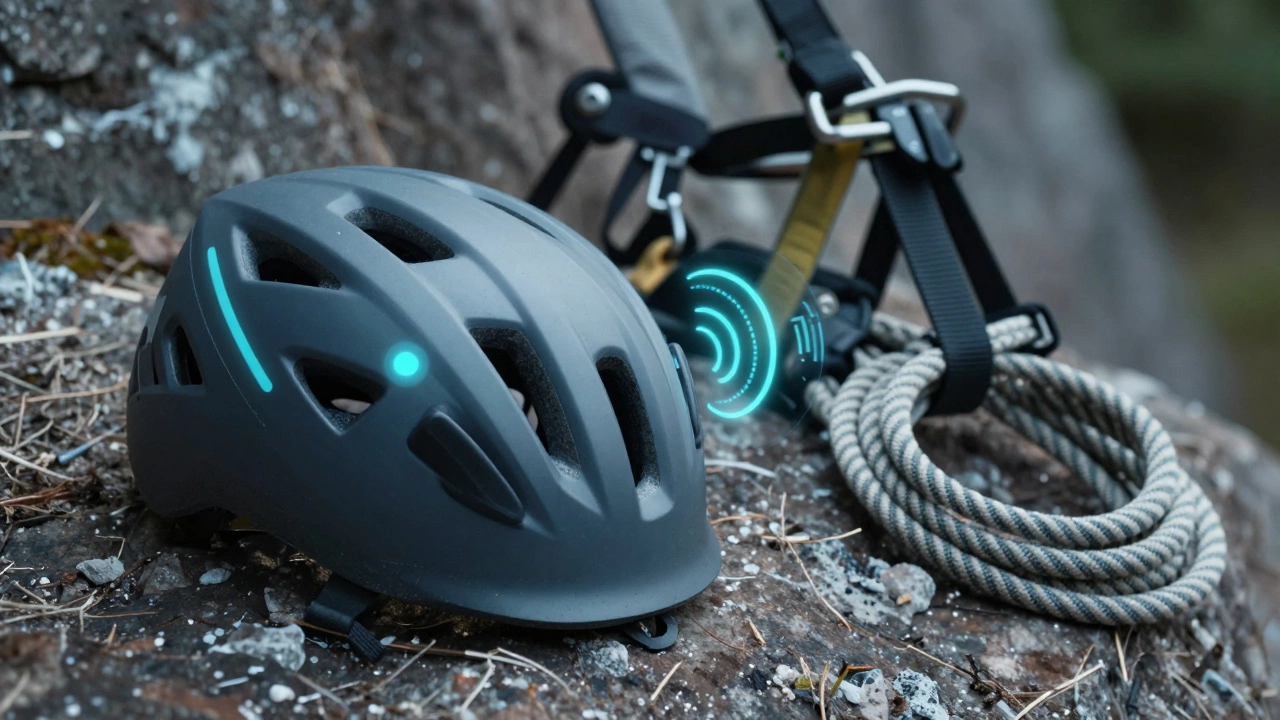
Water sports require specialized protection too. Swimmers wear goggles to shield eyes from chlorine and improve underwater visibility. Surfers ride boards made of foam or fiberglass. They provide buoyancy but also require wax for grip. Climbers depend on ropes and harnesses. These are life-support systems. A failure in equipment here can be fatal. Therefore, certification and regular inspection of harnesses are mandatory before hitting the rock face. The gear is not optional; it is survival technology.
Winter Sports Technology
Cold weather activities demand equipment that manages friction and thermal insulation. Skiers glide on skis attached to boots via bindings. The skis are long planks with metal edges. These edges bite into snow to allow turning. The boots are rigid plastic shells connected to a cable mechanism that transfers leg movement to the ski tip. Snowboarders use a single wide plank, requiring different balance mechanics. Both activities rely heavily on clothing layers. Base layers wick sweat away, preventing hypothermia. Outer shells repel water and wind. Without this layering system, the cold environment stops the athlete quickly.
Home and Recreational Equipment
Not everyone plays professionally. Many enthusiasts practice at home. Jump ropes are cheap, portable tools for cardiovascular health. Skipping rope increases heart rate rapidly while improving coordination. Resistance bands are elastic loops providing variable tension. They are excellent for rehabilitation or light strength work because they do not require heavy lifting. Foam rollers help with recovery. Rolling over sore muscles breaks up fascial adhesions. This self-massage keeps athletes healthy longer.
Even recreational activities have gear. Camping involves tents and sleeping bags. While not competitive, these tools enable interaction with nature safely. Hiking boots protect feet on rough terrain. The choice of equipment depends entirely on where you intend to go. A muddy trail requires waterproof boots. A sandy beach path needs breathable sandals. Understanding the environment helps you pick the right tool.
Maintenance and Longevity
Owning the gear is only half the battle. Keeping it functional extends its lifespan. Leather batting gloves need conditioning to stay soft. Metal parts on bicycles must be oiled to prevent rust. Electronic devices like GPS watches need charging and firmware updates. Cleaning equipment after use prevents degradation. Sweat contains salt, which corrodes straps and metal buckles over time. Washing jerseys removes bacteria buildup. Caring for your investment ensures safety standards remain high.
Selecting the Right Fit
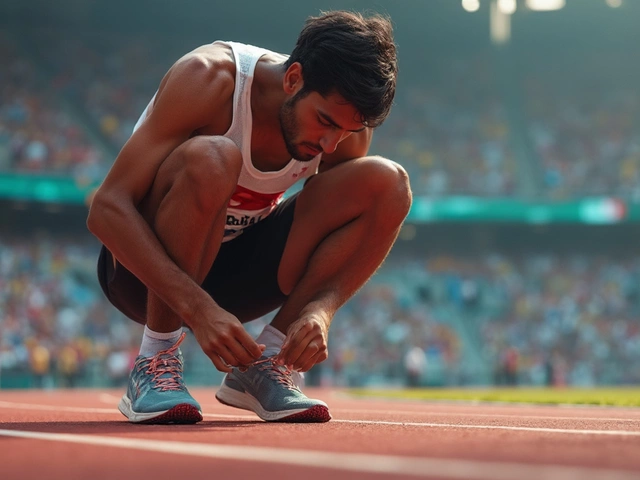
Sizing matters significantly. A helmet that is too loose slides off during a crash. Shoes that are too narrow cause blisters. Measuring feet in the afternoon works best because feet swell throughout the day. Trying gear on before purchase saves money later. Some brands differ in sizing charts, so always refer to the manufacturer's specific measurements. Proper fit enhances comfort and reduces distraction during activity. You cannot focus on your swing if your glove rubs your palm raw.
Emerging Technologies in Gear
As of 2026, equipment integrates more sensors. Smart watches track heart rate zones. Cycling computers measure power output in watts. These data points help users train more efficiently. Fabric technology has improved moisture management. Clothing now dries faster and resists odor better. Sustainability is also a factor. More manufacturers use recycled materials for fabrics and plastics. Buying eco-friendly gear reduces environmental waste without sacrificing performance.