Boxing Match Duration Calculator
Select a preset or customize your own bout to see exactly how long the fighters will be in the ring.
You sit down with your snacks, ready for the big fight night. The bell rings, the fighters touch gloves, and suddenly you’re wondering: how long is this actually going to take? It’s not just about who lands the hardest punch; it’s about endurance, strategy, and yes, the clock. If you’ve ever watched a broadcast that stretched from an early evening start into the late-night hours, you know the TV schedule rarely matches the actual fighting time. So, how long is a boxing match? The short answer depends entirely on whether you’re watching pros or amateurs, but the real answer involves rounds, breaks, and some serious stamina.
The Professional Standard: 12 Rounds of Pain
For most high-profile events you see on HBO or DAZN, we are talking about professional championship bouts. These fights are scheduled for twelve rounds. Each round lasts three minutes. Between each round, there is a one-minute rest period where cornermen work frantically to cool down their fighter, offer water, and give tactical advice. If a fight goes the distance-meaning no knockout occurs-it lasts exactly 47 minutes of active action plus 11 minutes of breaks. That totals 58 minutes of pure ring time.
But wait, why 12 rounds? Historically, boxing was much longer. In the early 20th century, fights could go up to 15 rounds. This changed in 1983 after the tragic death of Duk Koo Kim following a brutal 15-round battle against Ray Mancini. The International Boxing Federation (IBF) and other major bodies shortened championship bouts to 12 rounds to protect fighter health. Today, 12 rounds is the gold standard for world title fights. Non-title professional bouts might be shorter, often lasting four, six, or eight rounds depending on the experience level of the competitors.
Amateur Boxing: Speed Over Stamina
If you’re watching the Olympics or local club tournaments, the math changes completely. Amateur boxing prioritizes speed, technique, and scoring points rather than knocking someone out. For men’s elite competitions under AIBA (International Boxing Association) rules, bouts typically last three rounds. Each round is three minutes long, with one minute of rest between them. That means the total fighting time is only nine minutes, plus two minutes of breaks, totaling 11 minutes of ring presence.
Women’s amateur boxing follows similar structures, though historically it used different round lengths. Currently, women’s elite bouts also consist of three three-minute rounds. This shorter format makes amateur fights feel more like sprints than marathons. Fighters can’t afford to pace themselves as slowly as professionals do because every second counts toward the judges’ scorecards. If you’re training for amateur competition, your conditioning needs to focus on explosive output over short bursts rather than sustained energy over an hour.
| Category | Number of Rounds | Round Duration | Rest Period | Total Ring Time |
|---|---|---|---|---|
| Professional Title Fight | 12 | 3 minutes | 1 minute | 58 minutes |
| Pro Non-Title Bout | 4-10 | 3 minutes | 1 minute | Varies (e.g., 6 rounds = 29 mins) |
| Men's Elite Amateur | 3 | 3 minutes | 1 minute | 11 minutes |
| Women's Elite Amateur | 3 | 3 minutes | 1 minute | 11 minutes |
Why Does the TV Broadcast Last Hours?
Here is the frustration many new fans face: the main event starts at 10 PM and ends at 10:58 PM, but the show started at 6 PM. Where did the other four hours go? The answer is the undercard. Boxing events are structured like concerts. You have the "main event," which is the biggest name and highest stakes, followed by co-main events, regional titles, and developmental prospects.
A typical card features 8 to 12 fights. Early fights might be four-round bouts for rookies, while mid-card fights are six or eight rounds. By the time you reach the main event, hours have passed. Additionally, broadcasts include pre-fight interviews, weigh-in replays, analyst panels, and halftime-style entertainment segments. If you want to skip the fluff, check the official schedule online before tuning in. Most promoters release a timeline estimating when the main event will begin. Usually, the main event starts 30 to 45 minutes after the final preliminary fight concludes.
Knockouts Change Everything
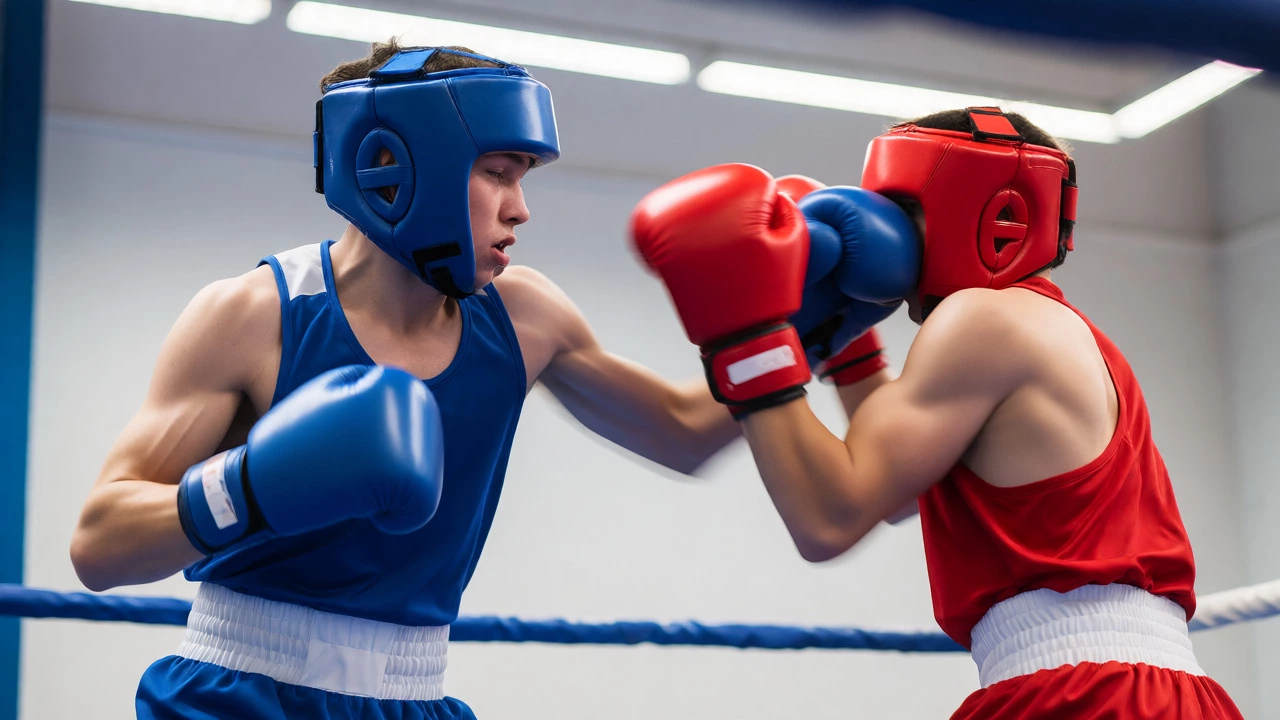
All these calculations assume the fight goes the distance. But boxing is unpredictable. A knockout can happen in ten seconds or in the twelfth round. When a fighter is knocked down, the referee begins a ten-count. If the fighter doesn’t rise before the count reaches ten, the fight is over immediately. This stops the clock effectively, ending the match far earlier than scheduled.
There is also the technical knockout (TKO). This happens when the referee decides a fighter can no longer defend themselves intelligently, even if they aren’t unconscious. Or, a corner might throw in the towel, signaling surrender. In these cases, the match duration is determined by the moment the stoppage occurs. A first-round KO means you only saw three minutes of action. A tenth-round TKO means you saw nearly fifty minutes. This variability is part of the sport’s appeal-you never know if you’re getting a quick thriller or a grueling war of attrition.
Rules for Different Weight Classes and Organizations
Does weight class affect duration? Not directly. Heavyweights don’t get extra time, and flyweights don’t get less. However, heavyweight fights tend to end in knockouts more frequently due to power, potentially shortening the average duration compared to lighter weight classes where decisions are more common. Judges score based on clean punches, effective aggression, defense, and ring generalship. Since scoring is subjective, many close fights go to decision, ensuring the full 12 rounds are completed.
Major organizations like the WBC, WBA, IBF, and WBO all adhere to the 12-round standard for world titles. There are minor variations. For instance, some regional championships might be capped at 10 rounds. Always check the specific bout agreement. In rare cases, such as rematch clauses or special exhibition matches, rules can be tweaked. An exhibition match, like the recent McGregor vs. Mayweather style events, might have modified round times or lengths agreed upon privately, but standard competitive boxing remains rigidly consistent.
What About Women’s Professional Boxing?
For years, women’s professional boxing had inconsistent standards. Some states allowed 10 rounds, others limited it to 8 or 6. Recently, however, the trend has shifted toward equality. Major commissions now recognize 10-round bouts for world titles in women’s divisions, matching the structure for lower-tier male pro fights. Top-tier women’s title fights are increasingly moving toward the 12-round format, mirroring men’s championships. This shift acknowledges that female athletes possess the same capacity for endurance and strategic pacing. If you’re watching a top-tier women’s title fight today, expect up to 12 rounds of intense action.
Training Implications: How Long Should You Train?
If you’re stepping into the ring yourself, understanding match duration dictates your training. Training for a 12-round pro fight requires a different physiological approach than preparing for a 3-round amateur bout. Pro boxers spend months building aerobic base capacity to sustain output for 36 minutes of high-intensity interval activity. They practice "round simulation" drills, working hard for three minutes and resting for one, repeating this cycle twelve times.
Amateur boxers focus on anaerobic threshold development. Their training emphasizes rapid recovery between short bursts. If you’re a hobbyist sparring in a gym, typical sessions involve 3-minute rounds with 1-minute rests, usually lasting 6 to 8 rounds per session. This mimics the rhythm of actual competition. Don’t neglect the mental aspect. Staying focused for 12 rounds is mentally exhausting. Many fighters report feeling drained not just physically, but cognitively, by the final bell.
Frequently Asked Questions
How long does a professional boxing match last?
A standard professional championship match consists of 12 rounds. Each round is 3 minutes long, with 1-minute breaks in between. If the fight goes the distance, the total time in the ring is 58 minutes (36 minutes of fighting + 11 minutes of rest).
How long is an amateur boxing match?
Elite amateur boxing matches typically last 3 rounds. Each round is 3 minutes long, with 1-minute rest periods. The total ring time is approximately 11 minutes (9 minutes of fighting + 2 minutes of rest).
Why do boxing rounds have 1-minute breaks?
The 1-minute break allows fighters to recover heart rates, receive medical attention, hydrate, and listen to corner advice. It balances safety with maintaining fight intensity.
Can a boxing match end before the scheduled rounds?
Yes. A match can end early via Knockout (KO), Technical Knockout (TKO), disqualification, or injury stoppage. In these cases, the duration is determined by the round in which the stoppage occurred.
Do women’s boxing matches have different round lengths?
Currently, elite women’s amateur and professional title fights largely follow the same 3-minute round structure as men. While historical inconsistencies existed, modern standards aim for parity, with top women’s pro fights often going 10 to 12 rounds.
Why does the TV broadcast last so long if the fight is under an hour?
TV broadcasts include multiple preliminary fights (the undercard), pre-show analysis, interviews, and promotional content. The main event is just the final segment of a multi-hour programming block.