
Workout Order Optimizer
What's Your Primary Goal?
Ever walked into the gym, started with cardio, then felt wiped out before even touching the weights? Or maybe you crushed your bench press but couldn’t finish your run because your legs were dead? The order you do your exercises isn’t just about preference-it directly affects your strength, endurance, fat loss, and recovery. So what order should you actually exercise in?
Why Exercise Order Matters More Than You Think
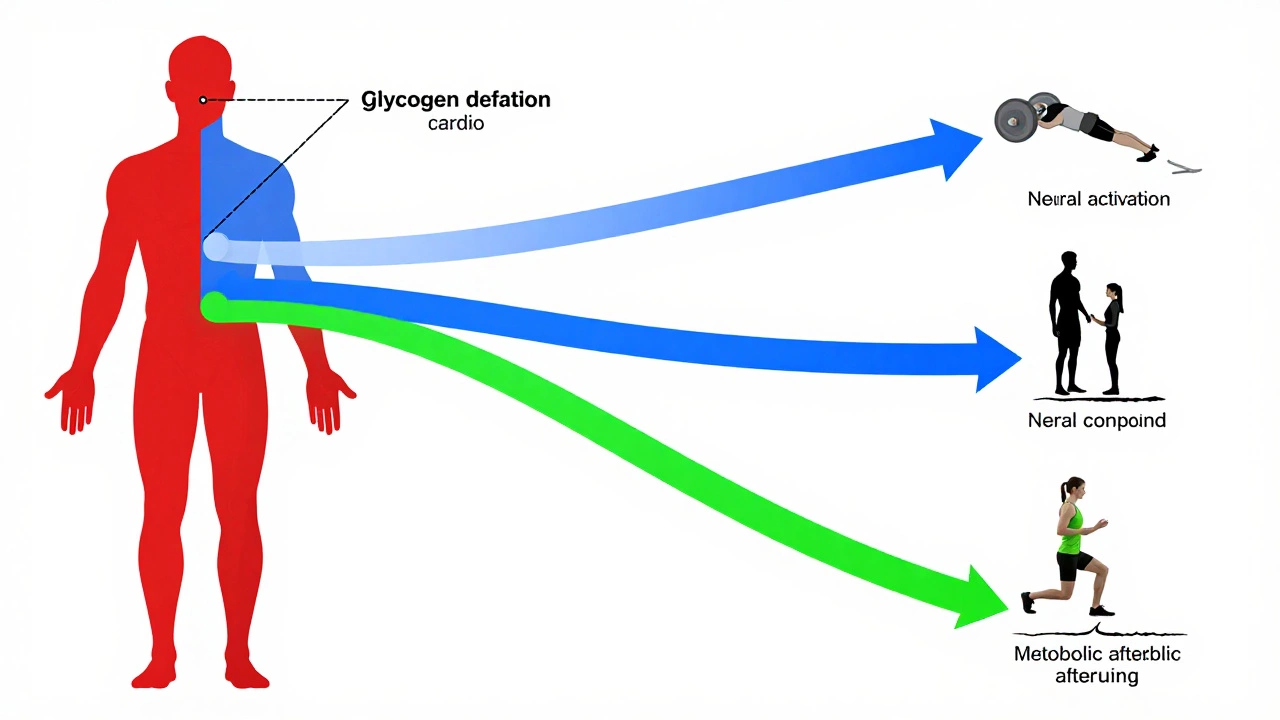
Your body doesn’t treat a workout like a playlist you can shuffle. Each type of exercise uses different energy systems and muscle groups. If you do cardio first, you drain your glycogen stores-the fuel your muscles need for heavy lifting. If you lift after a long run, your form breaks down, and you’re more likely to get hurt. The right sequence lets you get the most out of every minute you spend in the gym.
Studies from the Journal of Strength and Conditioning Research show that lifting weights before cardio leads to 18% greater muscle growth over 12 weeks compared to doing cardio first. Why? Because your nervous system is fresh, your muscles are fully fueled, and your technique stays sharp. That’s not a minor difference-it’s the difference between making progress and spinning your wheels.
Rule #1: Do What Matters Most First
Your primary goal determines your exercise order. There’s no one-size-fits-all answer. Here’s how to pick:
- If your goal is building muscle: Lift weights before anything else. Your body can only lift heavy when it’s rested. Save cardio for after, or better yet, on separate days.
- If your goal is endurance: Run, cycle, or swim first. Your muscles need to adapt to sustained effort, and that requires fresh legs. Save light strength work for later-just enough to maintain muscle, not exhaust it.
- If your goal is fat loss: Do strength training first, then moderate-intensity cardio. Lifting boosts your metabolism for hours after you finish. Adding cardio after keeps your heart rate up without killing your lifting performance.
Most people think they need to do cardio to burn fat. But if you’re too tired to lift, you’re not burning fat-you’re losing muscle. And losing muscle slows your metabolism. That’s the opposite of what you want.
Rule #2: Compound Movements Before Isolation
Not all strength exercises are created equal. A squat uses your quads, glutes, hamstrings, core, and lower back. A leg extension only uses your quads. Which one should you do first? The squat.
Compound lifts-exercises that move multiple joints and work several muscle groups-are your foundation. They require the most energy, coordination, and focus. If you do isolation moves like bicep curls or leg extensions first, you’ll fatigue smaller muscles that are supposed to help stabilize your big lifts. That’s like trying to push a car with a flat tire.
Example of a smart strength sequence:
- Barbell back squat
- Bench press
- Deadlift
- Overhead press
- Lat pulldown
- Dumbbell curls
- Triceps rope pushdown
You’ll lift heavier, get stronger, and reduce injury risk by doing the hardest, most demanding movements when you’re at your peak.
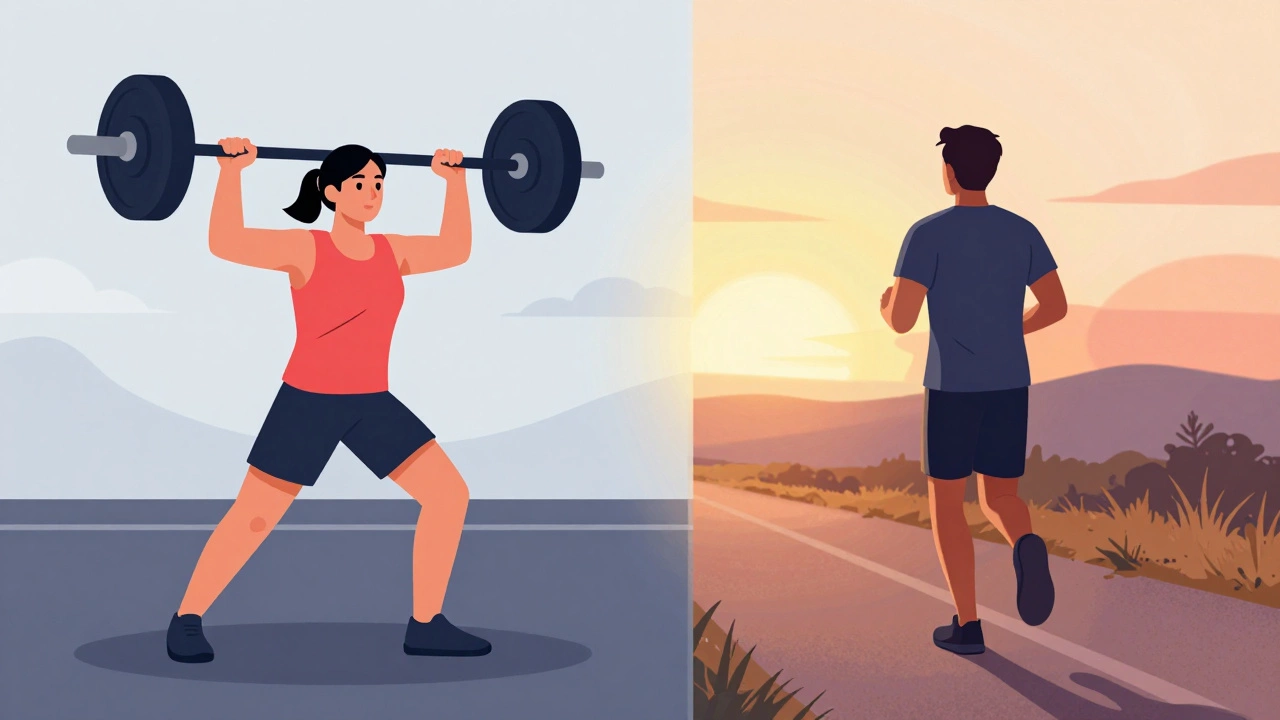
Rule #3: Don’t Mix Cardio and Strength on the Same Day (Unless You Have To)
If you’re serious about results, splitting cardio and strength into separate days is the gold standard. It’s not always possible-especially if you’re short on time-but it’s the most effective approach.
Here’s what happens when you combine them:
- Cardio before strength → weaker lifts, less muscle growth
- Strength before cardio → better lifts, but slower recovery for endurance
- Same-day combo → your body can’t fully adapt to either stimulus
Research from the University of Birmingham found that athletes who trained strength and cardio on separate days gained 30% more strength and 22% more endurance over 16 weeks than those who did both in one session.
Realistic for most people? Yes. But if you’re stuck doing both on the same day, follow this rule: Do strength first, then 20-30 minutes of moderate cardio. No HIIT. No long runs. Just enough to get your heart rate up without wrecking your recovery.
Rule #4: Warm-Up Right-Then Train Hard
Before you even think about exercise order, you need a proper warm-up. A good warm-up isn’t just walking on the treadmill. It’s activating the muscles you’re about to use.
For a leg day, try:
- 5 minutes of light cycling or rowing
- Bodyweight squats: 2 sets of 15
- Glute bridges: 2 sets of 15
- Band walks: 2 sets of 10 steps each way
This isn’t fluff. It increases blood flow, primes your nervous system, and reduces injury risk. Skipping it means you’re starting cold-and that’s asking for trouble.
What About HIIT? Should I Do It First or Last?
HIIT is intense. It taxes your nervous system, burns through glycogen fast, and leaves you drained. If you do HIIT before lifting, you’ll struggle to hit your rep targets. If you do it after lifting, you might not have enough energy left to push hard.
Here’s what works:
- If you’re doing strength + HIIT on the same day: Lift first, then 15-20 minutes of HIIT. No more. You’re not training for a sprint race-you’re building muscle.
- If you’re doing HIIT on its own: Do it on a non-lifting day. Let your body recover.
- Never do HIIT on leg day. Your quads will be too sore to recover properly.
One person I trained in Mumbai did HIIT after leg day every Tuesday. After three months, she made zero strength gains. We switched her to HIIT on Fridays, and in six weeks, she added 20 pounds to her squat. Simple change. Big result.
Sample Weekly Routine Based on Goals
Here’s how to structure your week if you train 4-5 days:
For Muscle Gain (Push-Pull-Legs Split)
- Monday: Push (chest, shoulders, triceps) + 10 min light cardio
- Tuesday: Pull (back, biceps) + 10 min light cardio
- Wednesday: Rest
- Thursday: Legs (squats, deadlifts, lunges)
- Friday: Upper body accessory work + 15 min steady-state cardio
- Saturday: Rest
- Sunday: Optional walk or mobility session
For Fat Loss (Strength + Moderate Cardio)
- Monday: Full-body strength
- Tuesday: 30 min steady-state cardio (brisk walk, elliptical)
- Wednesday: Rest
- Thursday: Full-body strength
- Friday: 30 min cardio
- Saturday: Light activity (yoga, hike, swim)
- Sunday: Rest
For Endurance (Running, Cycling, Triathlon)
- Monday: Long run
- Tuesday: Light strength (core, glutes, posture)
- Wednesday: Interval run
- Thursday: Light strength
- Friday: Moderate run
- Saturday: Rest or swim
- Sunday: Easy long ride or hike
Common Mistakes People Make
Even smart people mess this up. Here are the top 3 mistakes I see:
- Doing cardio before weights because they think it "burns fat first"-Nope. Fat burning happens over hours, not minutes. Lifting first burns more total calories and keeps your metabolism elevated longer.
- Starting with isolation exercises-Bicep curls before pull-ups? You’re setting yourself up for failure. Your arms will be tired before you even start working your back.
- Doing HIIT every day-Your body needs recovery. Overtraining kills progress. Two HIIT sessions a week max.
Final Tip: Listen to Your Body
Rules are guidelines, not laws. If you’re recovering from an injury, feeling burned out, or just not energized, adjust. Maybe today, you do a short cardio session first just to get moving. That’s fine. But don’t make it a habit.
Track your lifts. Track how you feel. If your squat weight drops week after week, your exercise order is probably wrong. If you’re consistently sore, tired, and not getting stronger, you’re overdoing it.
The best routine isn’t the one that looks the most intense. It’s the one you can stick to, recover from, and keep improving on.
Should I do cardio or weights first if I want to lose weight?
Do weights first. Lifting builds muscle, and muscle burns more calories at rest. Doing cardio after keeps your heart rate up without draining your strength. If you do cardio first, you’ll lift lighter, lose muscle, and slow your metabolism-making fat loss harder in the long run.
Is it okay to do cardio and strength on the same day?
Yes, but only if you’re short on time. Always do strength first, then 20-30 minutes of moderate cardio. Avoid HIIT on the same day as heavy lifting. For best results, split them into separate days whenever possible.
What if I only have 30 minutes to work out?
Do a full-body strength circuit: squats, push-ups, rows, and planks. Finish with 5-10 minutes of brisk walking or cycling. This gives you muscle-building benefits and keeps your heart rate up without overdoing it. Don’t try to cram in too much-quality beats quantity.
Does exercise order matter for beginners?
Absolutely. Beginners often think they need to do everything at once. But doing the wrong order leads to fatigue, poor form, and injury. Start with strength first, then add light cardio. Learn the pattern before you complicate it.
Can I change my exercise order based on how I feel?
Yes. Some days you’ll feel strong-go heavy. Other days you’ll feel tired-do a lighter session. Listen to your body. The goal isn’t to follow a rigid plan. It’s to build a habit that works for your life, energy, and progress.