
Fat Loss Calculator
Science-Backed Fat Loss Calculator
Calculate your personalized fat loss plan based on proven methods from the article. This tool uses evidence-based formulas for sustainable fat loss.
Your Details
Your Goals
Recommended: 0.5-1.0 kg/week for sustainable fat loss
Want to lose fat fast? You’re not alone. Millions of people start every year with the same goal: shed pounds, get lean, and feel better. But here’s the truth most fitness influencers won’t tell you-there’s no magic pill, no 7-day miracle, and no shortcut that lasts. What actually works? A smart mix of movement, eating habits, and recovery. And yes, you can see real changes in under four weeks if you do it right.
Stop Doing What Doesn’t Work
Let’s clear the air first. If you’re doing endless cardio on the treadmill for an hour every day, or skipping meals to ‘cut calories,’ you’re fighting yourself. Studies from the Journal of Obesity show that extreme calorie restriction and excessive cardio don’t burn fat sustainably-they slow your metabolism and trigger muscle loss. Your body starts holding onto fat like a survival mechanism. That’s why yo-yo dieting happens. You lose weight fast… then gain it all back, plus a few extra pounds.
Instead of starving or over-exercising, focus on fat loss, not just weight loss. Weight can drop from water loss, muscle waste, or even bowel movements. Fat loss means your body is breaking down stored triglycerides for energy. That’s the real goal.
Build Muscle to Burn Fat
You’ve heard it before: muscle burns more calories at rest. But how much? One pound of muscle burns about 6-7 calories per day. Sounds small? Multiply that by 5 pounds of muscle gained-you’re burning 30-35 extra calories daily, just by existing. That’s like eating one banana without gaining weight.
The real power comes from compound lifts. These are moves that use multiple muscle groups at once. They trigger a bigger hormonal response, increase your metabolic rate for hours after the workout, and preserve lean mass while you’re in a calorie deficit.
- Squats - work quads, glutes, hamstrings, core
- Deadlifts - hit back, glutes, hamstrings, grip, core
- Bench Press - chest, shoulders, triceps
- Overhead Press - shoulders, upper back, core stability
- Pull-Ups - lats, biceps, forearms, core
Do these 3 times a week. Start with bodyweight or light weights. Focus on form. Add 5-10% more weight every 1-2 weeks. You don’t need to lift heavy to burn fat-just consistent, progressive effort.
High-Intensity Interval Training (HIIT) Is Your Secret Weapon
Forget steady-state cardio. If you want to torch fat fast, HIIT delivers more bang for your time. A 2024 meta-analysis in the British Journal of Sports Medicine found that HIIT burns 25-30% more fat than moderate cardio over the same time period-even when total calories burned during the workout are similar.
Why? Because HIIT creates an ‘afterburn’ effect. Your body keeps burning calories for up to 24 hours after you finish. This is called EPOC-Excess Post-exercise Oxygen Consumption.
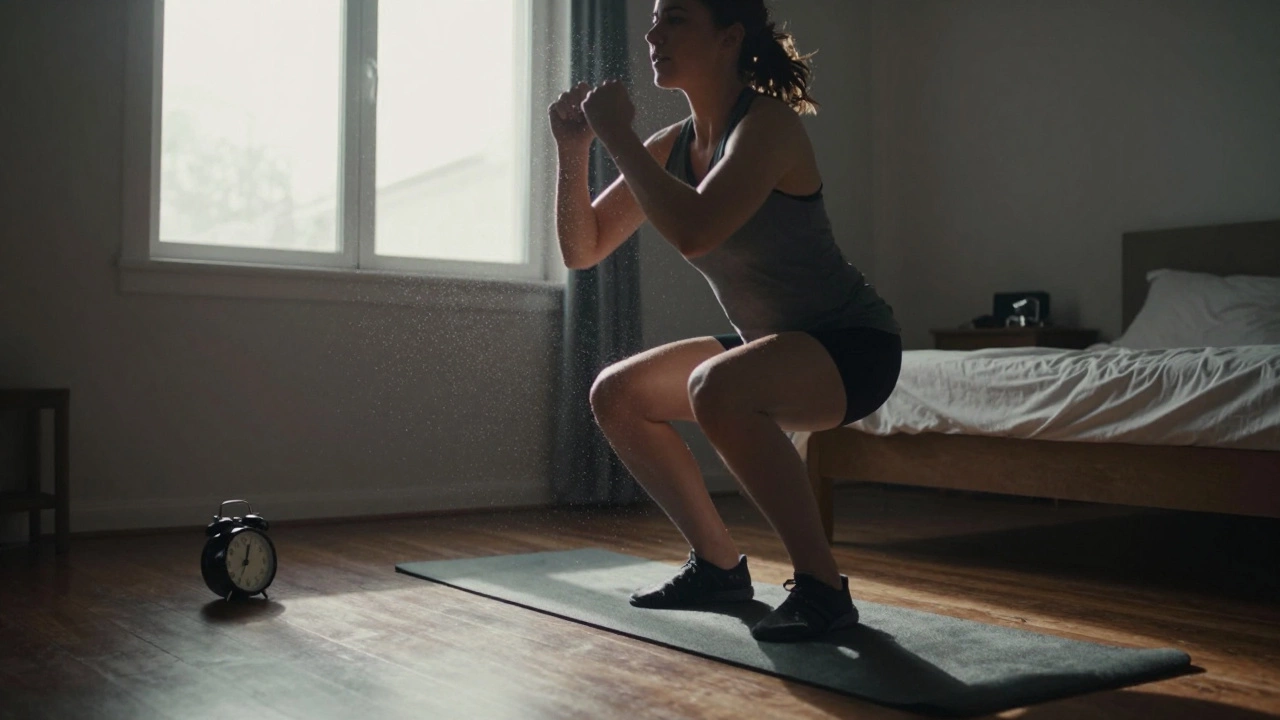
Here’s a simple, no-equipment HIIT routine you can do at home or in the gym:
- Jump squats - 45 seconds
- Rest - 15 seconds
- Push-ups - 45 seconds
- Rest - 15 seconds
- Mountain climbers - 45 seconds
- Rest - 15 seconds
- Plank shoulder taps - 45 seconds
- Rest - 15 seconds
- Repeat 3 rounds
Do this 2-3 times a week, on non-lifting days. You’ll sweat, you’ll breathe hard, and you’ll feel it in your core, legs, and chest. That’s the fat-burning signal working.
Eat Like Your Body Needs Fuel, Not Punishment
Here’s where most people fail. They think fat loss means eating less. It doesn’t. It means eating smarter.
Your body needs protein to preserve muscle. It needs fiber to control hunger. It needs healthy fats to regulate hormones. And it needs water-yes, water-to flush out metabolic waste.
Here’s what to eat daily:
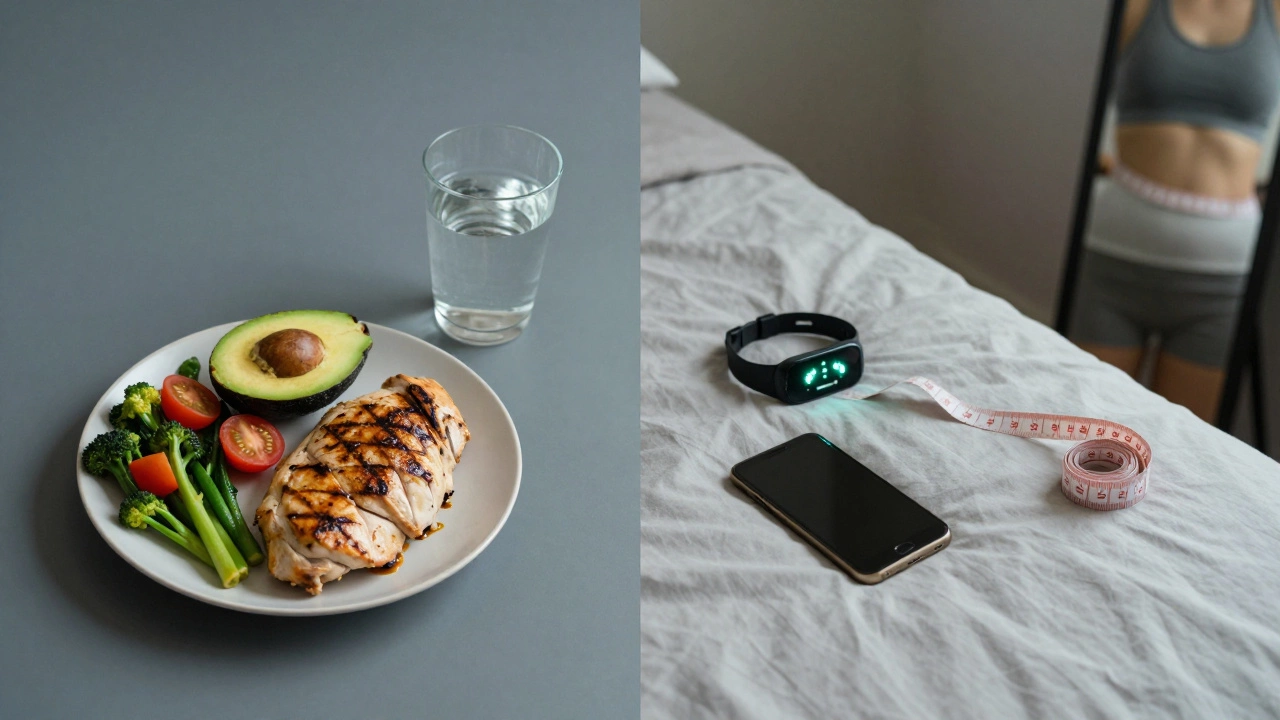
- Protein: 1.6-2.2 grams per kilogram of body weight. For a 70kg person, that’s 112-154g. Eggs, chicken, fish, lentils, tofu, Greek yogurt.
- Fiber: At least 30g. Vegetables, oats, beans, chia seeds, apples.
- Healthy fats: Avocado, nuts, olive oil, fatty fish. Don’t fear them-they keep insulin stable.
- Water: 3-4 liters daily. Dehydration tricks your brain into thinking you’re hungry.
Don’t count calories obsessively. Track your meals for 3 days. Notice patterns. Are you eating carbs before bed? Are you skipping breakfast and binging at night? Adjust those habits first. Small changes create big results.
Sleep Is Non-Negotiable
You can do all the right workouts and eat perfectly-but if you’re sleeping less than 6 hours, your fat loss will stall. Why? Cortisol, the stress hormone, spikes when you’re sleep-deprived. High cortisol = more belly fat storage.
A 2023 study from the University of Chicago showed that people who slept 5.5 hours lost 55% less fat than those who slept 8.5 hours-even when both groups ate the same calories.
Fix your sleep:
- Turn off screens 60 minutes before bed
- Keep your room cool (around 18-20°C)
- Go to bed and wake up at the same time every day-even on weekends
That’s not luxury. That’s biology.
Track Progress the Right Way
Don’t rely on the scale. It’s a liar.
Instead, use these 3 tools:
- Measurements: Take your waist, hips, and upper arm measurements every 7 days. Use a tape. Record it. Even if the scale doesn’t move, your waist might shrink by 2 cm.
- Photos: Take front, side, and back photos every 14 days. Same lighting, same clothes. You won’t notice changes day-to-day, but after 3 weeks? You’ll see them clearly.
- Energy levels: Are you stronger? More alert? Better sleep? Better mood? Those are real signs of fat loss.
Progress isn’t always visible on the scale. It’s in how you feel, how your clothes fit, and how your body responds.
What to Avoid
Here are 3 common mistakes that ruin fat loss:
- Overdoing cardio - it increases hunger and burns muscle if you’re not eating enough protein.
- Drinking sugary ‘health’ drinks - protein shakes with added sugar, fruit juices, flavored yogurts. They’re liquid sugar bombs.
- Waiting for motivation - motivation fades. Discipline doesn’t. Show up even when you don’t feel like it. That’s how results happen.
Sample Weekly Plan
Here’s what a realistic, effective week looks like:
- Monday: Strength (Squats, Deadlifts, Pull-Ups)
- Tuesday: HIIT (20 minutes)
- Wednesday: Rest or walk 45 minutes
- Thursday: Strength (Bench, Overhead Press, Rows)
- Friday: HIIT (20 minutes)
- Saturday: Active recovery - hike, swim, or bike
- Sunday: Rest
That’s 5 days of structured effort. 2 days of recovery. No overtraining. No burnout. Just steady, sustainable fat loss.
Can I lose fat in just one week?
You can lose 1-2 kg in a week, but most of that will be water weight and glycogen, not fat. True fat loss takes time. Aim for 0.5-1 kg of fat loss per week. That’s safe, sustainable, and keeps your muscle intact. Trying to lose faster often leads to muscle loss, metabolic slowdown, and rebound weight gain.
Do I need to go to the gym to lose fat?
No. You can build muscle and burn fat at home with bodyweight exercises and HIIT. But if you have access to weights, use them. Resistance training is the most effective way to preserve muscle while losing fat. If you can’t lift, do push-ups, squats, lunges, and planks. Consistency matters more than equipment.
Is intermittent fasting helpful for fat loss?
It can help some people control hunger and reduce overall calorie intake. But it’s not magic. If you eat the same amount of junk food in an 8-hour window, you won’t lose fat. Fasting works only if you’re in a calorie deficit and eating nutrient-dense food. It’s a tool, not a solution.
Why am I not losing fat even though I’m working out?
You’re likely eating too much, not recovering enough, or not lifting heavy enough. Most people overestimate how many calories they burn and underestimate how many they eat. Track your food for 3 days. Are you eating protein with every meal? Are you sleeping 7+ hours? Are you lifting progressively? If not, fix those first.
Should I do cardio or weights first?
Do weights first. Your energy and focus are highest at the start of a workout. Strength training needs more mental and physical effort. If you do cardio first, you’ll fatigue your muscles and reduce your lifting performance. That means less muscle gain, less metabolic boost, and slower fat loss.
Final Thought: It’s Not About Speed. It’s About Sustainability.
Fat loss isn’t a race. It’s a lifestyle shift. The fastest way to lose fat is the one you can stick to for months-not days. Build habits that last: lift weights, move daily, eat whole foods, sleep well. Don’t chase quick wins. Chase long-term results. That’s how you change your body-and keep it changed.