
You've signed up for the gym, you've got the gear, and you're standing in the parking lot wondering: "What do I actually do today?" Most people fail at the gym not because they lack willpower, but because they lack a map. Walking in and picking random machines is a fast track to plateauing or, worse, getting injured. A great gym schedule isn't about spending five hours a day lifting heavy things; it's about matching your time available with the specific biological needs of your muscles.
Whether you want to look like an athlete, lose a few pounds, or just stop your back from hurting during work, your schedule needs to be sustainable. If you plan a six-day-a-week pro bodybuilder routine but you have a demanding job and kids, you'll quit by week three. The secret is finding the sweet spot between the volume your body needs to change and the amount of time you actually enjoy spending in the gym.
Quick Wins for Your Week
- Consistency over Intensity: Three days you actually hit is better than five days you skip.
- Prioritize Compound Movements: Start with big lifts (squats, presses) before moving to machines.
- Rest is Work: Your muscles grow while you sleep and eat, not while you're lifting.
- Track Everything: If you don't know what you lifted last week, you can't improve this week.
Matching your routine to your life
Before you pick a plan, you have to be honest about your calendar. The "best" schedule is the one you can stick to for six months straight. If you're a total beginner, jumping into a high-volume split is a recipe for burnout. Instead, focus on movements that hit multiple muscle groups at once.
For those with very limited time, a Full Body Workout is a training method where every major muscle group is targeted in a single session. This is incredibly efficient because if you miss a day, you haven't "missed a body part" for the entire week. You're still hitting everything frequently.
If you have a bit more breathing room-say, four days a week-you can move toward a split. This allows you to put more stress on specific muscles and give them more time to recover. A common approach is the Upper/Lower Split, which divides the body into two sections, training the upper body on one day and the lower body the next. This prevents the exhaustion that comes from trying to do a heavy leg day and a heavy shoulder day in the same hour.
| Days Per Week | Recommended Split | Best For | Recovery Rate |
|---|---|---|---|
| 2-3 Days | Full Body | Beginners / Busy Pros | High |
| 4 Days | Upper/Lower | Intermediate / Strength | Moderate |
| 5-6 Days | Push/Pull/Legs (PPL) | Advanced / Muscle Growth | Low to Moderate |
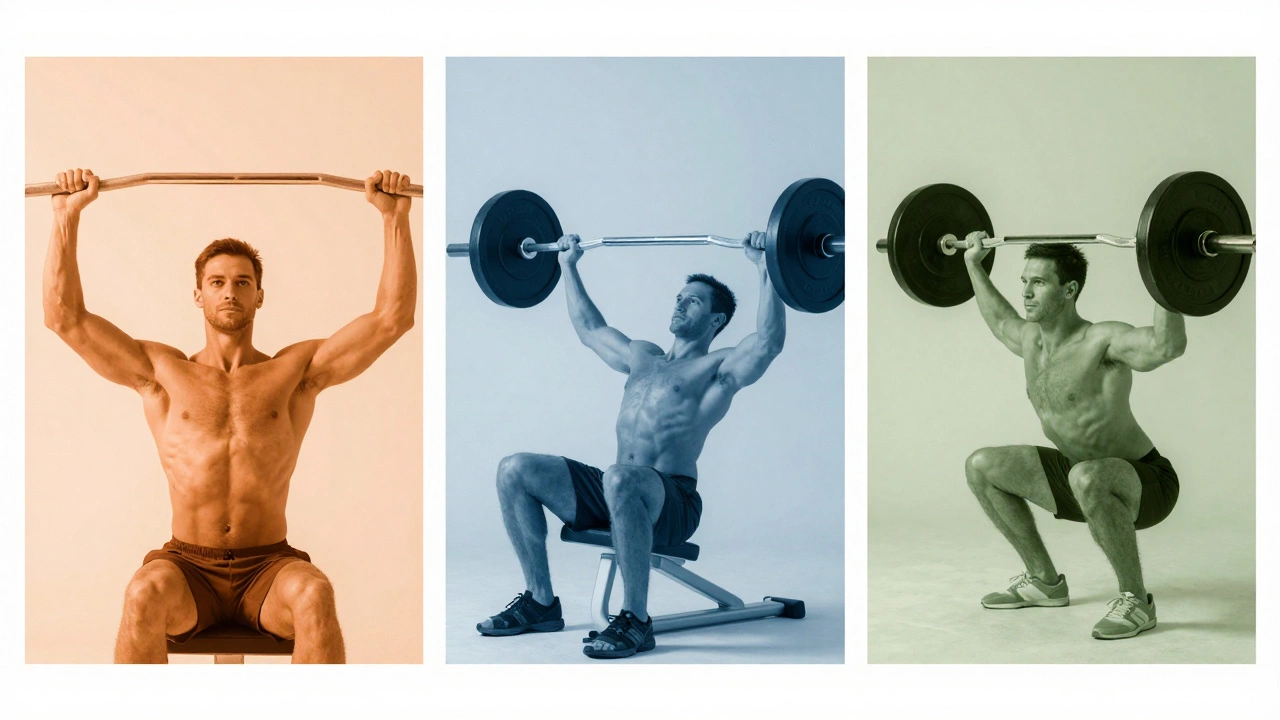
The logic behind the Push, Pull, Legs (PPL) system
If you're looking to maximize muscle growth, you've likely heard of the Push/Pull/Legs (PPL) routine. This isn't just a trend; it's based on how muscles function together. Instead of training a "chest day" and then an "arm day," you group muscles by their action.
On a Push day, you focus on the muscles that push weight away from the body. This primarily involves the Pectorals (chest), the primary muscles used for pushing motions, the deltoids (shoulders), and the triceps. For example, a bench press uses all three. By grouping them, you avoid overlapping fatigue; you aren't hitting your triceps on Monday and then trying to hit them again on Tuesday.
The Pull day targets the muscles that bring weight toward the body. This means your Latissimus Dorsi (the large muscles of the back), the rhomboids, and the biceps. Think of rows, pull-ups, and curls. Because the biceps assist the back during rows, it makes sense to finish them off in the same session.
Finally, the Legs day handles everything from the waist down. This is usually the hardest day of the week. You're targeting the Quadriceps, the large muscles on the front of the thigh, the hamstrings, and the glutes. If you skip this day, you're leaving half your body's potential for strength and calorie burning on the table.
Managing the "Hidden" parts of the schedule
A schedule is more than just the hours you spend lifting. If you ignore the other 23 hours of the day, your gym time is mostly wasted. One of the biggest mistakes people make is ignoring Progressive Overload. This is the gradual increase of stress placed upon the body during exercise. If you lift the same 20lb dumbbells for a year, your body has no reason to build new muscle. You must either add more weight, do more reps, or decrease your rest time.
Then there is the matter of Active Recovery. You can't just go from 100% intensity to sitting on a couch for two days. Light walking, mobility work, or a slow swim helps flush out metabolic waste and keeps your joints lubricated. It prevents that "stiff as a board" feeling that often leads people to quit their routine.
Don't forget about your heart. While strength training is great, adding 20-30 minutes of Cardiovascular Exercise-like a brisk walk on an incline or a rowing machine-improves your recovery capacity. Better cardio means you can recover faster between sets, allowing you to lift more total weight in less time.

Common pitfalls and how to dodge them
The "Monday Motivation" trap is real. Many people go incredibly hard on Monday, doing a massive chest day, and then find themselves so sore by Wednesday that they skip the rest of the week. This creates a cycle of inconsistency. The fix? Start at 70% of your maximum effort for the first two weeks. Let your tendons and ligaments catch up to your muscles.
Another issue is "Program Hopping." You see a fitness influencer on TikTok doing a weird sequence of movements and you switch your whole schedule. Stop. Any decent program will work if you follow it for at least 12 weeks. Changing your routine every fortnight prevents you from mastering the movements and tracking your progress accurately.
Lastly, beware of the ego. Lifting weight that is too heavy with poor form doesn't make you strong; it makes you an orthopedic surgeon's favorite patient. Focus on the "mind-muscle connection." Feel the muscle stretching and contracting rather than just moving a weight from point A to point B.
Building your personalized weekly blueprint
If you're still unsure, try this simple logic tree. Ask yourself: How many days can I *guarantee* I will go? If the answer is two, do Full Body. If it's four, do Upper/Lower. If you're obsessed and want to be there six days a week, go with PPL.
Once you have your split, organize your exercises. Always put the hardest, most energy-consuming movement first. You should never do bicep curls before you do heavy rows; you'll tire out your arms and won't be able to push your back muscles to the limit. Save the isolated, single-joint movements for the end of the workout.
Finally, build in a "flex day." Life happens. You'll have a late meeting, a flat tire, or a family emergency. Instead of feeling like you failed your schedule, have one day a week designated as a makeup day. This removes the guilt and keeps the momentum going.
How many days a week should I actually go to the gym?
It depends on your recovery and goals. For most people, 3 to 4 days is the sweet spot. This allows for enough volume to see results while ensuring your central nervous system isn't fried. If you're a beginner, start with 3 days of full-body workouts to build a foundation without burning out.
Can I do cardio and weights in the same session?
Yes, but the order matters. If your goal is strength or muscle growth, do your weights first. Cardio consumes the glycogen (energy) your muscles need for heavy lifting. If you do an intense 30-minute run first, your squats will suffer. A light 5-10 minute warm-up is fine, but save the heavy cardio for the end or a separate session.
What happens if I miss a day in my schedule?
Don't panic and don't try to "double up" the next day. If you miss a Leg day, just pick up where you left off. Trying to do Legs and Push in one session usually leads to poor quality in both. Just shift your calendar by one day and keep moving forward.
Should I change my gym schedule every few weeks?
No. You should stick to a core program for 8 to 12 weeks. This is called a training block. Changing exercises too often makes it impossible to track if you're actually getting stronger. After 12 weeks, you can tweak the exercises or change the rep ranges to keep things fresh.
Do I need a rest day between every workout?
Not necessarily, but you need rest for specific muscle groups. For example, you can train your upper body on Monday and your lower body on Tuesday because they use different muscles. However, you shouldn't train the same muscle group two days in a row, as muscle growth happens during the recovery phase, not during the lift.
tag: gym schedule workout routine strength training muscle growth fitness planning

Stop guessing at the gym. Learn how to build a sustainable gym schedule based on your goals, from Full Body and Upper/Lower splits to the PPL system.
read more
A good gym plan doesn't mean spending hours every day lifting weights you hate. Instead, it's about finding workouts that actually fit your life and help you get stronger, feel better, and avoid injury. From choosing the right exercises to understanding how much rest you really need, this guide breaks down the essentials. You’ll get real-life tips and a proven structure that even beginners can follow. No guesswork—just straightforward advice that works.
read more
Stop guessing your health routine. Learn the 5 essential pillars of fitness-strength, cardio, nutrition, recovery, and mindset-to build a sustainable, healthy lifestyle.
read more
Explore the big 3 gym workouts everyone talks about—squats, deadlifts, and bench presses. Discover their benefits, how they work, and why they're crucial for building strength. Get practical tips to improve your form and maximize gains. Learn why consistency and technique matter more than lifting the heaviest weights.
read more
Looking to gain weight in a healthy way? This article breaks down the essentials of strength training, focusing on the 4 2 1 and 5/3/1 methods. We provide you with a structured approach to maximize muscle gain in just one month. Follow our tips and tricks, including the importance of a balanced diet, the role of rest, and how consistency fuels progress.
read more