American Sports Terminology Decoder
Select the scenario you are observing or hearing about below to find out what an American would call it.
The Gridiron Game
- • Players wear helmets and heavy pads
- • The ball is oval-shaped
- • Scoring involves Touchdowns (6 pts)
- • Action stops frequently for strategy
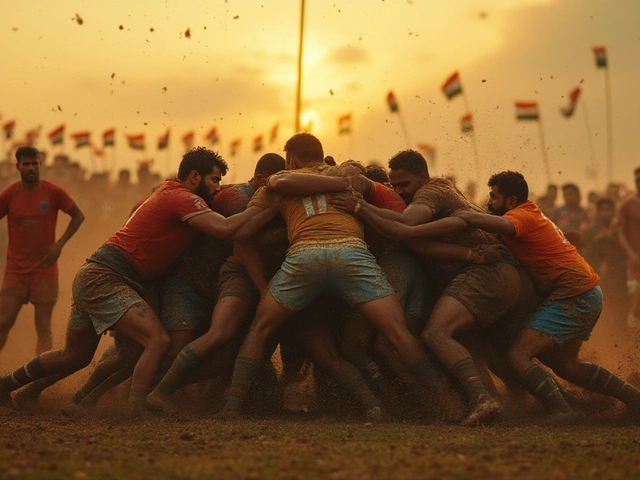
The Global Game
- • Round ball played primarily with feet
- • Two teams of 11 players
- • Continuous play (90 minutes)
- • No tackling allowed
The Super Bowl
- • Occurs annually in February
- • Features high-budget commercials
- • Most-watched TV event in the US
- • Halftime show with pop stars
FIFA World Cup
- • International tournament every 4 years
- • Teams represent countries globally
- • Stars like Messi or Ronaldo
- • USWNT dominance
What Americans Call It
Explanation goes here.
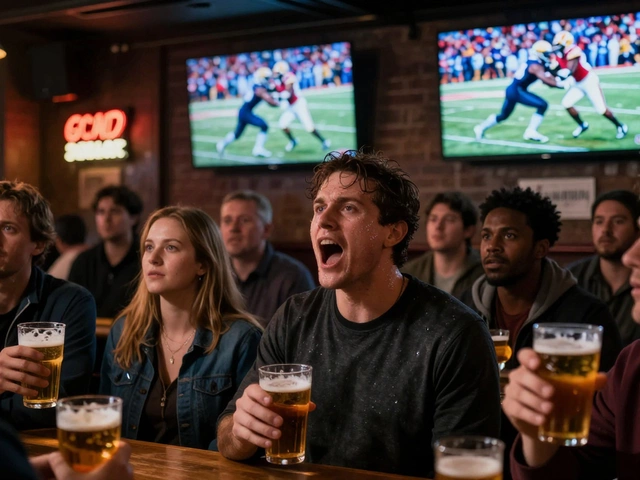
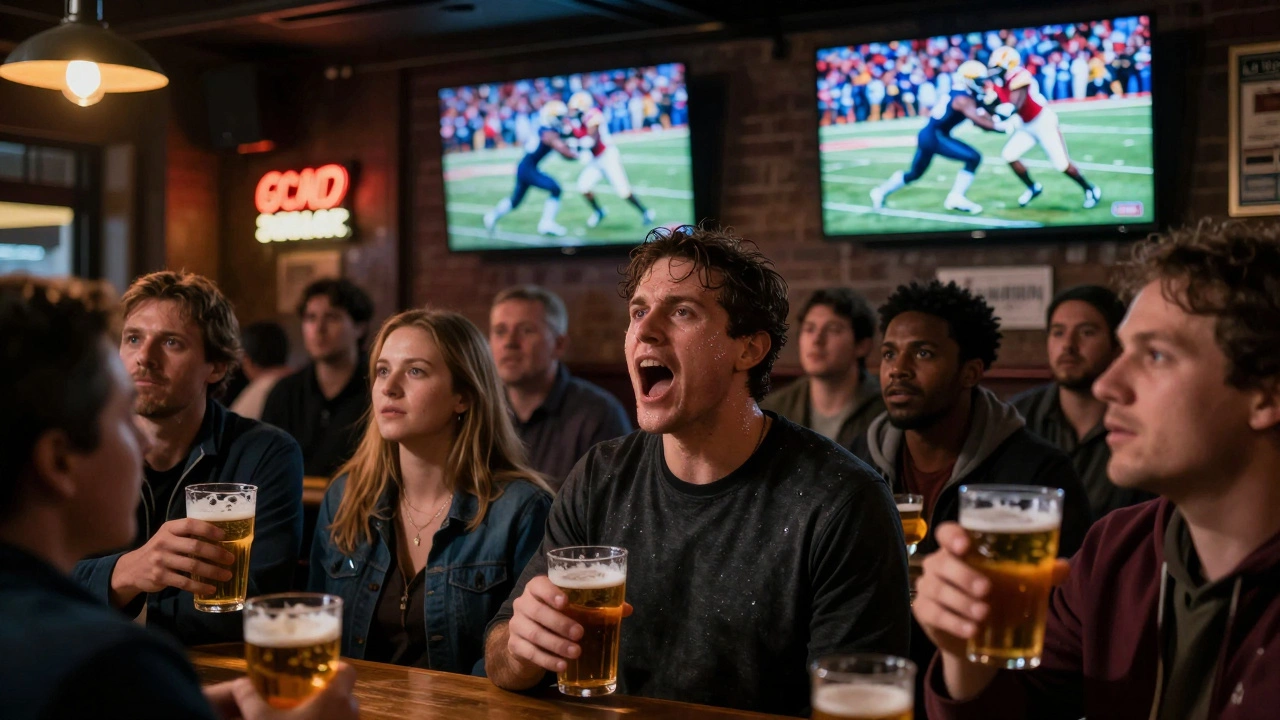
Imagine you are standing in a crowded bar in New York City. It is October, and the air is thick with the smell of beer and excitement. On every screen, players in heavy armor collide with a thud that shakes the floor. Someone shouts, "Touchdown!" You look around, confused. You came here to watch the World Cup qualifiers, but nobody seems to care about the ball rolling across the grass on TV. Instead, everyone is glued to a game where the action stops every few seconds.
You ask a local, "Why aren't we watching football?" They look at you blankly and say, "We *are* watching football. What do you mean?"
This is the classic linguistic trap for anyone visiting the United States. If you ask an American what they call football, the answer depends entirely on which sport you are talking about. To avoid awkward moments and missed connections, you need to understand the split identity of this word in American culture.
The Two Meanings of 'Football' in the USA
In most of the world, football refers to the sport played with feet, involving two teams of eleven players trying to kick a round ball into a net. In the United States, this sport is almost exclusively called soccer.
Conversely, when Americans use the word "football," they are referring to American football. This is the sport governed by the National Football League (NFL), featuring oval-shaped balls, forward passes, and complex strategic plays. It is the country's most popular spectator sport, surpassing baseball and basketball in terms of television viewership and cultural impact.
The confusion arises because both sports share a common ancestor. In the late 19th century, rugby and soccer were merging into various forms of "football" in British schools. When these games crossed the Atlantic, they evolved differently. The British kept the foot-based game as "football." The Americans adapted the rugby-style handling game, eventually codifying it as "American football."
To an outsider, it seems like a simple naming error. But for Americans, the distinction is rigid. Calling American football "soccer" will get you laughed out of the room. Calling soccer "football" might make you sound like a snob or a tourist, depending on who you talk to.
Why Is It Called Soccer?
If you think "soccer" is an American invention designed to confuse Europeans, you would be wrong. The term actually originated in England.
In the 1860s, British universities distinguished between "rugby football" and "association football." Students shortened "association" to "assoc" and added the suffix "-er," a common Oxford slang trend at the time. Thus, "assoccer" became "soccer." For decades, "soccer" and "football" were used interchangeably in Britain.
However, as the 20th century progressed, "football" became the dominant term in Europe, while "soccer" remained standard in North America, Australia, and Canada. By the 1980s, using "soccer" in Britain was seen as slightly old-fashioned or pretentious, though it has made a comeback among younger generations recently to distinguish their sport from Gaelic football or Australian rules football.
In the US, the term stuck because there was no ambiguity. There was only one major code of football: the gridiron game. So, "football" meant the NFL game, and "soccer" meant the international game. The language settled into this binary system long before global media merged our sporting cultures.
American Football: The Gridiron Game
When you hear Americans talk about football, they are discussing a sport that looks more like chess than continuous running. American football is defined by its stop-start nature, specialized positions, and physical intensity.
The field is shaped like a rectangle with goalposts at each end, resembling a gridiron fence-hence the nickname "gridiron football." The objective is to advance an oval-shaped ball down the field by running or passing it, aiming to cross the opponent's goal line for a "touchdown" (worth six points) or kick the ball through the posts for a "field goal" (worth three points).
Unlike soccer, where play continues until a foul or boundary violation, American football operates in discrete units called "plays." After each play, the clock stops, and the team huddles up to discuss strategy. This structure allows for immense tactical depth. Coaches draw up specific plays for every situation, accounting for weather, player matchups, and score differential.
The equipment is another major differentiator. Players wear helmets, shoulder pads, thigh pads, and cleats. The collision aspect is central to the game; tackling is not just allowed but required to stop the offense. This physicality has led to ongoing discussions about player safety, particularly regarding concussions and long-term brain health.
Culturally, American football is a ritual. The Super Bowl, held annually in February, is the most-watched television event in the United States. It features halftime shows with top musical artists, high-budget commercials, and a national conversation that transcends sports. For many Americans, watching football is less about the athletic performance and more about community bonding, family traditions, and regional pride.

Soccer in America: The Growing Force
While American football dominates the cultural landscape, soccer is rapidly gaining ground, especially among younger demographics. The United States hosted the FIFA Men's World Cup in 1994 and the Women's World Cup in 1999 and 2015, sparking significant interest.
The success of the U.S. Women's National Team (USWNT) has been pivotal. With multiple World Cup titles, the USWNT has become a symbol of excellence and equality in sports. Figures like Alex Morgan and Megan Rapinoe are household names, bridging the gap between traditional American sports fans and the global soccer community.
Major League Soccer (MLS), the professional league for men's soccer, has also grown steadily. Once considered a niche market, MLS now boasts sold-out stadiums, high-profile international transfers, and a dedicated fan base. Cities like Seattle, Atlanta, and Austin have developed passionate soccer cultures, rivaling those of traditional football markets.
Despite this growth, soccer still faces challenges in the American sports hierarchy. It lacks the historical institutional support of college athletics, which feeds directly into the NFL. Most American football players come through high school and university programs, whereas soccer talent development relies on youth academies and club systems. This structural difference affects how deeply embedded each sport is in the fabric of American education and community life.
Regional Variations and Exceptions
Not all Americans follow the strict "football = NFL, soccer = FIFA" rule. Regional influences create pockets of exception.
In border states like Texas, California, and Florida, proximity to Mexico and Latin American communities means that "football" often refers to soccer. In these areas, you might hear bilingual families switch seamlessly between "fútbol" and "football" without confusion. Similarly, in cities with large immigrant populations from Europe, Africa, and Asia, the term "football" is frequently used for soccer.
Additionally, some older Americans who grew up before the NFL's dominance may still use "soccer" loosely or refer to both sports as variations of football. However, this is becoming increasingly rare. The younger generation, raised in a globalized digital age, is more likely to understand the distinction but may prefer "football" for soccer due to international exposure via streaming services and social media.
Even within the sports world, terminology can blur. College athletes often play multiple sports. A student-athlete might play "football" in the fall and "soccer" in the spring. Their coaches and teammates maintain the distinction rigorously, but casual observers might not.
| Feature | American Football | Soccer |
|---|---|---|
| Primary Name in US | Football | Soccer |
| Ball Shape | Oval (Prolate Spheroid) | Spherical |
| Players per Team | 11 on field | 11 on field |
| Game Duration | 60 minutes (4 quarters) | 90 minutes (2 halves) |
| Scoring Method | Touchdown (6 pts), Field Goal (3 pts) | Goal (1 pt) |
| Physical Contact | High (Tackling allowed) | Low (No tackling) |
| Equipment | Helmets, Pads, Cleats | Cleats, Shin Guards |

Navigating Conversations About Sports
Understanding these distinctions helps you navigate social situations in the US. If you want to bond with an American over sports, knowing their preferred team is key.
If someone says they are a "football fan," assume they mean the NFL unless context suggests otherwise. Ask them about their favorite team-the Dallas Cowboys, New England Patriots, or Kansas City Chiefs are safe bets for broad appeal. Discussing the Super Bowl, draft picks, or controversial referee calls will usually spark an enthusiastic response.
If you are interested in soccer, frame your conversation around the USWNT, MLS, or international tournaments like the World Cup. Mentioning stars like Lionel Messi or Cristiano Ronaldo can bridge the gap, as even non-soccer fans recognize these global icons. Avoid calling soccer "football" in mixed company unless you are sure the group includes international residents.
Humor can also be a useful tool. Acknowledging the confusion openly often breaks the ice. Saying, "I know you call it soccer, but I'm still getting used to it," shows respect for local norms while signaling your own background.
The Future of Sporting Terminology
As globalization accelerates, the lines between American and international sporting languages may continue to blur. Younger Americans are more exposed to global soccer culture through video games like FIFA and eFootball, streaming platforms, and social media influencers.
Some linguists predict that "football" may gradually reclaim its universal meaning in the US, especially as soccer's popularity grows. However, the cultural entrenchment of American football is strong. The NFL's economic power, media deals, and integration into American holiday schedules (like Thanksgiving and Christmas Day games) ensure its dominance.
For now, the dual naming system remains stable. Americans will continue to call their homegrown sport "football" and the global game "soccer." Understanding this duality is not just about vocabulary-it's about appreciating the unique cultural identity of American sports. Whether you prefer the strategic complexity of gridiron or the fluid elegance of association football, recognizing the terminology helps you connect with fans on their terms.
Do Americans ever call soccer 'football'?
Generally, no. In mainstream American culture, soccer is almost always referred to as 'soccer.' Using 'football' for soccer is typically reserved for people with international backgrounds or in specific multicultural communities. Most Americans associate 'football' exclusively with the NFL-style game.
Why did the US keep the name 'soccer'?
The term 'soccer' originated in England as a shortening of 'association football.' It remained common in North America because American football had already claimed the simpler term 'football.' There was no linguistic conflict in the US, so the distinction persisted while Britain eventually favored 'football' for the association game.
Is American football harder than soccer?
Both sports require high levels of athleticism, but in different ways. American football demands explosive power, strength, and tactical intelligence due to its stop-start nature and physical collisions. Soccer requires exceptional endurance, agility, and technical skill over a continuous 90-minute period. Comparing difficulty is subjective and depends on individual physical strengths.
Which sport is more popular in the US?
American football is significantly more popular in the United States. The NFL generates higher revenues, attracts larger television audiences, and has deeper cultural penetration than Major League Soccer (MLS). However, soccer is growing faster, particularly among children and young adults.
Can I play both sports?
Yes, many athletes participate in both sports, especially during high school. Skills like speed, coordination, and teamwork transfer well between them. However, the specific techniques-such as kicking a spherical ball versus throwing an oval one-are distinct and require separate training.
What is the 'Gridiron'?
The 'gridiron' refers to the white lines painted on the American football field, which resemble the iron grating used for cooking meat. The term is often used synonymously with American football itself, highlighting the structured, segmented nature of the gameplay.