Italian Rugby Terminology Converter
Discover how Italians talk about rugby. While the sport keeps its English name, many positions and actions have unique Italian translations. Click a term to see the equivalent.
Did You Know?
The split between English and Italian terms often follows the "forward vs. back" divide. Forwards (like Pilone/Prop) use traditional Italian words reflecting manual labor, while backs often keep English terms or descriptive Italian phrases, reflecting strategic fluidity.
You might think that if you’re watching a match in Rome or Milan, the commentators are using some exotic, untranslatable term for the sport. Maybe they call it calcio-something, like they do with football (calcio). Or perhaps there’s a historical word buried deep in Italian dialects that only nonnas know. But here is the twist: Italians call rugby... rugby. Yes, really. It’s one of those rare instances where the English word crossed the Alps and just stuck, unchanged.
That answer feels too simple, doesn’t it? If you’ve ever tried to order pasta in Florence without stumbling over consonants, you know Italian speakers love their own linguistic flair. So why did this British import keep its original name? And more importantly, what does that tell us about how Italy actually consumes and talks about this sport? Because while the word "rugby" is universal, the way Italians use it, the leagues they follow, and the slang around it are distinctly local. Let’s unpack the real story behind the terminology.
The Straight Answer: Why No Translation?
In most countries, imported sports get localized names. In France, they say le rugby (with a French accent, obviously). In Spain, it’s often rugby but sometimes referred to in older texts as related to fútbol variants. In Germany, it’s Rugby. But Italy? They didn’t bother translating it into something like palla al cesto or gioco della palla ovale. They took the brand name and ran with it.
This isn’t accidental. Rugby arrived in Italy in the early 20th century, primarily through universities and military connections with Britain and France. By the time the sport started gaining traction in the 1920s and 30s, the international identity of the game was already tied to the English word. Unlike football, which had centuries of local folk games to rename, rugby was a specific, branded import from Anglo-Saxon culture. The Italian Rugby Federation (Federazione Italiana Rugby, or FIR) adopted the term immediately because it carried prestige and clarity.
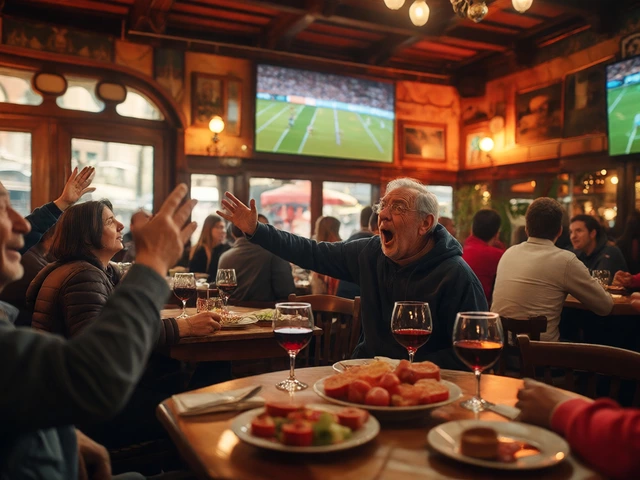
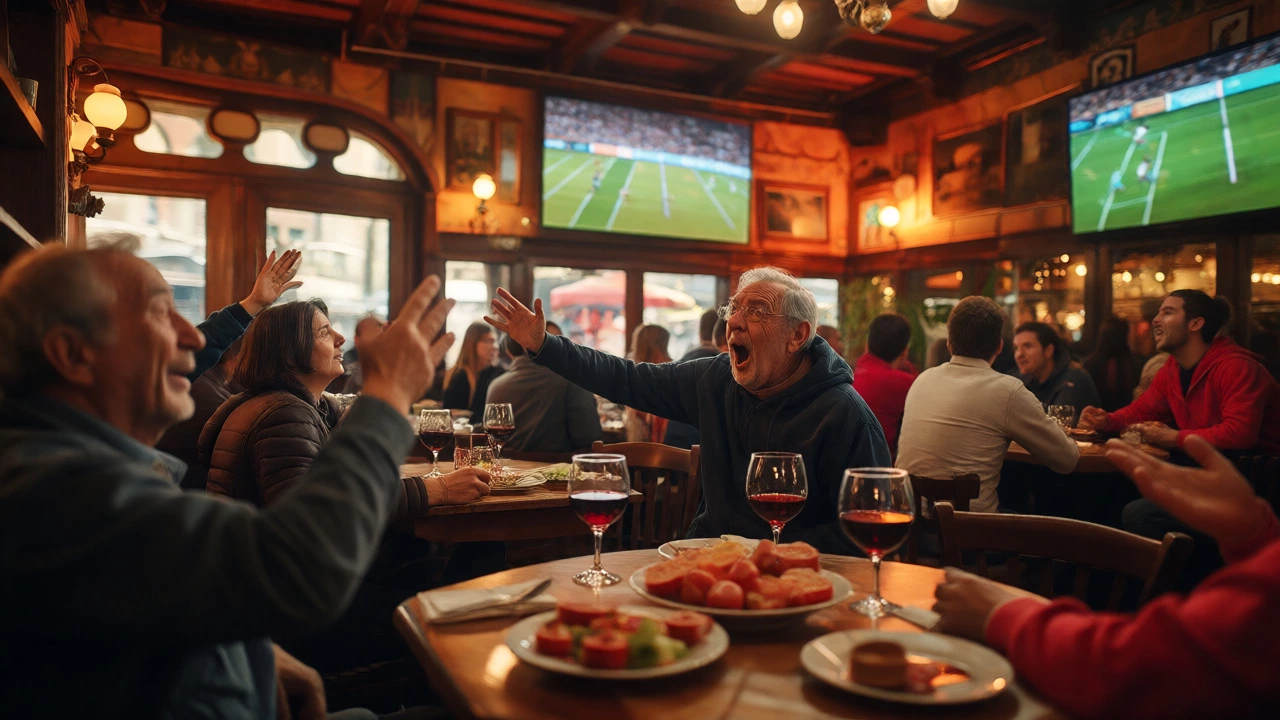
If you walk into a sports bar in Bologna during a Six Nations match, you won’t hear people debating whether to call it "oval ball" or "English kick." You’ll hear them shouting "Dai! Dai!" (Come on!) and referring to players by their positions using anglicized terms. This linguistic adoption signals that rugby in Italy is viewed as an international, somewhat elite activity rather than a homegrown peasant game.
How Italians Actually Talk About the Game
Just because they use the word "rugby" doesn’t mean the conversation is identical to what you’d hear in London or Sydney. Italian fans have developed a hybrid vocabulary that mixes standard Italian grammar with English technical terms. This creates a unique jargon that can confuse even fluent Italian speakers who aren’t into the sport.
For example, the field positions are almost exclusively referred to by their English names. An "opening sidekick" is still an opening sidekick, though pronounced with Italian vowels-a-pen-ing sai-dik. A "fly-half" becomes flai-haf. This happens because the tactical complexity of these roles didn’t have pre-existing equivalents in Italian sporting language. Trying to translate "prop" into Italian would result in awkward descriptions of heavy lifting, so everyone just says "prop."
However, general actions get translated. A "try" is a meta. A "conversion" is a trasformazione. A "scrum" is a mischia. This mix-and-match approach is key to understanding Italian sports commentary. It’s not pure English; it’s not pure Italian. It’s a functional pidgin designed for speed and clarity among fans who grew up watching matches broadcast in this specific hybrid style.
The Cultural Context: Where Rugby Fits in Italy
To understand why the name stuck, you have to look at where rugby sits in the Italian cultural hierarchy. Football (calcio) is religion. Basketball is huge in certain cities like Bologna and Treviso. Volleyball has massive female participation. Rugby? It’s niche, but passionate. It’s associated with northern industrial towns, university circles, and a certain rebellious spirit.
The term "rugby" carries a connotation of toughness and camaraderie that resonates with Italian regional identities, particularly in Veneto and Emilia-Romagna. When people say they play "rugby," they aren’t just naming a sport; they’re signaling membership in a club culture that values physicality and team loyalty over individual stardom. This social weight helped cement the English term. Changing it to a translated phrase would have stripped away that international, club-based mystique.
Moreover, the lack of translation reflects a broader trend in modern Italian media. As global sports broadcasting became standardized in the late 20th century, Italian TV networks found it easier and cheaper to use international terminology. Subtitling or dubbing every technical term slowed down the broadcast. Using "rugby" allowed commentators to sync with global feeds and keep the pace fast. For a country obsessed with the drama of calcio, adopting the efficient, no-nonsense terminology of rugby was a pragmatic choice that stuck.

Key Leagues and Terminology in Practice
If you want to sound like a local, you need to know more than just the word "rugby." You need to know what people are actually watching. The top tier is the Serie A Elite, which replaced the previous Peroni Top10 structure. Below that, there are lower divisions, but few outside the fanbase track them closely.
Here’s a quick guide to the terms you’ll hear in Italian bars and stadiums:
| English Term | Italian Usage | Pronunciation Note |
|---|---|---|
| Rugby | Rugby | Roo-gbee (hard 'g') |
| Try | Meta | Meh-tah |
| Scrum | Mischia | Mee-skee-ah |
| Lineout | Rimessa laterale | Ree-mess-ah lah-teh-rah-leh |
| Prop | Pilone | Pee-loh-neh |
| Hooker | Tallonatore | Tal-loh-nah-toh-reh |
| Lock | Seconda linea | Se-kon-dah lee-neh-ah |
| Back Row | Terza linea | Tair-zah lee-neh-ah |
| Halfback | Mediano | Meh-dee-ah-noh |
| Wing | Ala | Ah-lah |
| Fullback | Estremo | Es-treh-moh |
Notice how the forwards have traditional Italian names (pilone, tallonatore) while backs often keep English or descriptive Italian terms. This split exists because forward play is seen as "gritty work" akin to manual labor, fitting traditional Italian words, while back play is seen as strategic and fluid, borrowing from the international playbook.
Why This Matters for Fans and Travelers
If you’re planning to attend a match in Italy, knowing that they say "rugby" saves you embarrassment. But knowing the hybrid slang helps you connect. If you shout "Go Prop!" nobody will know you’re talking about the guy holding the scrum together. If you shout "Dai Pilone!", heads will turn. It shows respect for the local context.
Furthermore, understanding the terminology helps you navigate sports news. Italian sports websites like Gazzetta dello Sport cover rugby, but they use these mixed terms. If you search for "meta" you’ll find try highlights. If you search for "mischia" you’ll see scrum analysis. Searching for "try" might bring up American football results instead. The digital landscape mirrors the spoken one: fragmented between English roots and Italian execution.
Also, consider the betting angle. If you’re placing wagers on Italian fixtures, the markets will be labeled in Italian. Knowing that "Over/Under" points might be listed as "Punti totali" or simply "Total" helps you avoid confusion. The lack of a translated sport name means the betting infrastructure also leans heavily on international standards, making it accessible to foreign bettors despite the language barrier.
Is There Any Regional Variation?
You might wonder if dialects change the name. In Naples, do they call it something else? In Sicily? Generally, no. Rugby is not a widespread enough sport to have developed deep dialectal nicknames across all regions. In areas where it’s popular, like Rovigo or Treviso, the usage is consistent with national media. However, you might hear slight pronunciation shifts. A Neapolitan speaker might roll the 'r' harder or flatten the vowels differently, but the core word remains "rugby."
There is, however, a generational divide. Older fans, who remember the amateur days before professionalization, might occasionally use more descriptive phrases like "gioco del pallone ovale" (game of the oval ball) in nostalgic contexts. Younger fans, raised on televised Super Rugby and Premiership games, use the English terms instinctively. This shift reflects the globalization of the sport in Italy since the 1990s.
Final Thoughts on Linguistic Adoption
So, next time someone asks you what Italians call rugby, don’t guess. Don’t assume it’s some poetic translation. It’s just rugby. But don’t stop there. Dig into the how. The fact that they kept the name reveals how Italy views the sport: as an international entity, not a domestic invention. It’s a window into how global culture penetrates local traditions-not by erasing them, but by blending with them. The Italian fan cheering "Dai!" while analyzing a "mischia" is doing something uniquely Italian, even if the noun is borrowed.
Do Italians pronounce rugby differently?
Yes, slightly. While the spelling is identical, the pronunciation follows Italian phonetics. The 'u' is pronounced like an 'oo' in 'food', and the 'y' is often treated as an 'ee' sound. So it sounds closer to "roo-gbee" rather than the British "rug-bree" or American "rug-bee". The stress is usually on the first syllable.
What is the Italian word for a 'try'?
The Italian word for a try is meta. This comes from the Latin concept of reaching a goal or boundary. You will hear commentators shout "Meta!" when a player scores under the posts. It is distinct from the English word 'try', which has no direct equivalent in common Italian usage.
Is rugby popular in all of Italy?
No, popularity varies significantly by region. Rugby is strongest in the north, particularly in Veneto (Treviso), Emilia-Romagna (Rovigo, Parma), and Lombardy. In the south and central islands, football dominates completely, and rugby is considered a minor interest. Urban centers with universities tend to have higher engagement regardless of geography.
Why don't Italians translate 'scrum'?
Actually, they do translate it. The Italian word for scrum is mischia. However, in casual conversation among hardcore fans, you might hear the English term used interchangeably, especially when discussing technical laws. But in official broadcasts and press, 'mischia' is the standard term.
Can I watch rugby matches in Italian?
Yes, major tournaments like the Six Nations and World Cup are broadcast on Italian channels such as Sky Sport Italia or Rai. The commentary uses the hybrid terminology described above. For league matches, streaming services like DAZN or local regional broadcasters may carry games, depending on the season and rights deals.