Full-Body Exercise Muscle Engagement Calculator
Choose Your Exercise:
Deadlift
Posterior chain king
60%+ Muscle MassBack Squat
Anterior chain ruler
50%+ Muscle MassClean & Jerk
Explosive power
Full BodyBurpee
Cardio destroyer
High IntensityEver walked into a gym, looked around at all those machines, and wondered which one actually does the most work for your time? You’re not alone. We’ve all been there-staring at a row of isolated leg extension machines versus a lonely barbell in the corner, trying to figure out where to start. If you want maximum results with minimum fuss, the answer isn’t hiding on some fancy cardio machine. It’s right there in the basics.
The short answer? Compound exercises. These are movements that hit multiple joints and muscle groups simultaneously. But let’s get specific. When we talk about using the "most" muscles, we aren’t just counting how many muscles twitch; we’re looking at total mass recruited, energy expenditure, and hormonal response. And when it comes to sheer volume of muscle engagement, one king stands above the rest: the deadlift.
The Heavyweight Champion: Why Deadlifts Rule Them All
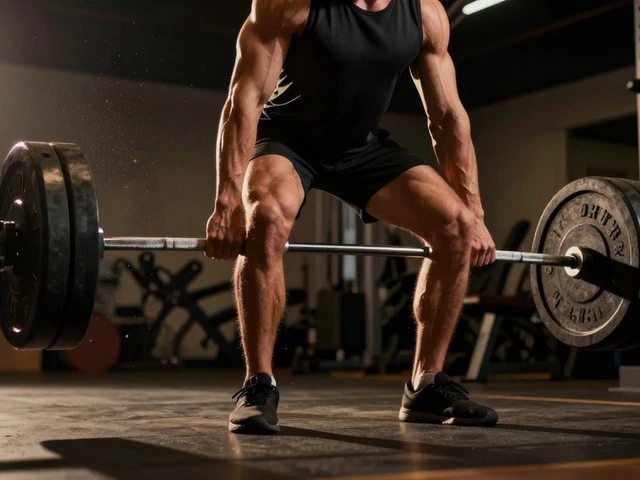
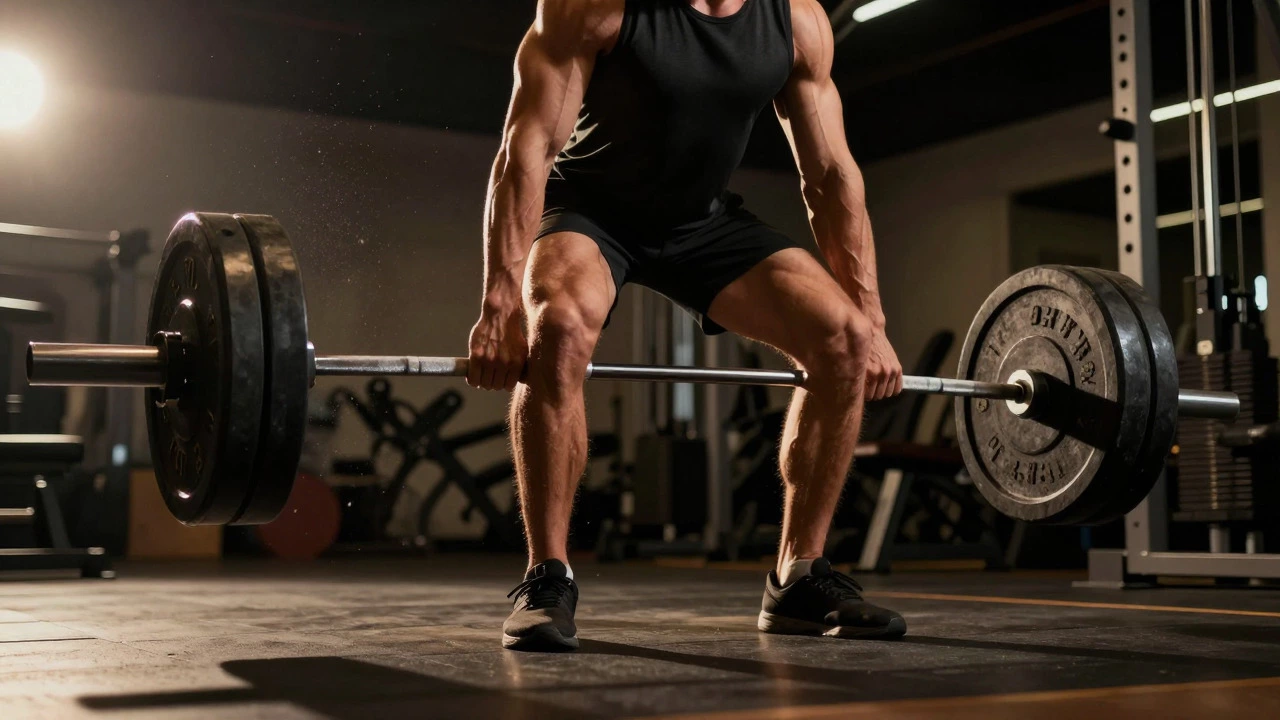
If you had to pick just one exercise to build strength, burn calories, and sculpt your entire posterior chain, it’s the deadlift. This isn’t just gym bro hype; it’s biomechanics. A conventional deadlift engages over 60% of your total muscle mass. That includes your glutes, hamstrings, lower back, upper back, traps, lats, forearms, core, and even your quads to a significant degree.
Deadlift is a compound weight training exercise in which a loaded barbell or bar is lifted off the ground to the level of the hips, and then lowered again. Unlike isolation moves, it requires coordination between the nervous system and nearly every major muscle group in the lower and upper body.
Why does this matter? Because lifting heavy weights recruits high-threshold motor units-the ones responsible for maximum force production. When you pull a heavy bar off the floor, your body doesn’t have the luxury of isolating one muscle. It has to work as a unified chain. Your grip holds the weight, your core stabilizes your spine, your legs drive the movement, and your back keeps everything upright. It’s a full-body symphony, not a solo act.
But here’s the catch: form is everything. Do it wrong, and you’ll hurt your back before you build your glutes. Keep your chest up, hinge at the hips, and keep the bar close to your shins. It’s not about how much weight you throw on the bar; it’s about moving it with control.
The Other Contenders: Squats, Cleans, and Burpees
While the deadlift takes the crown for pure muscle mass recruitment, other exercises come close and offer unique benefits. Let’s break down the runners-up.
1. The Back Squat
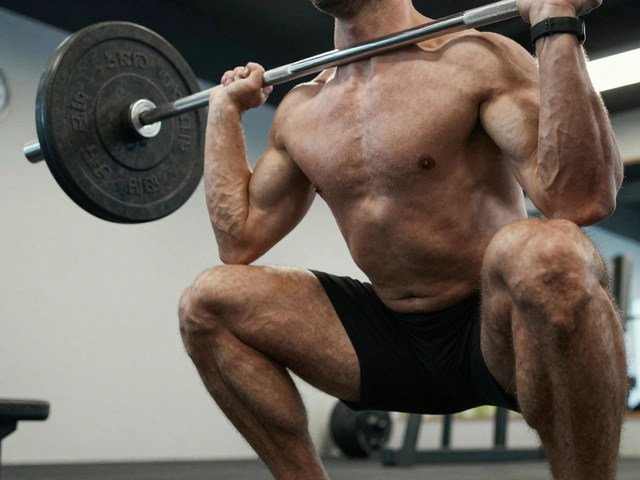
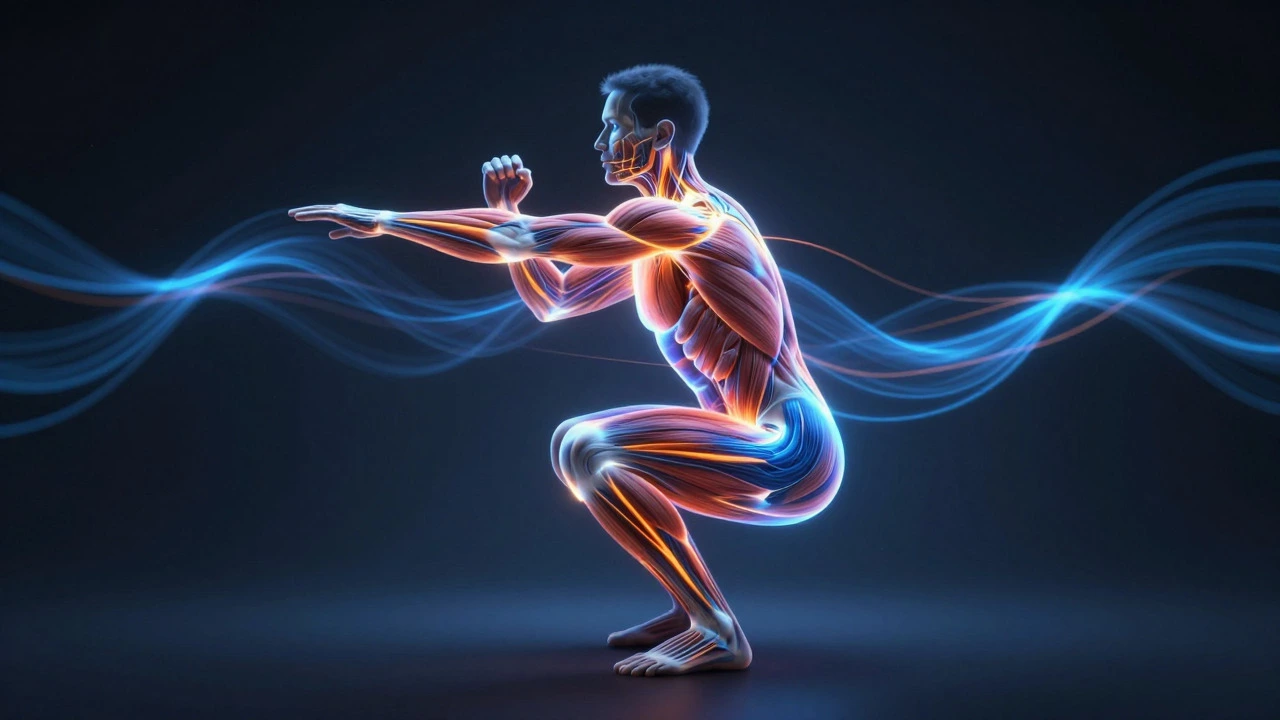
If the deadlift is the king of the posterior chain, the squat is the ruler of the anterior (front) chain. A proper back squat heavily targets the quadriceps, glutes, and adductors, but don’t forget the core and upper back working overtime to stabilize the bar. It’s incredibly demanding because you’re supporting weight on your shoulders while moving through a deep range of motion. For building lower body power and overall athleticism, nothing beats the squat.
2. The Olympic Clean and Jerk
This one scares people away because it looks complicated. But if you’re talking about raw intensity and muscle firing rate, the clean and jerk is unmatched. It involves pulling the bar from the floor to the shoulders (the clean) and then overhead (the jerk). It engages the entire body explosively. Your legs generate the power, your back transfers it, and your shoulders and triceps lock it out. It’s technically difficult, yes, but the metabolic cost and muscle recruitment are off the charts.
3. The Burpee
Not a fan of weights? No problem. The burpee is the bodyweight equivalent of a full-body assault. It combines a squat, a plank, a push-up, and a jump. While it doesn’t recruit as much slow-twitch muscle fiber as a heavy deadlift, it spikes your heart rate and engages almost every muscle in your body rapidly. It’s why CrossFit athletes love them-they burn calories like crazy and build endurance alongside strength.
Understanding Muscle Activation vs. Muscle Recruitment
Before you go buying a new pair of lifting straps, it helps to understand what "using muscles" actually means. There’s a difference between activation and recruitment.
- Activation: This refers to how much a specific muscle is working relative to its maximum potential. An isolation exercise like a bicep curl might have 100% activation of the biceps, but zero activation elsewhere.
- Recruitment: This is about how many different muscles are involved in the movement. Compound exercises win here because they require synergy between multiple groups.
For general fitness, fat loss, and functional strength, recruitment is usually more valuable. You want exercises that make your body work together, not just one part at a time. Think about real life: do you ever lift a box by only using your biceps? No. You use your legs, back, and core. Compound exercises mimic these natural movements.

The Science Behind the Burn: Hormonal Response
Here’s something interesting: doing an exercise that uses the most muscles doesn’t just build bigger muscles; it changes your hormone levels. Studies have shown that large-muscle-group exercises trigger a greater release of testosterone and growth hormone compared to smaller, isolated movements.
When you perform heavy squats or deadlifts, your body perceives a significant stressor. To cope, it releases anabolic hormones that help repair tissue and build muscle throughout the entire body, not just the area being worked. This is known as the "spillover effect." So, even though you’re focusing on your legs during a squat, your chest and arms might still see gains because of this systemic hormonal boost.
| Exercise | Primary Muscles Targeted | Secondary Muscles | Difficulty Level | Best For |
|---|---|---|---|---|
| Deadlift | Glutes, Hamstrings, Lower Back | Traps, Lats, Forearms, Core | High | Overall Strength, Posterior Chain |
| Back Squat | Quadriceps, Glutes | Adductors, Core, Upper Back | High | Leg Power, Athleticism |
| Clean & Jerk | Full Body Explosive | Shoulders, Triceps, Core | Very High | Speed, Power, Coordination |
| Burpee | Legs, Chest, Shoulders | Core, Arms | Medium | Cardio, Endurance, Fat Loss |
| Pull-Up | Lats, Biceps | Rear Delts, Core | Medium | Upper Body Pulling Strength |
How to Structure Your Workout for Maximum Efficiency
Knowing which exercises use the most muscles is great, but how do you put them into a routine? You don’t need to train like an Olympic weightlifter to benefit. Here’s a simple framework for a highly efficient full-body workout.
- Start with the Heaviest Compound Move: Begin your session with your most demanding exercise, whether that’s deadlifts or squats. Save your freshest energy for when it matters most.
- Follow with Horizontal Push/Pull: After your lower body focus, move to bench presses or rows. These engage the chest, back, and arms while still requiring core stability.
- Add a Vertical Movement: Include overhead presses or pull-ups to ensure you’re hitting the shoulders and lats from a different angle.
- Finish with Core or Cardio: End with planks, hanging leg raises, or a few rounds of burpees to spike the heart rate and tie everything together.
Aim for 3-4 sets of 5-8 reps for the heavy lifts. This rep range builds strength without excessive fatigue. Rest 2-3 minutes between sets to allow your nervous system to recover. For the accessory movements, you can go slightly higher, maybe 8-12 reps.
Common Mistakes That Kill Your Gains
Even the best exercise becomes useless if done poorly. Here are the biggest pitfalls people face when trying to maximize muscle engagement.
Momentum Over Control: Swinging the weight up in a deadlift or bouncing out of the bottom of a squat might let you lift heavier, but it robs your muscles of tension. Slow down the eccentric (lowering) phase. That’s where the magic happens.
Neglecting the Core: You can’t protect your spine if your core isn’t braced. Before you lift, take a breath into your belly and tighten your abs like someone is about to punch you. This intra-abdominal pressure supports your spine and allows you to transfer force more efficiently.
Skipping Warm-Ups: Jumping straight into heavy compounds is a recipe for injury. Spend 5-10 minutes doing dynamic stretches-leg swings, arm circles, and light bodyweight squats-to prepare your joints and muscles for the load.
Is More Always Better?
It’s tempting to think that using more muscles equals better results. But balance is key. If you only do deadlifts and squats, you might develop imbalances. Your posterior chain could become overly dominant compared to your anterior chain, or vice versa. That’s why variety matters. Incorporate pulling movements (rows, pull-ups) to counteract pushing movements (bench press, overhead press). This ensures your joints stay healthy and your posture remains strong.
Also, consider your goals. If you’re training for a marathon, spending hours on heavy deadlifts might not be optimal. If you’re a powerlifter, endless burpees might interfere with your recovery. Tailor your approach to what you want to achieve.
Final Thoughts: Consistency Beats Intensity
So, what exercise uses the most muscles? Technically, the deadlift. But practically, the best exercise is the one you can do consistently with good form. Don’t get obsessed with finding the "perfect" movement. Focus on mastering the basics. Learn to squat, hinge, push, and pull. Once you have those down, you’ll find that your body responds quickly, regardless of which specific variation you choose.
Remember, fitness is a long game. It’s not about crushing yourself in the gym once a week. It’s about showing up, moving well, and progressively challenging your body. Start light, focus on technique, and gradually increase the load. Your future self will thank you.
Is the deadlift safer than the squat?
Safety depends largely on form. Both exercises carry risks if performed incorrectly. Squats place more compressive force on the spine, while deadlifts place more shear force on the lower back. However, studies suggest that with proper technique, both are very safe. Many injuries occur due to ego-lifting or poor warm-ups rather than the exercises themselves.
Can I build muscle with just bodyweight exercises?
Yes, absolutely. Exercises like pull-ups, dips, and pistol squats are highly effective for building muscle. The key is progressive overload-making the exercise harder over time by adding reps, slowing down the tempo, or reducing rest periods. You don’t need heavy weights to stimulate muscle growth, but you do need sufficient resistance.
How often should I do full-body workouts?
For most people, 2-3 times per week is ideal. This frequency allows enough stimulus for growth while providing adequate recovery time. Beginners might benefit from three sessions spaced out (e.g., Monday, Wednesday, Friday), while advanced lifters might split their volume differently but still prioritize compound movements.
Do compound exercises burn more calories?
Yes, generally speaking. Because they involve more muscle mass, compound exercises require more energy to perform. Additionally, the afterburn effect (excess post-exercise oxygen consumption or EPOC) is higher after intense strength training sessions involving large muscle groups, meaning you continue to burn calories at a elevated rate for hours after your workout.
Should beginners start with deadlifts?
Beginners can start with deadlifts, but they should begin with lighter weights or variations like Romanian deadlifts or kettlebell deadlifts to learn the hip-hinge pattern. Mastering the movement mechanics is crucial before adding significant weight. Consider working with a trainer initially to ensure proper form.