Boxing Format Identifier
Select the features of the boxing event you are watching or analyzing to determine its official classification.
Event Characteristics
Key Features Detected:
Why This Classification?
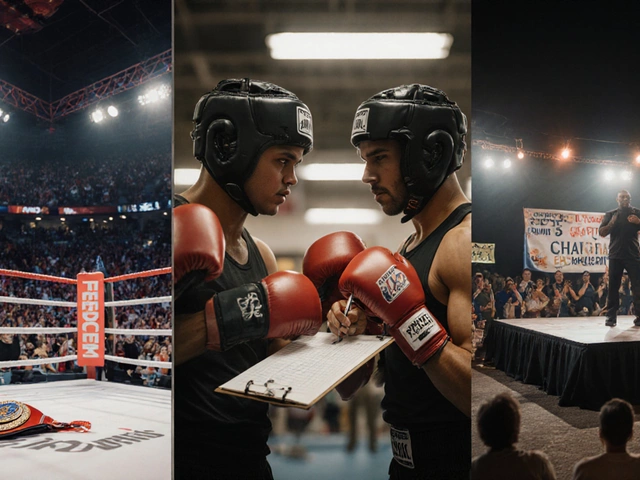
You’ve probably seen it on TV or heard commentators mention it: two heavyweights stepping into the ring, gloves on, but no title belt hanging in the balance. The crowd cheers, the bell rings, and they throw punches with intensity, yet something feels different. It’s not the high-stakes tension of a championship bout where careers are made or broken in three minutes. This is an exhibition match, often referred to as an exhibition fight or simply an exhibition bout. But why do we call them that? And more importantly, how does this "friendly" format differ from the brutal reality of professional competition?
If you’re new to the sport, the terminology can be confusing. Is it just sparring? Is it a real fight? Does it count toward their record? Let’s break down exactly what happens when boxers agree to step into the ring for a non-title, low-stakes encounter, and why these matches serve a vital purpose in the boxing ecosystem.
The Official Name: Exhibition Matches
In professional boxing, a friendly match without official sanctioning consequences is universally called an exhibition match. Unlike standard professional bouts, exhibitions are not sanctioned by major regulatory bodies like the Association of Boxing Commissions (ABC) or state athletic commissions for ranking purposes. This means the result-win, loss, or draw-does not appear on the fighters’ official professional records. If Mike Tyson fought Roy Jones Jr. in 2020, the result was officially recorded as a "draw," but because it was an exhibition, neither fighter’s professional win-loss tally changed.
This distinction is crucial. A professional bout is governed by strict rules regarding scoring, medical suspensions, and licensing. An exhibition, however, operates under a modified set of guidelines agreed upon by both camps and the local commission hosting the event. Often, the number of rounds is reduced (typically four to eight rounds instead of twelve), and protective gear might be adjusted. For example, fighters may wear larger gloves (14oz or 16oz) compared to the standard 8oz or 10oz used in title fights, adding an extra layer of safety while maintaining the spectacle.
Exhibition vs. Sparring: Where’s the Line?
A common misconception is that exhibition matches are just glorified sparring sessions. While they share DNA, they are fundamentally different activities. Sparring is a training method conducted in a gym environment. It is private, controlled, and focused on skill development, timing, and conditioning. Fighters spar to learn, to test strategies against live opponents, and to prepare for upcoming fights.
An exhibition, conversely, is a public performance. There is an audience, a promoter, broadcast rights, and ticket sales. The fighters are paid appearance fees or purses, even if they don’t earn a purse for winning. The intent shifts from pure training to entertainment and promotion. During sparring, a fighter might hold back significantly to avoid injury before a big fight. In an exhibition, while the risk is managed, the fighters are expected to perform. They need to give the fans value for their money, which often leads to higher output and more visible action than typical sparring.
| Feature | Professional Bout | Exhibition Match | Sparring Session |
|---|---|---|---|
| Official Record Impact | Yes (Win/Loss/Draw) | No | No |
| Gloves Used | 8oz - 10oz | 12oz - 16oz (varies) | 14oz - 16oz+ |
| Primary Goal | Competition & Ranking | Entertainment & Promotion | Training & Skill Dev |
| Audience | Ticket holders/TV viewers | Ticket holders/TV viewers | Gym members/Coaches |
| Medical Suspension | Mandatory after KO/KO stoppage | Rarely required unless injury occurs | Not applicable |
Why Do Boxers Agree to "Friendly" Fights?
You might wonder, why would a top-tier athlete risk getting punched in the face for no official credit? The reasons are surprisingly strategic. First, there’s the financial incentive. Even without a title shot, promoters pay substantial appearance fees for marquee names. When Floyd Mayweather Jr. announced his return against Logan Paul, it wasn’t about proving he was still the best boxer in the world; it was a business move that generated millions in pay-per-view buys.
Second, exhibitions allow veterans to stay active without the physical toll of full-contact professional bouts. As boxers age, recovery takes longer. A six-round exhibition with heavier gloves allows a former champion to maintain sharpness, engage with fans, and keep their brand relevant without the same wear-and-tear risk as a twelve-round war. It’s a way to monetize fame while preserving health.
Third, these matches serve as promotional tools. A rising star might fight in an exhibition against a well-known name to build hype for their upcoming title eliminator. It gets the young fighter’s face on screens and introduces them to a broader audience who might not follow regular boxing cards. Think of it as a trailer for the main movie.
The Rules Are Different (And That’s Okay)
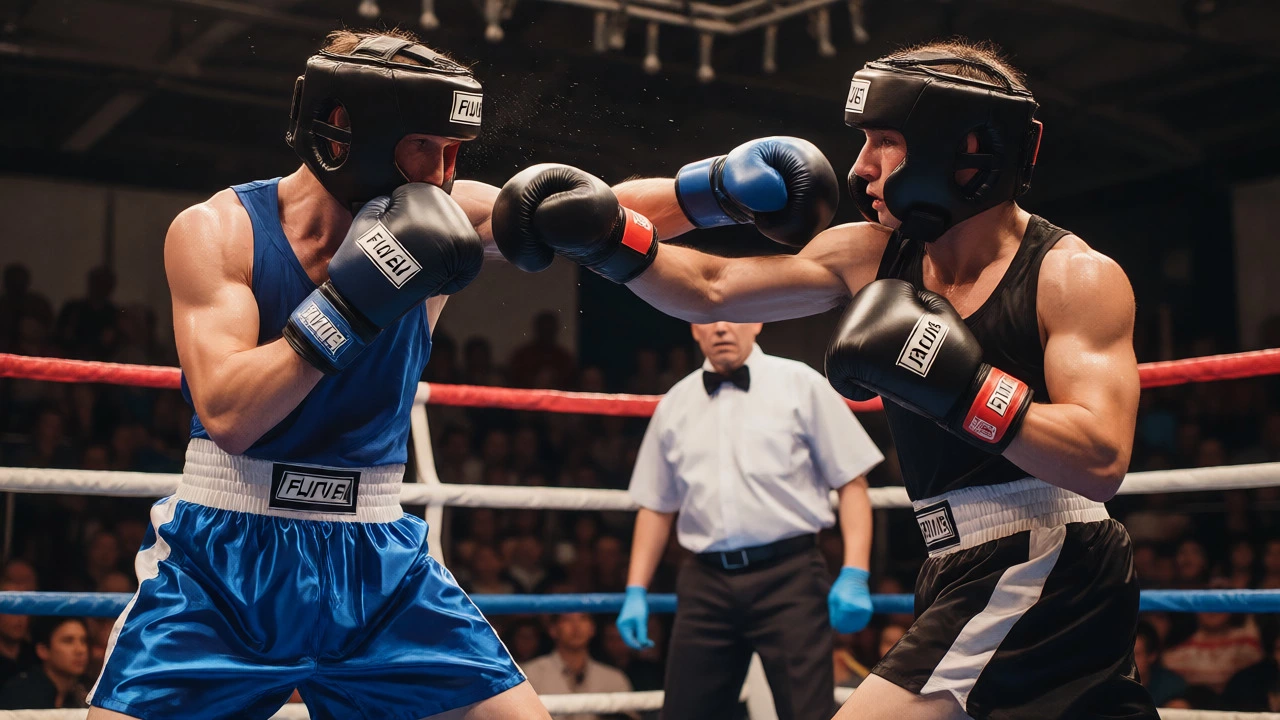
Because exhibitions aren’t strictly regulated for competitive integrity, the rules can be customized. Promoters and fighters negotiate terms beforehand. Here are some common variations you’ll see:
- Round Count: Most professional fights are scheduled for 10 or 12 rounds. Exhibitions are often capped at 3 to 8 rounds to limit fatigue and injury risk.
- Judging Criteria: Sometimes, judges score the fight based on "entertainment value" rather than clean punching volume. Or, the fight might end in a declared draw regardless of who landed more punches.
- Stoppage Rules: Referees have more discretion. In a pro fight, a referee stops a bout if a fighter cannot defend themselves. In an exhibition, the ref might let the action continue longer because the priority is giving the crowd a show, provided the fighters are safe.
- Headgear: In some amateur-style exhibitions or charity events, headgear might be worn, though this is rare in high-profile celebrity or veteran matchups.
It’s worth noting that while the rules are looser, safety protocols remain. Medical staff are present, and pre-fight physicals are usually mandatory. However, the post-fight medical suspension period is often waived unless a knockout occurs, allowing fighters to return to training sooner.
Famous Examples of Exhibition Matches
To truly understand the concept, look at recent history. The most prominent example in modern times is the Mike Tyson vs. Roy Jones Jr. bout in November 2020. Both men were retired legends. The fight lasted eight rounds, ended in a split draw, and raised over $5 million for charity. Neither man’s professional record was altered, but the event dominated sports headlines globally.
Another massive case was Floyd Mayweather Jr. vs. Logan Paul in June 2021. Mayweather, an undefeated professional legend, faced a YouTube influencer-turned-boxer. The fight was an eight-round exhibition. Mayweather dominated, but because it was an exhibition, his record remained 50-0. The event grossed over $70 million, proving the commercial power of the format.
These examples highlight a key trend: exhibitions are increasingly blurring the lines between sports and entertainment. They attract casual fans who might never watch a Tuesday night boxing card but will tune in to see a celebrity face-off or a nostalgia trip featuring retired icons.

Amateur Boxing and "Friendly" Competitions
Outside the professional realm, the term "friendly" might also refer to amateur boxing tournaments or dual meets between clubs. In Olympic-style boxing, athletes compete for points, medals, and rankings. While these are competitive, they are often framed as "friendlies" in international contexts, especially during warm-up tournaments leading up to the Olympics.
In club-level amateur boxing, "sparring nights" are sometimes open to the public and marketed as friendly competitions. These are distinct from professional exhibitions because the participants are typically unpaid amateurs, and the focus is squarely on development. However, the vibe is similar: lower stakes, community-focused, and less intense than a pro debut.
How to Watch an Exhibition Fight
If you want to catch one, don’t expect it to be on regular cable sports channels every week. Exhibitions are often special events. Here’s how to spot them:
- Check Pay-Per-View Listings: Major exhibitions (like Mayweather vs. Paul) are almost always PPV events due to their high production costs and star power.
- Follow Promoter Announcements: Companies like Top Rank, PBC, or Matchroom Boxing announce exhibitions separately from their regular cards. Look for keywords like "non-sanctioned," "exhibition," or "charity bout."
- Watch for Celebrity Crossovers: Influencers, actors, and MMA fighters often enter the boxing ring via exhibitions. These events are heavily promoted on social media platforms like Instagram and TikTok.
Remember, just because it’s an exhibition doesn’t mean it’s fake. The punches land hard. The sweat is real. The only difference is the administrative paperwork afterward. Treat it as a unique sub-genre of boxing-one that prioritizes spectacle and accessibility over rigid sporting hierarchy.
Common Misconceptions About Exhibition Fights
Many fans dismiss exhibitions as "scripted" or "soft." Let’s correct those notions. First, they are rarely scripted in the WWE sense. While outcomes might be loosely discussed (e.g., "let’s make it close"), the actual fighting is unscripted improvisation. Second, they aren’t necessarily soft. When two elite athletes decide to go all out, even with heavier gloves, the impact is significant. Tyson hit Jones Jr. with enough force to cause concern among medical observers, despite the non-competitive status.
Another myth is that only old or washed-up fighters participate. While veterans dominate the space, younger prospects use exhibitions to gain experience against tougher opponents than they’d find in regional circuits. It’s a bridge between amateur development and professional stardom.
Does an exhibition fight count on a boxer's record?
No, exhibition matches do not affect a boxer's official professional win-loss-draw record. The result is noted separately in archives but does not change the statistical standing recognized by boxing commissions.
Are exhibition fights safer than professional fights?
Generally, yes. Fighters often use larger gloves (14oz or 16oz), fight fewer rounds, and may wear headgear. However, the risk of injury remains, especially if fighters choose to go hard. Safety measures are tailored to the specific agreement between the parties.
Can anyone organize an exhibition boxing match?
Promoters can organize them, but they must still comply with local athletic commission regulations. This includes obtaining licenses for the fighters, arranging medical checks, and ensuring insurance coverage. You cannot just book a venue and start fighting without regulatory approval.
Why do celebrities fight in exhibitions?
Celebrities use exhibitions to capitalize on their fame, generate revenue through pay-per-view or ticket sales, and engage their fanbase. It allows them to participate in the sport without committing to the rigorous lifestyle and career trajectory of a professional boxer.
Is sparring the same as an exhibition match?
No. Sparring is a private training exercise focused on technique and preparation. An exhibition is a public, commercial event with an audience, broadcast deals, and entertainment goals. While both involve fighting, their context and objectives are entirely different.
So, next time you hear commentators talk about a "friendly" boxing match, you know they’re referring to an exhibition. It’s a fascinating corner of the sport where commerce meets combat, and where the thrill of the fight exists without the permanent scar of a loss on the record. Whether you’re a die-hard purist or a casual viewer, understanding this distinction helps you appreciate the strategy behind why legends step back into the ring long after their prime years have passed.