Rugby Try & Conversion Points Calculator
Enter values and click Calculate to see the breakdown.
Have you ever watched a Rugby Union match and heard the commentator shout about a "try" being scored, only to wonder why they don't call it a touchdown like in American football? The short answer is that it is simply called a try. It is the primary way to score points in rugby, but the terminology and mechanics are distinct from other major sports. Understanding what a try is, how it is awarded, and what happens next is essential for anyone following the game.
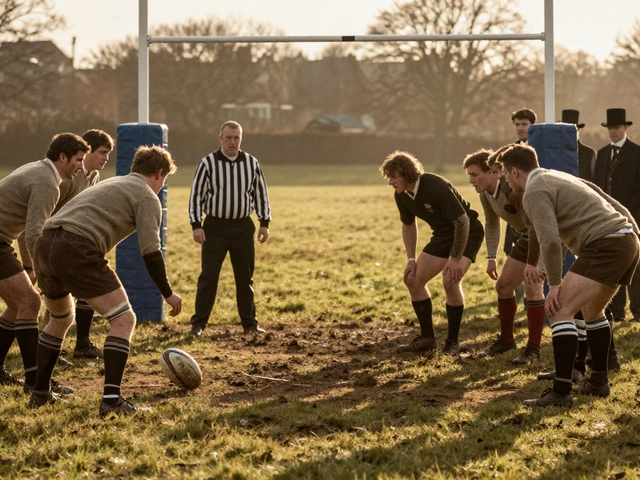
The term "try" dates back to the early days of the sport when scoring a goal directly from open play was rare. If a player grounded the ball in the opponent's in-goal area, they earned the right to "try" for a goal (a conversion). Over time, the act itself became worth points, but the name stuck. Today, a try is worth five points, making it the most valuable single scoring event in the game before any additional kicks are taken.
How a Try is Defined in Rugby Laws
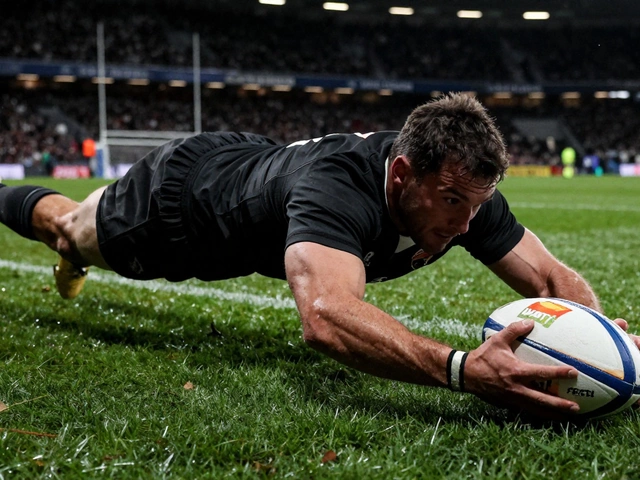
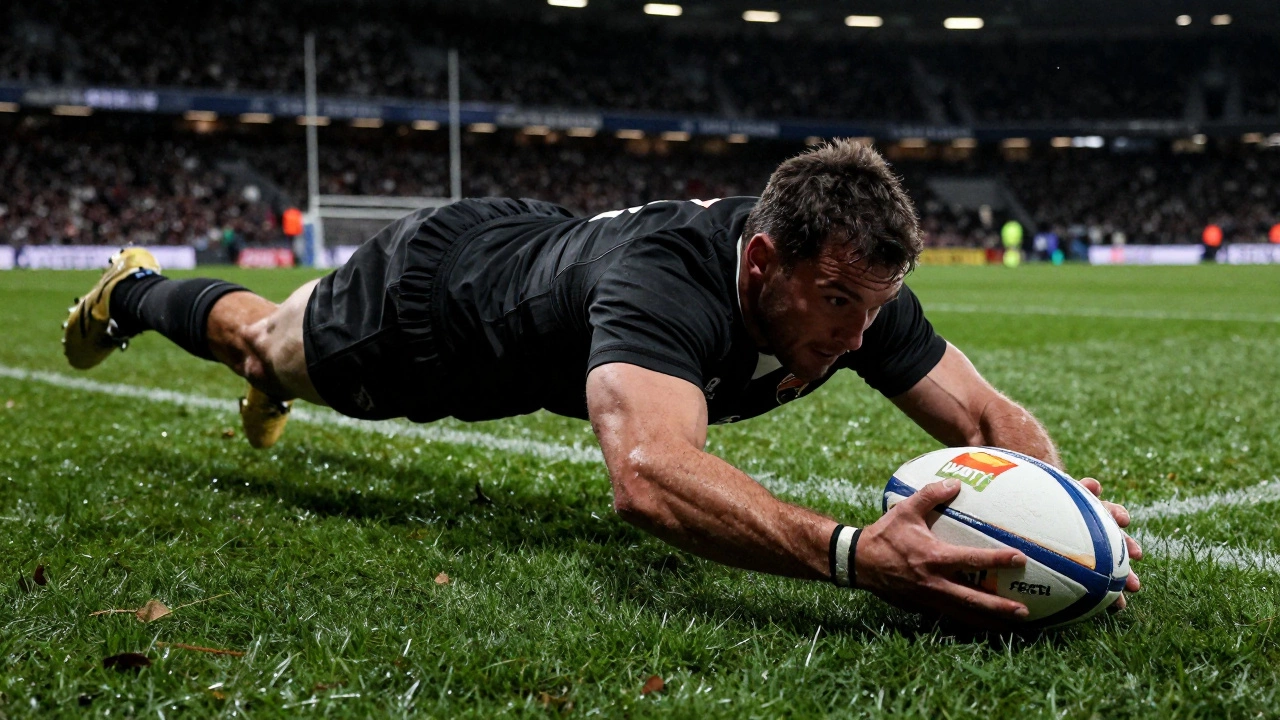
To understand what constitutes a valid try, you have to look at the specific laws set by World Rugby, the international governing body. A try is not just about crossing the line; it requires precise physical contact with the ground. According to Law 9.1 of the Rugby Union Laws, a try is scored when an attacking player grounds the ball with downward pressure in the opponent's in-goal area.
This definition contains several critical components that often confuse new viewers:
- Grounding: The player must place the ball on the ground. Simply falling over the line while holding the ball is not enough if there is no downward pressure applied.
- Downward Pressure: The player must press the ball into the turf. This distinguishes a try from merely touching the ground with the ball while sliding or diving without intent to ground it firmly.
- In-Goal Area: The grounding must happen within the boundaries of the in-goal area, which includes the dead-ball line and the touch-in-goal lines.
If a player throws the ball forward or steps out of bounds before grounding it, the attempt is nullified. The referee will signal a throw-in or a scrum depending on the infringement. This precision is why referees often review decisions using Video Assistant Referee (VAR) technology, now commonly known as the Decision Review System (DRS), to ensure the ball made contact with the ground under pressure.
The Value of a Try and Subsequent Kicks
A try itself is worth five points. However, scoring a try is rarely the end of the scoring sequence. Once a try is awarded, the team has the opportunity to add more points through two types of kicks: the conversion and the drop goal (though drop goals are typically taken during open play, not after a try).
The immediate follow-up to a try is the conversion kick. The kicking team can choose to kick the ball through the uprights from anywhere along an imaginary line drawn perpendicular to where the try was scored. A successful conversion adds two points to the total. Therefore, a completed try with a conversion is worth seven points in total.
In some cases, particularly in close matches, teams may opt for a quick tap instead of taking the conversion. This allows them to restart play immediately and potentially score another try before the opposing team can reorganize their defense. This strategic choice highlights the dynamic nature of rugby scoring compared to other sports where scoring sequences are more rigid.
| Scoring Event | Points Awarded | Description |
|---|---|---|
| Try | 5 | Grounding the ball in the in-goal area |
| Conversion | 2 | Kick through the posts after a try |
| Penalty Kick | 3 | Kick through the posts after a foul |
| Drop Goal | 3 | Kick through the posts during open play |
Why It Is Not Called a Touchdown
One of the most common questions from newcomers is why rugby doesn't use the term "touchdown." The confusion stems from the visual similarity between scoring in rugby and American football. In both sports, players advance the ball into an end zone to score. However, the origins and mechanics differ significantly.
The term "touchdown" originated in early forms of football played in the United States, where touching down the ball in the opponent's goal area gave the right to attempt a goal kick. In rugby, the evolution took a different path. The word "try" reflects the historical opportunity to "try" for a goal. While American football retained the term "touchdown" and made it the primary scoring method, rugby evolved the "try" into a standalone scoring event worth more points than a goal kick.
Additionally, the concept of a "six-yard line" in American football, where the ball is placed for extra point attempts, has no direct equivalent in rugby. In rugby, the conversion kick can be taken from anywhere along the line parallel to the try, allowing for strategic positioning based on the kicker's ability and wind conditions. This flexibility makes the post-try phase in rugby more complex and tactically interesting.

Referee Signals and Game Flow
When a try is scored, the referee signals it by raising both arms straight up above their head. This clear gesture indicates that a try has been awarded and play has stopped. The assistant referees (touch judges) also raise their flags to confirm the ball was grounded within the correct boundaries.
After signaling the try, the referee will check with the DRS if necessary. If the decision stands, the team will prepare for the conversion kick. The ball is placed on the ground, and the kicker has a limited amount of time to take the shot. If the conversion is missed, the game resumes with a kickoff from the 22-meter line (in Super Rugby and similar competitions) or the halfway line, depending on the competition's specific regulations.
Understanding these signals helps fans follow the flow of the game. For instance, if the referee raises one arm, it usually indicates a penalty or a free kick. Two arms up always means a try. This consistency in signaling ensures that players, officials, and spectators all understand the status of the game at any given moment.
Common Misconceptions About Tries
Despite its importance, several misconceptions persist about what constitutes a try. One common myth is that a player must cross the goal line entirely with the ball. In reality, only the ball needs to be grounded in the in-goal area. A player can be standing in the field of play, dive forward, and ground the ball in the in-goal area to score a try. This is often seen in tries scored from deep positions in the field.
Another misconception is that a try can be scored by kicking the ball into the in-goal area and having it bounce. This is incorrect. The ball must be grounded by a player's hand or arm. If the ball enters the in-goal area and bounces out, or if a player touches it without grounding it, no try is awarded. Instead, the defending team may earn a scrum or a turnover.
Furthermore, some believe that a try is automatically awarded if a player crosses the line with the ball. This is not true. The player must maintain possession and apply downward pressure. If the ball slips out of their hands before grounding, or if they are held up by defenders preventing them from grounding the ball, the referee may award a scrum or a penalty instead.
Historical Context of the Term "Try"
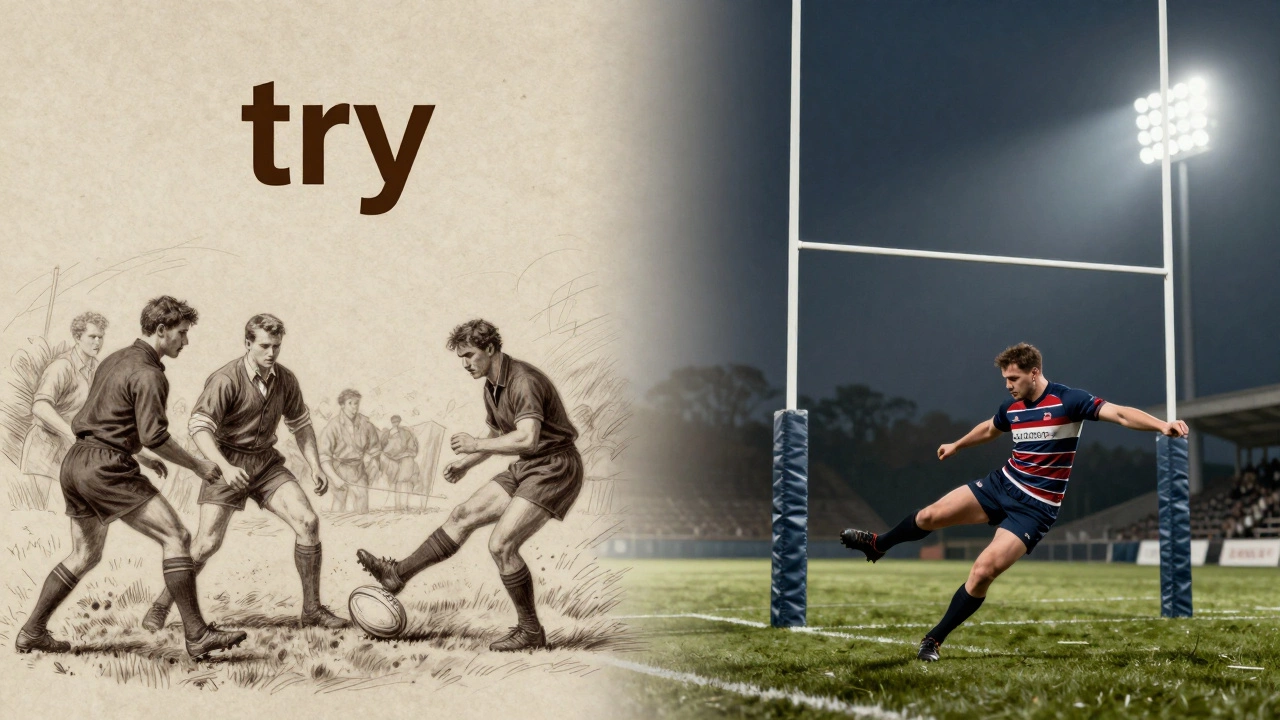
The term "try" has a rich history in rugby. In the early 1800s, rugby football was played with varying rules across different schools and clubs. The concept of scoring by grounding the ball emerged as a way to resolve disputes about who had possession near the goal line. Initially, grounding the ball did not award points directly but gave the team the right to attempt a goal kick. This attempt was called a "try" because the team was trying to score a goal.
Over time, the value of the try increased relative to the goal. By the late 19th century, the try had become a significant scoring event in its own right. The modern value of five points for a try was established in the mid-20th century, reflecting the emphasis on attacking play and rewarding teams for breaking through defensive lines.
This historical context explains why the term "try" persists even though it no longer implies an attempt to score a goal. It is a linguistic relic that has become deeply embedded in the culture and language of rugby. Fans around the world use the term interchangeably with "scoring," highlighting its centrality to the game.
Impact on Strategy and Tactics
The value of a try influences team strategies significantly. Because a try is worth five points, teams prioritize creating opportunities to score tries over attempting penalty kicks or drop goals. This leads to more expansive, attacking play, especially in the final minutes of a match when a team is trailing by a small margin.
Coaches often design plays specifically to create try-scoring opportunities, such as quick passes, offloads, and breaks in the defensive line. The presence of skilled wingers and fullbacks who can exploit gaps in the defense is crucial for scoring tries. Conversely, defensive strategies focus on preventing tries by maintaining tight defensive lines and tackling effectively.
The conversion kick also adds a layer of strategy. Teams may choose to score a try closer to the posts to increase the likelihood of a successful conversion. Alternatively, they may opt for a wider try if they believe the additional risk is worth the potential for a larger point swing. These decisions require careful analysis of field position, weather conditions, and player skills.
Is a rugby try the same as a touchdown?
No, a rugby try is not the same as a touchdown. While both involve advancing the ball into the opponent's end zone, the terminology and scoring values differ. A try is worth five points in rugby, whereas a touchdown is worth six points in American football. Additionally, the mechanics of grounding the ball in rugby require downward pressure, which is not explicitly required in American football touchdowns.
How many points is a try worth in rugby?
A try is worth five points in rugby union. After scoring a try, the team can attempt a conversion kick, which is worth two points if successful. Therefore, a completed try with a conversion totals seven points.
Why is it called a "try" in rugby?
The term "try" originates from the early days of rugby when grounding the ball gave a team the right to "try" for a goal kick. Although the try is now worth points on its own, the name has persisted due to historical tradition.
Can you score a try by kicking the ball into the in-goal area?
No, you cannot score a try by kicking the ball into the in-goal area. A try requires a player to ground the ball with downward pressure using their hand or arm. Kicking the ball into the in-goal area results in a turnover or a scrum if the ball goes dead.
What happens after a try is scored?
After a try is scored, the team has the option to take a conversion kick. They can also choose a quick tap to restart play immediately. The conversion kick is worth two points if successful, adding to the five points from the try.