Rugby Scoring Calculator
Calculate your rugby match points based on Rugby Union rules. Tries are worth 5 points, conversions 2 points, penalties and drop goals 3 points each.
Ever watched a rugby match and wondered why scoring a point is called a try? It doesn’t sound like a score. It doesn’t sound like a touchdown. And it definitely doesn’t sound like a goal. But in rugby, a try is worth five points-and it’s the most exciting way to put points on the board. The word feels odd, almost outdated. That’s because it is. The term ‘try’ comes from a time when rugby wasn’t even about scoring points-it was about earning a chance to kick.
The Original Rule: Try to Kick, Not Score
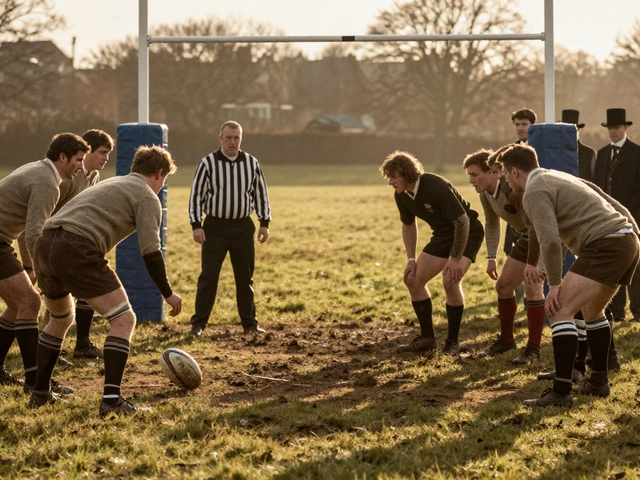
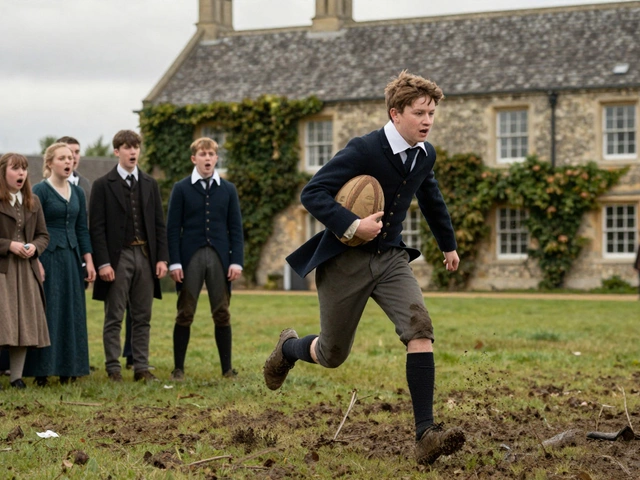
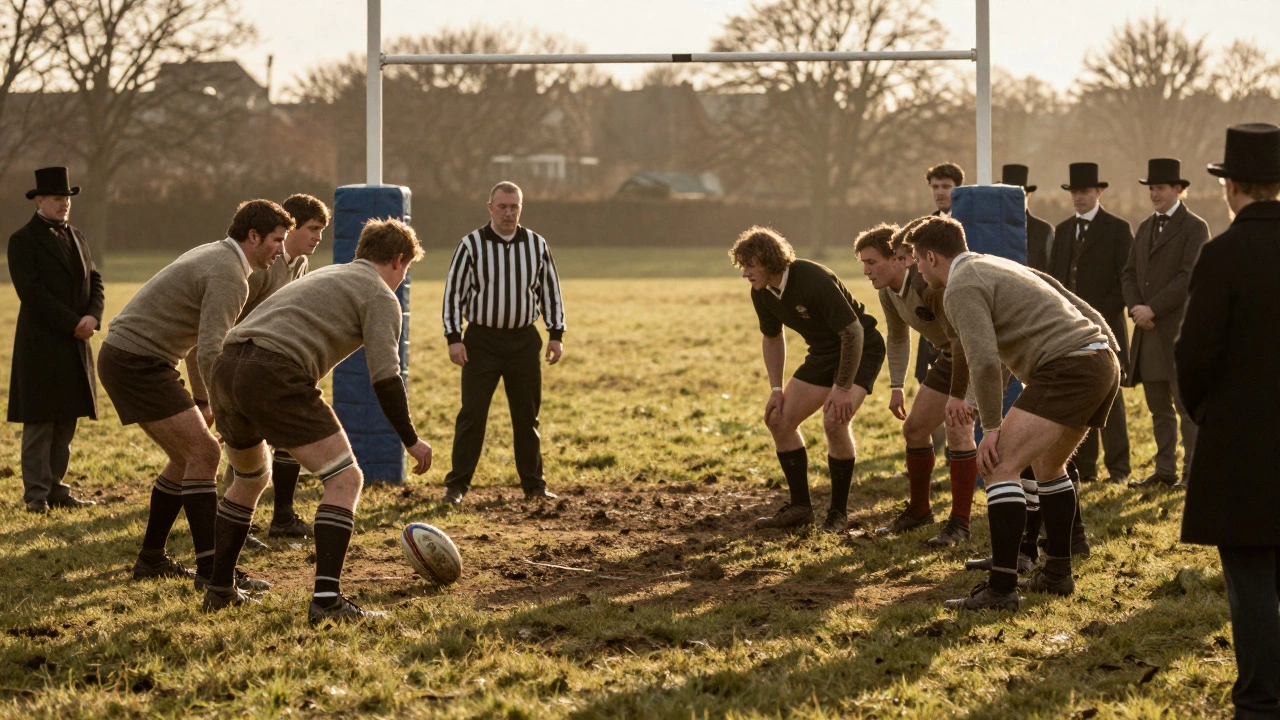
In the early 1800s, rugby wasn’t played the way it is today. The game evolved from football played at Rugby School in England. Back then, the main way to score was by kicking the ball through the goalposts. But if a player managed to ground the ball in the opponent’s in-goal area, they didn’t get points. Instead, they got a try-a chance to try to kick the ball through the posts.
This was a reward, not a score. The act of grounding the ball gave the attacking team a free shot at goal. If they missed, nothing happened. If they made it, they got three points. The grounding itself? Worth nothing. The word ‘try’ stuck because it literally meant ‘an attempt’-an attempt to kick.
When Did the Try Become a Score?
For decades, tries were just setup plays. But as the game grew faster and more physical, teams started realizing that grounding the ball was easier than kicking through the posts. Kicking required perfect conditions: calm wind, a flat surface, and a skilled kicker. Grounding the ball? You just needed to get there first.
By the 1870s, rugby clubs in England and Scotland began pushing to give tries their own value. In 1875, the Rugby Football Union officially changed the rules: a try was now worth one point. The kick after the try (the conversion) was worth two. This shift didn’t happen overnight. It was messy. Some teams resisted. Coaches argued that kicking was the real skill. But the game was changing. Players were bigger. Speed mattered more than accuracy.
By 1893, the try was worth three points. The conversion dropped to two. Then in 1971, the try jumped to four points. Finally, in 1992, it settled at five. The conversion stayed at two. Today, a try is worth more than a penalty or drop goal. That’s because the game now rewards effort, not just precision.
Why Not Call It a Touchdown?
You might wonder why rugby didn’t just borrow the word ‘touchdown’ from American football. The answer is simple: rugby came first. American football evolved from rugby in the late 1800s. When American players adapted the game, they kept the idea of grounding the ball in the end zone-but renamed it. They called it a touchdown because you literally touched the ball down to score.
Rugby didn’t need a new name. The word ‘try’ was already in use. It had history. It was part of the game’s identity. Changing it would’ve meant erasing a piece of its roots. So rugby kept ‘try,’ even as the rules turned it from a privilege into the main way to win.
How a Try Works Today
Modern rugby has clear rules for what counts as a try:
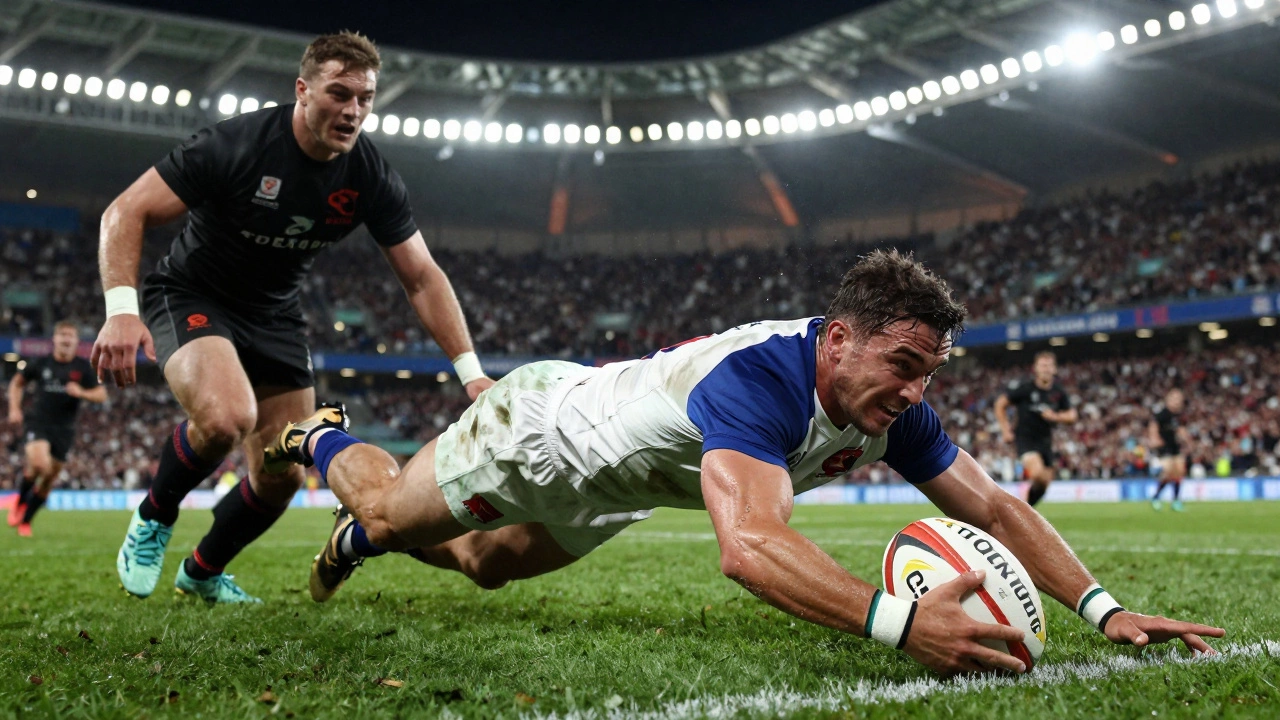
- The player must ground the ball with downward pressure in the opponent’s in-goal area.
- The ball must be in control-no fumbles or bobbles.
- The player must not be tackled before grounding the ball.
- The ball must not have been knocked forward before the try.
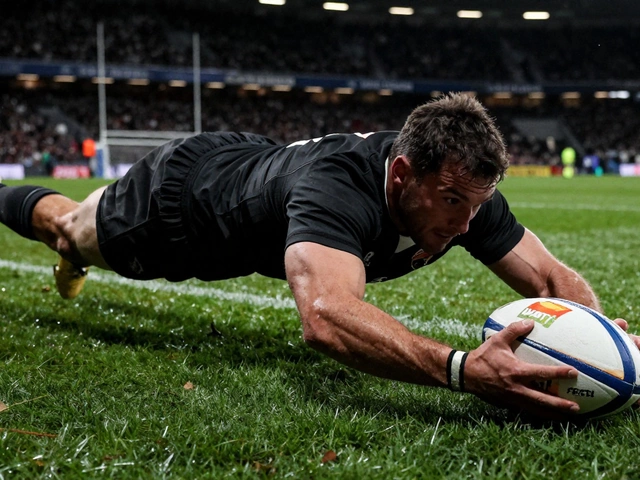
Grounding means pressing the ball down with your hand, arm, or torso. It’s not enough to just touch it. You have to hold it there for a split second. Referees watch closely. A try can be awarded-or denied-based on a millisecond of contact.
After a try, the scoring team gets a conversion kick. If they make it, they get two more points. That’s why you’ll see players sprinting to the center of the field after a try. They’re not celebrating yet-they’re setting up for the next shot.
Why the Try Still Matters
Even though the try is now the highest-scoring play, it’s still the hardest. Teams often spend 80 minutes trying to break through a defensive line. A single try can win a match. Think of the 2019 Rugby World Cup final: South Africa beat England 32-12. They scored four tries. England scored none. The tries didn’t just add points-they broke the spirit of the defense.
Modern rugby is built around the try. Coaches design drills to create space. Backs train for explosive runs. Forwards work on ruck speed to get the ball out fast. The whole game flows toward one goal: getting the ball over the line.

The Cultural Weight of the Word
‘Try’ isn’t just a rule. It’s a cultural marker. In New Zealand, Australia, South Africa, and Wales, the word carries pride. When a player scores a try, fans don’t shout ‘goal’ or ‘touchdown.’ They scream, ‘Try!’ It’s a shout of joy, history, and identity.
Even kids learning rugby in Mumbai or Nairobi know the word. They don’t need to know the 1871 rule change. They just know that when the ball hits the ground beyond the line, it’s a try. And that’s enough.
What If Rugby Had Renamed It?
Imagine if rugby had switched to ‘touchdown’ in 1992. Would the game feel the same? Probably not. The word ‘try’ is part of the sport’s soul. It reminds players that rugby was never just about points. It was about opportunity. About effort. About earning your shot.
Today, a try is worth five points. But its real value? It’s the heartbeat of the game. It’s why fans stay on their feet. Why players give everything for one extra meter. Why rugby, despite its rough edges, still feels like a sport built on courage.
Why is a try worth five points in rugby?
A try is worth five points because the game evolved to reward the difficulty of breaking through a defense. In the 1990s, rugby officials increased the value of the try to make it more valuable than penalty kicks and drop goals, encouraging teams to play more aggressively and focus on attacking play rather than just kicking for points.
Can you score a try from a penalty kick?
No, you cannot score a try directly from a penalty kick. A penalty kick is a set play meant to reward a foul. If a player kicks the ball into the in-goal area during a penalty, it’s not a try-it’s a dead ball. The only way to score a try is by grounding the ball during open play, not from a set piece like a penalty or free kick.
What’s the difference between a try and a conversion?
A try is scored when a player grounds the ball in the opponent’s in-goal area and is worth five points. A conversion is the kick taken after a try to earn two additional points. The kick must be taken from a spot directly in line with where the try was scored. It’s not automatic-you have to make the kick.
Do all rugby codes use the same try rules?
Yes, both Rugby Union and Rugby League award tries for grounding the ball in the in-goal area. However, the point values differ. In Rugby Union, a try is worth five points. In Rugby League, it’s worth four. The rules for grounding and scoring are nearly identical, but league allows fewer tackles and faster play, making tries more frequent.
Is it a try if the player is tackled before grounding the ball?
No, it’s not a try. The player must have control of the ball and ground it before being tackled. If they’re tackled before grounding, or if the ball is knocked loose during the tackle, the referee will call it a tackle, not a try. Even if the ball crosses the line, without controlled grounding, it doesn’t count.