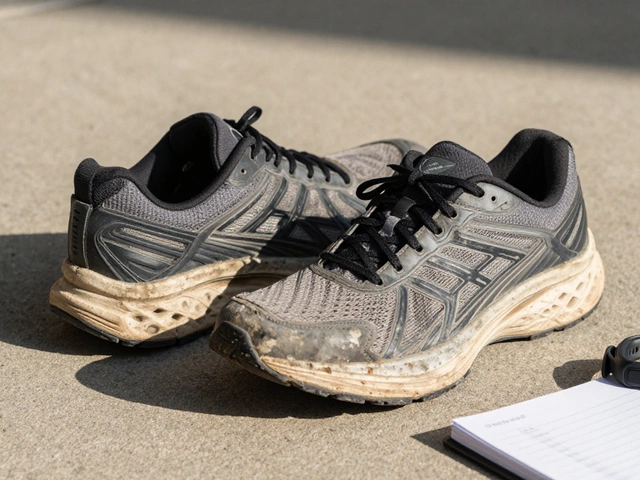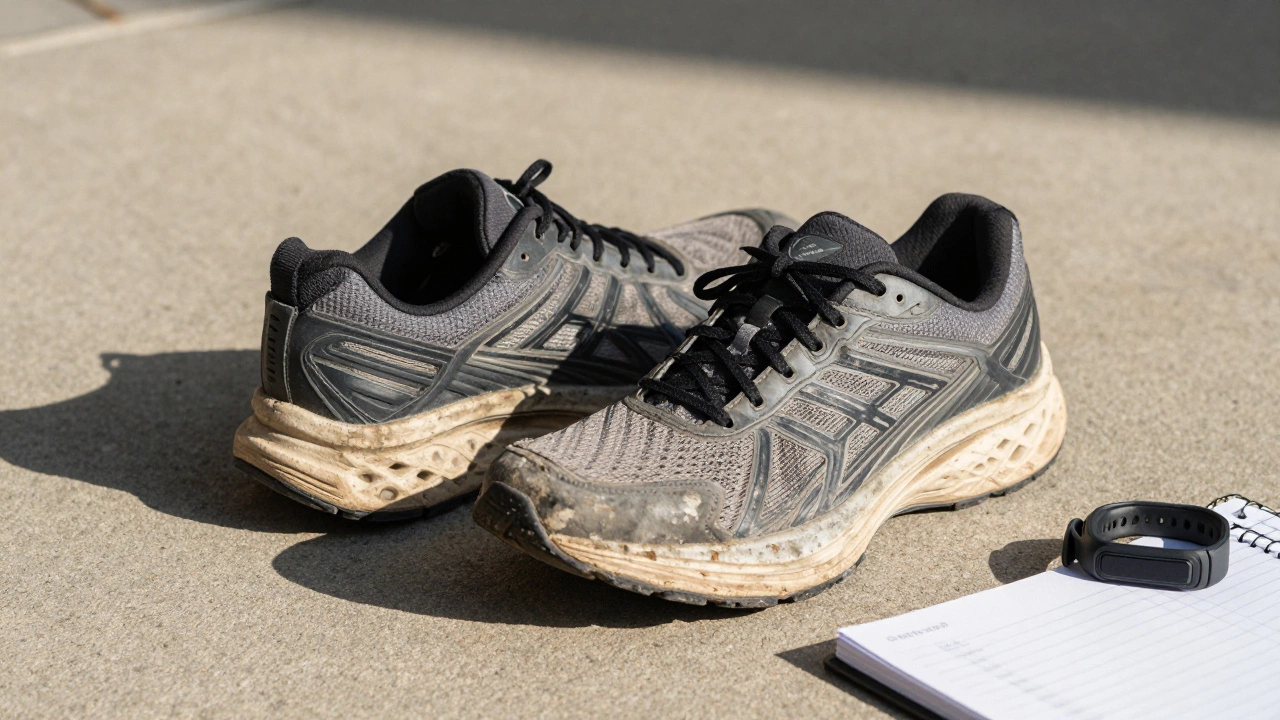
Running shoes don’t last forever. Even if they still look fine, the cushioning and support break down long before the outsole wears thin. Ignoring this can lead to shin splints, plantar fasciitis, or knee pain-problems that don’t disappear just because your shoes haven’t ripped yet.
How Many Miles Do Running Shoes Last?
Most running shoes lose their effectiveness between 300 and 500 miles. That’s the golden rule most runners and podiatrists agree on. If you run 20 miles a week, you’ll need new shoes in about 3 to 4 months. If you run 10 miles a week, you’ve got 6 to 8 months before it’s time to replace them.
It’s not about brand, price, or how fancy the shoe looks. A $150 pair won’t outlast a $80 pair if both are made with the same midsole foam. Most midsoles use EVA or PU foam, which compresses over time. After 300 miles, that foam doesn’t bounce back like it used to. Your feet feel every step harder, and your joints pay the price.
Keep a simple log. Write down your mileage in a notebook, phone app, or fitness tracker. You don’t need to be exact-just close enough. If you hit 400 miles and your legs feel heavier than usual, it’s not your fitness slipping. It’s your shoes.
Physical Signs Your Shoes Are Done
Mileage isn’t the only clue. Look at your shoes. You don’t need a lab to tell if they’re worn out. Here’s what to check:
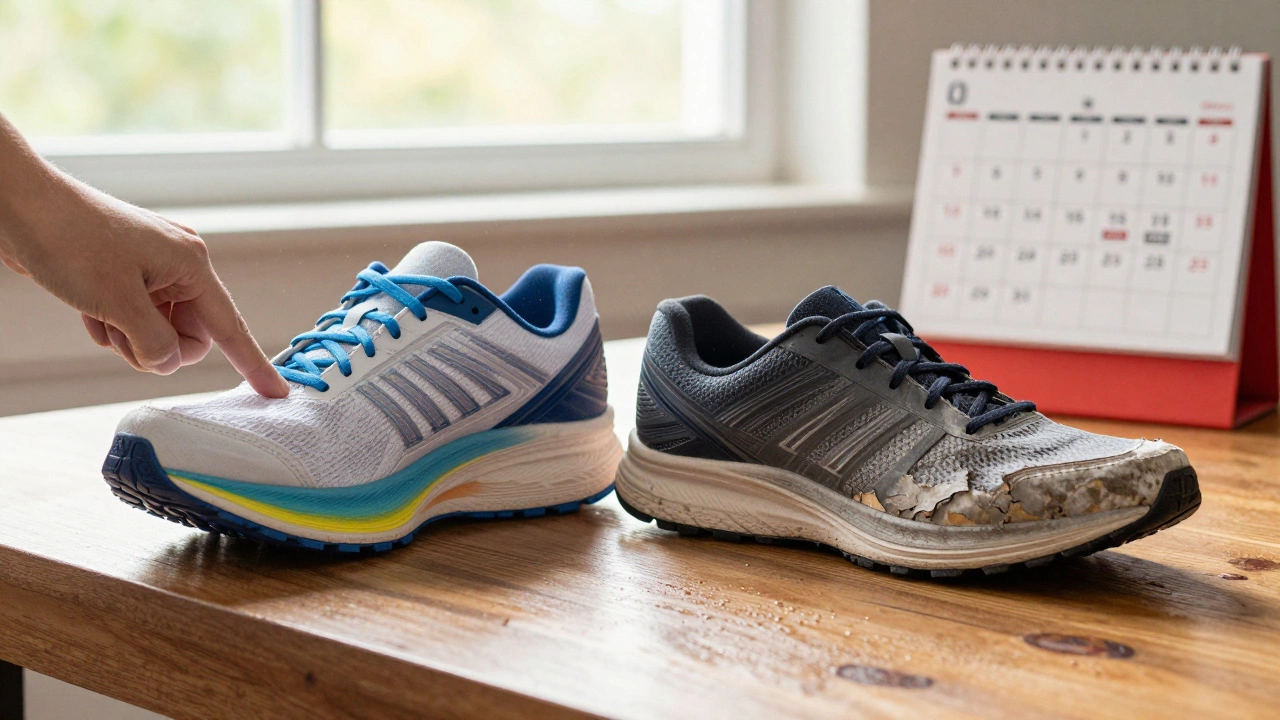
- Midsole compression: Press your thumb into the heel or forefoot. If it feels flat, mushy, or doesn’t spring back, the cushioning is gone.
- Uneven wear on the outsole: If the heel is worn down more on one side, or the forefoot is worn through, your gait has changed-and your shoes are no longer helping correct it.
- Creases in the midsole: Deep, permanent creases along the sides of the shoe mean the foam has been compressed too many times. It’s not just old-it’s broken.
- Loss of shape: Lay your shoes flat. If they don’t sit evenly, or the heel tilts inward or outward, the structure has collapsed.
- Soles separating: If the rubber sole is peeling away from the midsole, it’s not just ugly-it’s dangerous. You could slip or twist an ankle.
I once ran 10K in a pair that looked fine-until I noticed my right foot kept rolling inward. I checked the shoes. The right heel was flattened like a pancake. I swapped them out that day. Two weeks later, my knee pain was gone.
Time vs. Mileage: Which Matters More?
If you run only once a week, your shoes might sit unused for months. But foam still degrades. Oxygen, heat, and moisture break it down-even when you’re not running.
Most manufacturers say shoes should be replaced after 12 months, regardless of mileage. That’s because the materials age. In a hot, humid place like Bangalore, that clock ticks faster. Sweat, dust, and monsoon humidity eat away at foam and glue.
So if you’ve had the same pair for 18 months and only ran 200 miles? Still replace them. The cushioning is dead. You’re running on a brick wrapped in fabric.

How to Extend the Life of Your Running Shoes
You can’t stop foam from breaking down, but you can slow it down:
- Rotate two pairs: Alternate shoes every other run. It gives the foam time to recover. Studies show runners who rotate shoes get fewer injuries.
- Air them out: After every run, take out the insole and leave the shoes in a dry, ventilated spot. Never store them in a damp gym bag.
- Don’t use them for walking: Running shoes aren’t designed for errands or office wear. The extra miles add up fast.
- Keep them dry: If they get soaked, stuff them with newspaper-not plastic bags. Plastic traps moisture and speeds up decay.
One runner I know uses one pair for long runs, another for speed work, and a third for casual wear. He’s been running for 12 years and has never had a stress fracture.
What Happens If You Keep Wearing Old Shoes?
Running in worn-out shoes doesn’t just make you slower. It changes how your body moves.
Without proper cushioning, your heel strikes harder. Your knees absorb more impact. Your calves tighten. Your arches collapse. Over time, this leads to:
- Plantar fasciitis (heel pain)
- Tendonitis in the Achilles or patellar tendon
- Shin splints
- Stress fractures in the foot or lower leg
- Chronic hip or lower back pain
A 2023 study from the Journal of Sports Science looked at 1,200 runners. Those who kept shoes past 500 miles had a 48% higher chance of injury compared to those who replaced them on time. That’s not a small risk. That’s a red flag.
It’s not about being lazy or cheap. It’s about protecting your body. You wouldn’t drive a car with bald tires and worn brakes. Don’t run in shoes that have lost their grip-on the road, and on your joints.
When to Buy New Shoes
Don’t wait until your shoes are completely dead. Start shopping 100 miles before your current pair hits its limit. That way, you can test them out, break them in slowly, and avoid a sudden gap in your routine.
Try them on in the evening. Your feet swell during the day. Wear the same socks you run in. Walk around the store. Jump a little. Make sure there’s a thumb’s width of space between your longest toe and the end of the shoe.
Don’t assume your old model is still the best. Shoe tech changes fast. A shoe you loved three years ago might be outdated now. New foams like Nike’s ZoomX, Adidas’ Lightstrike, or ASICS’ FlyteFoam offer better energy return and durability.
And if you’re unsure? Visit a running store. Most have gait analysis. They’ll watch you run on a treadmill and recommend shoes based on your foot strike-not just your size.
What to Do With Old Shoes
Don’t toss them in the trash. Many brands take them back:
- Adidas has a recycling program for old running shoes.
- Nike’s Reuse-a-Shoe program turns old sneakers into playground surfaces.
- Local running clubs sometimes collect worn shoes to donate to shelters or athletes in developing countries.
Even if you can’t recycle them, keep them for light walking or gardening. But never run in them again.
Final Rule: Trust Your Body
Numbers help, but your body knows best. If you start feeling:
- Stiffness in your calves or feet that doesn’t go away after a warm-up
- Sharp pain in your knees or shins after every run
- A general feeling that your shoes are "flat" or "dead"
-then it’s time. Don’t wait for a checklist. Don’t wait for the sole to fall off. Your body is giving you a signal. Listen to it.
Running is supposed to feel good. If it doesn’t, the problem isn’t your motivation. It’s your shoes.
How many miles should I run before replacing my running shoes?
Most running shoes last between 300 and 500 miles. If you run 20 miles a week, replace them every 3 to 4 months. If you run less, replace them every 6 to 8 months. Even if you haven’t hit 500 miles, replace them after 12 months due to foam degradation.
Can I still run in shoes with visible wear on the outsole?
Visible wear on the outsole doesn’t always mean it’s time to replace your shoes. The midsole cushioning breaks down first. Check for flatness, creases, or loss of bounce in the midsole. If the foam feels dead, replace the shoes-even if the tread looks fine.
Do expensive running shoes last longer than cheap ones?
Not necessarily. Price doesn’t determine lifespan. A $200 shoe with standard EVA foam may wear out at the same mileage as a $90 shoe with the same foam. What matters is the foam type and how much you run. Focus on mileage and how your body feels, not the price tag.
Should I replace my running shoes if I haven’t used them much?
Yes. Foam degrades over time, even without use. Heat, humidity, and oxygen break down the materials. In a place like Bangalore, where it’s hot and humid, shoes older than 12 months should be replaced-even if you’ve only run 100 miles in them.
Can I use old running shoes for walking or gym workouts?
Yes, but only for light, low-impact activities like walking around the house or light gym sessions. Don’t use them for running, jumping, or high-intensity workouts. The cushioning won’t protect your joints, and the sole may not provide enough grip.