Tummy Toning Protein Calculator
Your Protein Needs
Based on the article's science-backed recommendations for tummy toning
Your Daily Protein Range
Based on 1.2-1.6g protein per kg body weight
If you’ve ever looked in the mirror and wished your stomach looked tighter, you’re not alone. Toning your tummy isn’t about doing a thousand crunches or buying some magic belt. It’s about combining the right kind of movement, eating habits that support your goals, and giving your body time to change. There’s no shortcut, but there are clear, science-backed steps that work-especially if you’re consistent.
Stop chasing crunches
Crunches won’t burn fat off your stomach. That’s a myth that’s been sold for decades. When you do a crunch, you’re strengthening your rectus abdominis-the muscle that gives you the "six-pack" look. But if there’s a layer of fat covering it, no amount of crunches will make it visible. Fat loss happens across your whole body, not just one spot. This is called "spot reduction," and it doesn’t work. Studies from the American College of Sports Medicine show that targeted exercises don’t reduce fat in the area you’re working. So skip the endless ab routines. Focus on full-body movement instead.
Build strength with compound movements
The best way to tone your midsection is to build overall muscle and burn calories efficiently. That means lifting weights, not just doing bodyweight exercises. Squats, deadlifts, push-ups, and rows all engage your core as a stabilizer. When you do a deadlift, your abs tighten to keep your spine safe. When you do a push-up, your entire core fires to keep your body straight. These movements build functional strength and burn more calories than isolated ab exercises. Start with two or three strength sessions a week. Even 20 minutes of squats, lunges, and planks can make a difference if you do them with good form and increasing intensity over time.
Cardio isn’t optional-but it doesn’t have to be boring
You need to burn fat to reveal muscle. That means cardio. But you don’t need to run for an hour on a treadmill. Walking fast for 45 minutes five days a week works. Brisk walking is low-impact, sustainable, and burns fat without wrecking your joints. If you want more intensity, try cycling, swimming, or stair climbing. High-intensity interval training (HIIT) can help too-like 30 seconds of sprinting followed by 90 seconds of walking, repeated 6-8 times. Do this once or twice a week. It’s time-efficient and boosts your metabolism for hours after you’re done. The key? Pick something you enjoy enough to stick with.
Eat to support muscle, not fat
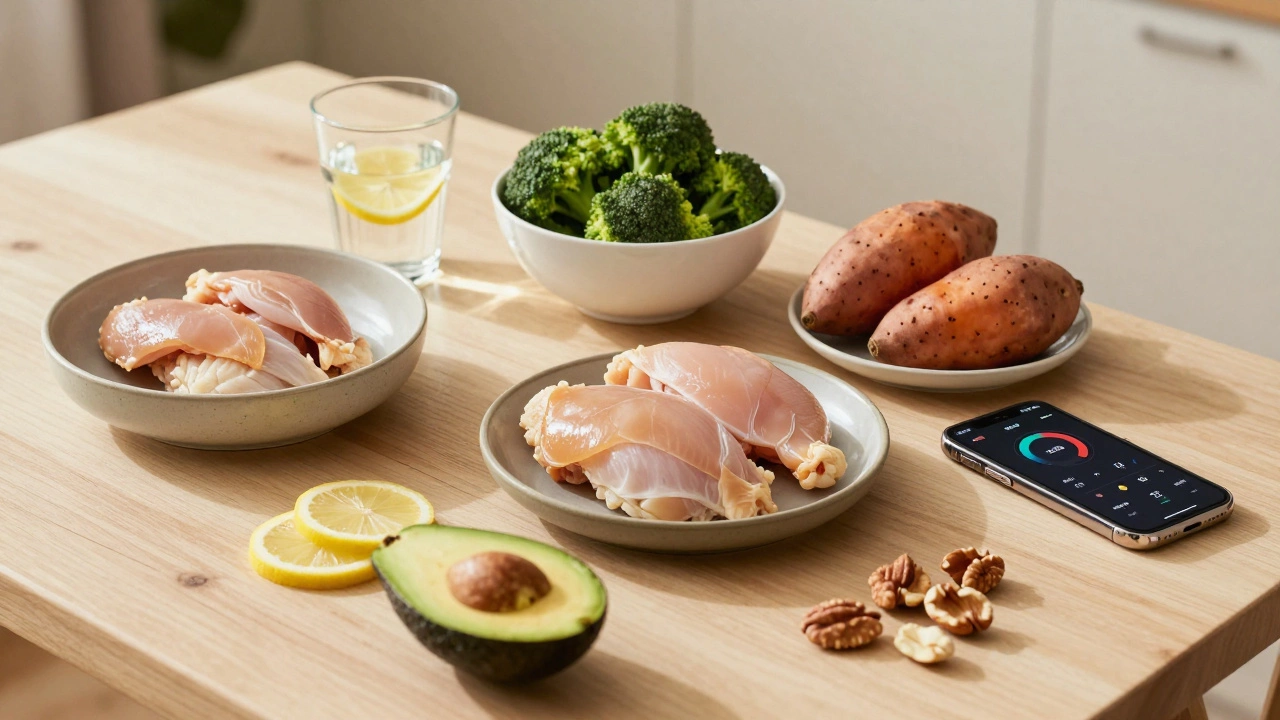
What you eat matters more than how many sit-ups you do. If you’re eating processed snacks, sugary drinks, or oversized portions, your body will hold onto fat-even if you’re working out. Focus on whole foods: lean proteins like chicken, fish, eggs, or tofu; vegetables like spinach, broccoli, and bell peppers; healthy fats from nuts, avocado, and olive oil; and complex carbs like oats, brown rice, and sweet potatoes. Protein is especially important. It helps repair muscle after workouts and keeps you full longer. Aim for 1.2 to 1.6 grams of protein per kilogram of body weight each day. For someone who weighs 70 kg, that’s about 85-110 grams of protein daily. A chicken breast, a cup of lentils, and a couple of eggs can get you there without supplements.

Reduce sugar and alcohol
Sugar and alcohol are the two biggest enemies of a toned midsection. Sugar-especially fructose in sodas, candies, and even "healthy" granola bars-gets turned into fat in your liver and stored around your belly. Alcohol does the same. One glass of wine or beer adds empty calories and lowers your body’s ability to burn fat for hours. Cutting back isn’t about perfection. Try reducing sugary drinks to once a week and limiting alcohol to two nights max. You’ll see changes faster than you think.
Planks and core stability matter more than crunches
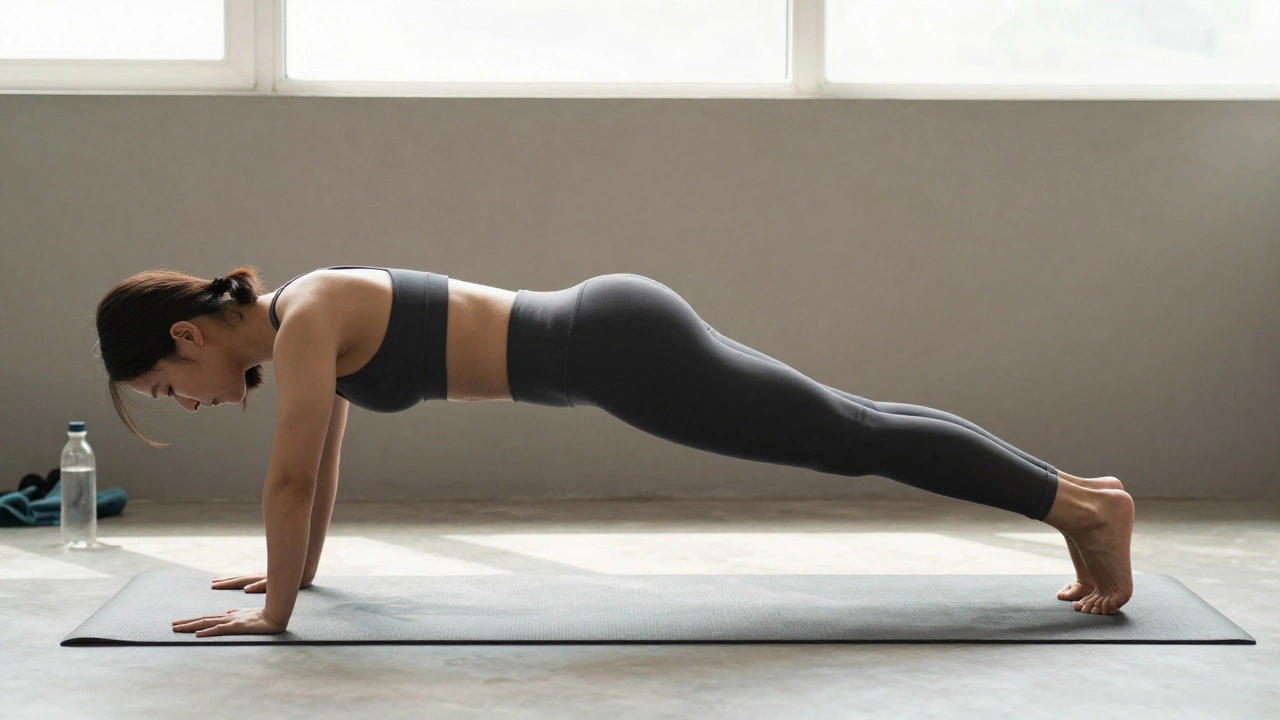
Yes, you still need to train your abs-but not for looks. You train them to be strong and stable. Planks are the gold standard. Hold a plank for 30-60 seconds, keeping your body in a straight line from head to heels. Don’t let your hips sag or rise. Do three sets, three times a week. Side planks work your obliques. Bird-dogs (on all fours, extend one arm and the opposite leg) improve coordination and core control. These movements teach your abs to work as a team, not just pop up and down. Stronger core = better posture = flatter appearance.
Sleep and stress are part of the equation
If you’re not sleeping well or you’re constantly stressed, your body makes more cortisol. High cortisol levels are linked to belly fat storage. This isn’t just "in your head." It’s biology. Aim for 7-8 hours of sleep each night. Try to wind down 30 minutes before bed-no screens, no work emails. Manage stress with breathing, walking, or even just sitting quietly. You don’t need to meditate for an hour. Five minutes of slow breathing can reset your nervous system.
Realistic timeline: What to expect
Most people start seeing changes in 4-8 weeks if they stick to the basics: strength training, daily movement, better food, less sugar, and good sleep. Don’t expect a six-pack in two weeks. That’s not realistic. But you can notice your pants feeling looser, your posture improving, and your stomach feeling firmer. Progress isn’t always visible in the mirror. Sometimes it’s in how you feel. Take photos every two weeks. Compare them. You’ll see changes even if you don’t feel them day to day.
What doesn’t work
Waist trainers? They compress your stomach temporarily. They don’t burn fat or build muscle. Ab rollers? They’re hard on your lower back and don’t offer more benefit than planks. Detox teas? They’re just diuretics-they make you lose water, not fat. And no, doing 500 crunches a day will not give you a flat stomach if your diet is full of pizza and soda. Stick to the fundamentals. They’re boring. But they work.
Sample weekly plan to get started
- Monday: Full-body strength (squats, push-ups, rows, planks) - 30 minutes
- Tuesday: Brisk walk - 45 minutes
- Wednesday: Core + mobility (planks, bird-dogs, side planks) - 20 minutes
- Thursday: Rest or light yoga
- Friday: HIIT (sprints or cycling intervals) - 20 minutes
- Saturday: Walk or hike - 60 minutes
- Sunday: Rest
Pair this with meals centered on protein, veggies, and whole grains. Drink water. Skip the soda. Sleep well. That’s it.
Why some people see results faster
People who lose belly fat quickly usually have one thing in common: they cut out liquid sugar. That means soda, fruit juice, sweet coffee drinks, and energy drinks. One 500ml bottle of soda has 50 grams of sugar-almost 13 teaspoons. That’s more than the daily recommended limit. Swap it for water, sparkling water with lemon, or unsweetened tea. That one change alone can shrink your waistline in a few weeks. It’s not about being perfect. It’s about removing the biggest obstacle.
Final thought: It’s about health, not just looks
Toning your tummy isn’t just about fitting into jeans. A strong core supports your spine, reduces back pain, improves balance, and helps you move better as you age. When you build strength and eat well, you’re not just changing your appearance-you’re changing how you live. That’s worth more than a six-pack.
Can I tone my tummy without losing weight?
If you already have low body fat, yes-you can tone your tummy by building abdominal muscle through strength training and core work. But if you have visible belly fat, you’ll need to reduce overall body fat to see the muscle definition. Muscle tone doesn’t show through fat. You can get stronger without losing weight, but you won’t see a flatter stomach until fat decreases.
How long does it take to see results?
Most people notice small changes in 3-4 weeks-like clothes fitting better or less bloating. Visible muscle definition usually appears between 6-12 weeks, depending on starting body fat, diet, and consistency. Men often see results faster due to higher muscle mass and lower estrogen levels, but women can achieve the same results with the same effort-it just might take slightly longer.
Do I need to do ab exercises every day?
No. Your abs are muscles-they need recovery like any other muscle group. Training them every day can lead to overuse and poor form. Three times a week is enough, especially when you’re already engaging them during squats, deadlifts, and planks. Focus on quality over frequency.
Is it harder for women to tone their stomachs?
It’s not harder-it’s different. Women naturally carry more body fat around the abdomen due to hormones like estrogen, which prepares the body for pregnancy. This doesn’t mean it’s impossible. It just means fat loss might take longer and require more consistency. The same rules apply: strength training, protein intake, reduced sugar, and sleep. Women who stick to these habits see results just as clearly as men.
Can I tone my tummy after having a baby?
Yes, but it takes patience. After pregnancy, your abdominal muscles may be separated (diastasis recti). Before doing crunches or planks, check with a physiotherapist. Start with gentle core reactivation exercises like pelvic tilts and breathing drills. Once you’ve rebuilt deep core strength, move to planks and bird-dogs. Don’t rush. Healing takes time, but most women regain a strong, toned midsection with consistent, safe training.
