
Marathon Training Plan Calculator
Your Current Running Profile
Key Insights for Your Age Group
Your body needs more time to recover as you age. This calculator prioritizes safe, sustainable progress.
Your Training Plan
Enter your current running profile to see your personalized plan.
Important Safety Guidelines
1. Never increase weekly mileage by more than 10%. 2. Include at least one rest day per week. 3. Strength training is essential for injury prevention. 4. Listen to your body - if you feel pain, stop and rest.
Let’s cut to the chase: 35 is not too old to run a marathon. In fact, many runners hit their peak marathon times between 30 and 39. The idea that you’re past your prime after 30 is a myth built on outdated assumptions, not science. I’ve seen people in their mid-30s crush their first marathon with times under 3:15 - and they didn’t start running until their late 20s. Age doesn’t lock you out of the finish line. It just changes how you get there.
What happens to your body at 35?
Your body doesn’t suddenly break down at 35. Muscle mass declines slowly - about 1% per year after 30. VO2 max (your body’s ability to use oxygen) drops around 10% per decade, but that’s not a death sentence. It just means recovery takes longer, and training needs to be smarter. You won’t bounce back from a 20-mile run in 24 hours like you did at 22. That’s normal. It doesn’t mean you can’t do it.
Studies from the American College of Sports Medicine show that runners aged 35-44 make up nearly 20% of all marathon finishers in major races like Boston and New York. In 2025, the average age of marathon finishers in India was 36.7. You’re not an outlier. You’re the median.
Why people think 35 is too old
Social media shows 22-year-olds sprinting through forests in slow motion, captioned with “Born to run.” That’s not reality. It’s marketing. Real runners at 35 aren’t chasing viral clips. They’re chasing personal bests, health, and the quiet pride of crossing a finish line after months of early mornings and sore legs.
Also, people confuse “peak speed” with “peak ability.” Yes, you might not run a 4:30 mile anymore. But marathon running isn’t about speed. It’s about endurance, pacing, mental toughness, and consistency. These traits often improve with age. A 35-year-old with 5 years of consistent training often outperforms a 22-year-old who ran twice last year.
What you need to train successfully at 35
Here’s the real checklist - no fluff, just what works:
- Build base mileage slowly - Don’t jump from 10K to 26.2. Start with 20-25 miles per week, then add 10% every 2-3 weeks. Your tendons and joints need time to adapt.
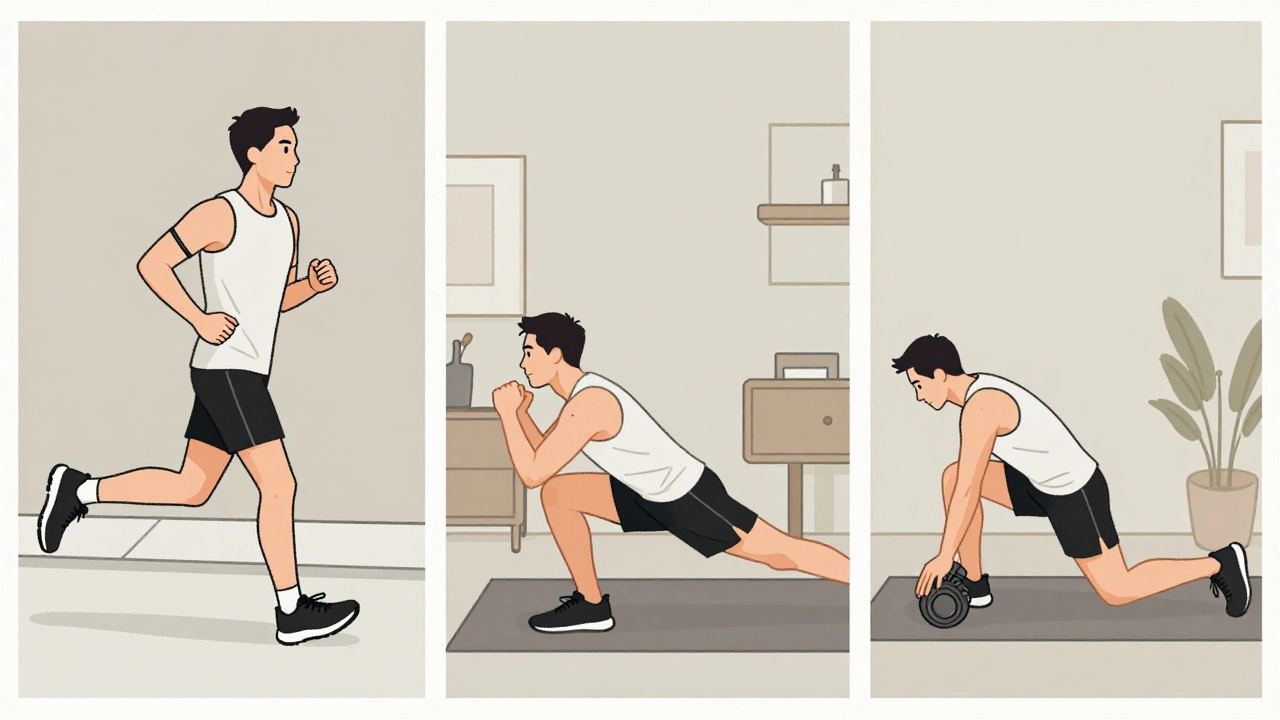
- Strength train 2x per week - Focus on glutes, core, and hips. Squats, lunges, deadlifts, and planks prevent injuries. A 2024 study in Journal of Sports Science found runners who lifted weights had 40% fewer overuse injuries.
- Recovery isn’t optional - Sleep 7+ hours. Take at least one full rest day. Use foam rolling, cold showers, or massage. Your body repairs itself when you’re not running.
- Listen to pain, not just fatigue - Muscle soreness? Fine. Joint pain? Stop. A nagging knee or ankle at 35 can turn into a 6-month injury if ignored.
- Run by effort, not pace - Use your breathing as a guide. If you can’t talk in short sentences, you’re going too hard. Marathon pace should feel “comfortably hard.”
Common mistakes runners make after 30
Most people who fail at their first marathon after 35 don’t fail because they’re old. They fail because they train like they’re 25.
- Doing too much too soon - Trying to run 4 days a week, plus intervals, plus long runs, plus cross-training. That’s overkill. Your body needs space to heal.
- Ignoring nutrition - At 35, your metabolism slows. You need more protein (1.6-2g per kg of body weight) and fewer processed carbs. Hydration matters more too - sweat loss increases with age.
- Skipping the long run - One long run per week, peaking at 20-22 miles, is the single most important workout. If you don’t do it, you won’t finish.
- Buying new gear every month - You don’t need the latest shoes. Just get ones that fit, support your arch, and feel comfortable at 8-mile runs.
Real stories from real runners
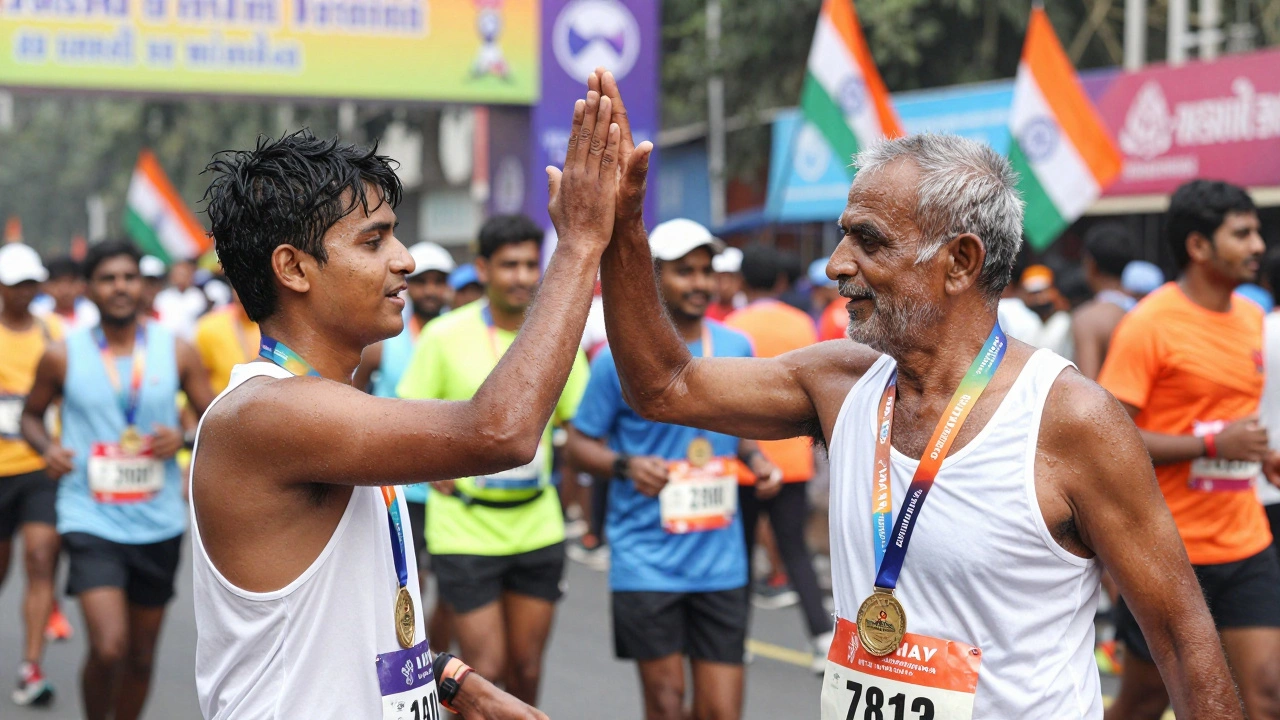
Meet Priya, 37, from Pune. She started running in 2021 after a health scare. Her first marathon? Bangalore Marathon 2024. Time: 3:58. She didn’t break any records. She broke her own limit. She told me: “I didn’t run to prove I could. I ran to prove I still could.”
Then there’s Raj, 41, from Jaipur. He ran his first marathon at 36. His goal? Just to finish. He did it in 4:22. Now he trains for 50K ultras. He says: “I didn’t lose my youth. I gained patience.”
These aren’t outliers. They’re typical. The data backs it up: runners over 35 have higher finish rates than those under 25. Why? Because they stick to the plan.
How to start if you’ve never run before
If you’re 35 and haven’t run a mile in years, start here:
- Walk 30 minutes, 4 days a week for 2 weeks.
- Swap 5 minutes of walking with 1 minute of jogging. Repeat weekly.
- After 4 weeks, aim for 20 minutes of continuous jogging.
- Use a 16-week beginner marathon plan - like the one from Runner’s World - and follow it exactly.
- Get fitted for running shoes at a local store. Don’t buy online.
You don’t need talent. You need time. And you have it.
Marathons aren’t about speed - they’re about commitment
At 35, you’re not chasing glory. You’re chasing something quieter: the feeling of showing up for yourself, day after day, even when it’s raining, even when you’re tired, even when no one’s watching. That’s the real win.
The finish line doesn’t care how old you are. It only cares if you showed up.
Can someone over 35 still improve their marathon time?
Yes. Many runners hit their personal bests between 35 and 40. With consistent training, better recovery habits, and smart pacing, it’s common to shave 10-20 minutes off your time compared to your first marathon. The key is patience - not intensity.
Is it safe to run a marathon after 35?
For most healthy adults, yes. A 2023 study in the British Journal of Sports Medicine tracked 12,000 marathon runners aged 35-50 and found no increased risk of heart events compared to younger runners - as long as they trained gradually and had no pre-existing conditions. Always get a basic check-up before starting.
How long should I train for my first marathon at 35?
Plan for at least 16 weeks. If you’re starting from zero, add 4-6 weeks of building base fitness first. That means 20-24 weeks total. Rushing increases injury risk. Slow and steady wins this race.
Do I need to give up beer or junk food to run a marathon at 35?
No. But you’ll perform better if you eat more protein, vegetables, and whole grains - especially on training days. You don’t have to be perfect. Just be consistent. One cheat meal won’t ruin your training. Consistent poor nutrition will.
What’s the best marathon for a first-timer over 35?
Choose a flat, well-organized race with strong medical support. Bangalore Marathon, Delhi Half Marathon (for practice), or Pune Marathon are great options in India. Avoid hilly or extreme weather races for your first one. Your goal is to finish - not to suffer.