
StrongLifts 5x5 Progression Calculator
Your Current Stats
Enter the working weight you successfully completed for 5x5 in your last session.
No Plan Generated Yet
Enter your current weights and click Generate Plan to see your projected progression.
Walking into a gym can feel overwhelming. There are machines everywhere, people grunting under heavy weights, and endless apps promising the "perfect" split. If you’ve heard someone mention doing "5 by 5," you might wonder if it’s a new fad or a proven method. It is neither-it is one of the oldest, most effective strength-building protocols in existence.
The 5 by 5 rule is a strength training protocol consisting of 5 sets of 5 repetitions per exercise, typically performed with compound movements. This approach prioritizes raw strength and muscle density over high-repetition endurance or isolation aesthetics. By lifting moderately heavy weights for moderate reps, you trigger both neural adaptation (getting stronger) and hypertrophy (getting bigger).
How the 5 by 5 Protocol Works
The beauty of this system lies in its simplicity. You do not need complex periodization charts or fancy equipment. The core mechanic is straightforward: perform five exercises, each for five sets of five reps. But how do you choose the weight? And how do you progress?
The standard implementation involves three main compound lifts:
- Barbell Squat: Targets quads, glutes, and lower back.
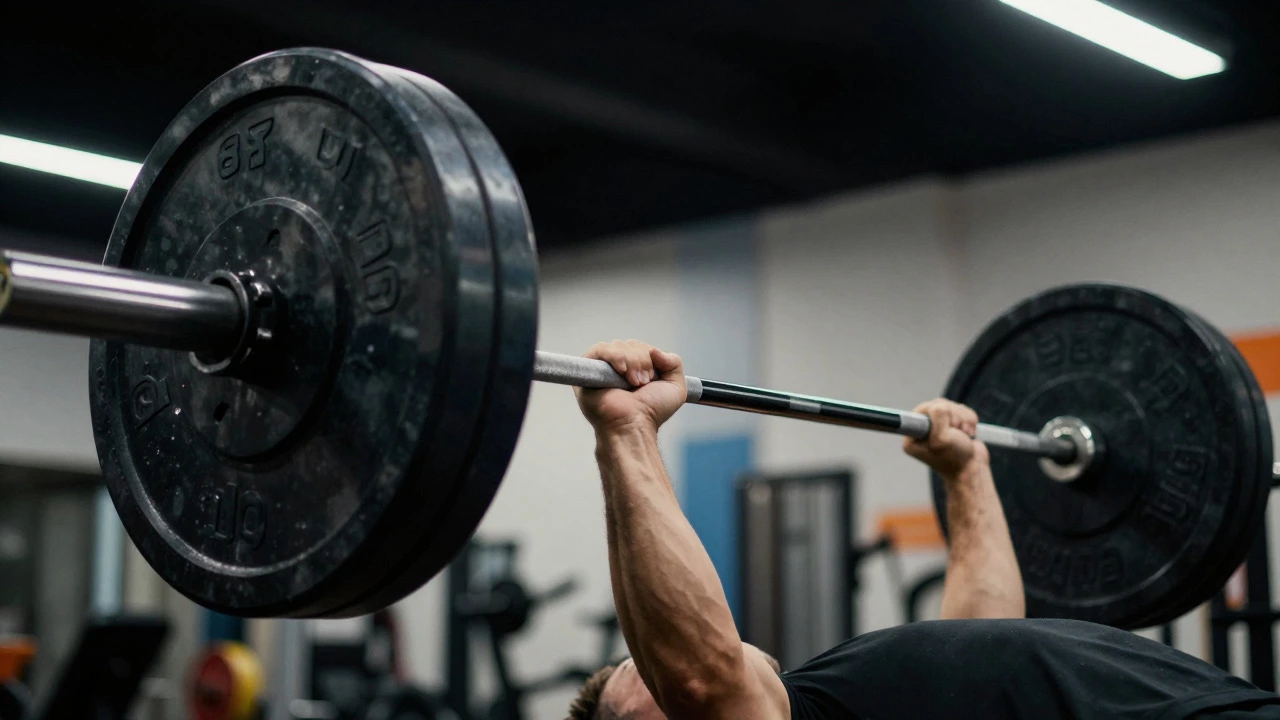
- Barbell Bench Press: Targets chest, shoulders, and triceps.
- Barbell Overhead Press or Barbell Row: Targets upper body pushing or pulling muscles.
You start with a weight you can lift for 5x5 with good form but that feels challenging on the last two reps. If you complete all 15 reps (5 sets x 5 reps) successfully, you add a small amount of weight-usually 2.5 to 5 pounds (1-2 kg)-in the next session. This is called linear progression.
The Origins: Jim Wendler and StrongLifts 5x5
While variations of 5x5 have existed for decades, the modern popularity stems largely from two sources: Jim Wendler's Starting Strength program and his later StrongLifts 5x5 variation. Wendler popularized the idea that beginners should focus exclusively on compound lifts because they recruit the most muscle mass and allow for the heaviest loads.
The original Starting Strength program alternates between Workout A and Workout B:
| Workout A | Workout B |
|---|---|
| Squat 5x5 | Squat 5x5 |
| Bench Press 5x5 | Overhead Press 5x5 |
| Barbell Row 5x5 | Pull-ups or Deadlift 1x5 |
Notice that deadlifts are often reduced to one set of five. Why? Because deadlifting heavy five times is incredibly taxing on the central nervous system and lower back. Most programs adjust this to prevent burnout.
Why 5 Sets of 5 Reps?
You might ask why not do 3 sets of 10 or 8 sets of 3? The answer lies in the balance between intensity and volume.
High-rep sets (10+) build muscular endurance and metabolic stress but don’t maximize strength gains. Low-rep sets (1-3) build pure neural drive and peak force but offer less time under tension for muscle growth. Five reps sit in the sweet spot. It is heavy enough to challenge your strength pathways but light enough to maintain perfect form throughout all five sets. This consistency reduces injury risk while maximizing mechanical tension-the primary driver of muscle growth.
Who Should Use the 5 by 5 Rule?
This program is not for everyone. It is specifically designed for beginners and intermediate lifters. If you have been lifting consistently for less than two years, 5x5 will likely yield dramatic results. You will see strength increases almost every week because your body is still learning how to move efficiently.
Advanced lifters often struggle with 5x5 because linear progression becomes unsustainable. Adding 5 pounds to your bench press every week works when you’re pressing 95 pounds. It stops working when you’re pressing 225 pounds. At that stage, you need more complex periodization.
Common Mistakes to Avoid
Even simple programs fail if executed poorly. Here are the most common pitfalls:
- Ego Lifting: Trying to add too much weight too soon. If you fail your fifth rep on the third set, you went too heavy. Drop the weight back down.
- Neglecting Form: Compound lifts require precise technique. Watch videos or hire a coach for your first few sessions. Bad squat form leads to knee pain; bad bench form leads to shoulder impingement.
- Inconsistent Rest: Rest 2-3 minutes between sets. Shorter rest periods turn a strength workout into cardio, reducing the load you can lift.
- Skipping Days: Consistency beats intensity. Three days a week, every week, for months, will outperform sporadic intense workouts.

Modifications for Different Goals
If you want to build more muscle size rather than just strength, you can tweak the protocol. Some lifters switch to Phantom 5x5 after failing a lift. Instead of dropping the weight, you reduce the number of sets (e.g., 4x5, then 3x5) until you rebuild capacity. Others add accessory work like bicep curls or lateral raises at the end of the session to address lagging body parts.
For those concerned about joint health, substituting barbell squats with goblet squats or using dumbbells for presses can reduce spinal compression while maintaining the 5x5 structure.
Is 5 by 5 Still Relevant in 2026?
Absolutely. In an era of trendy bro-splits and influencer-led routines, 5x5 remains a gold standard for foundational strength. It teaches discipline, proper mechanics, and the value of progressive overload. Whether you are preparing for a powerlifting meet or just want to carry groceries without getting winded, the principles of 5x5 apply universally.
How long does a 5x5 workout take?
A typical 5x5 session lasts between 45 to 75 minutes. This includes warm-up sets, the main working sets with 2-3 minute rests, and any optional accessory exercises. Efficiency comes from staying focused and minimizing phone usage between sets.
Can I do 5x5 twice a day?
Generally, no. 5x5 is demanding on the central nervous system. Doing it twice daily would lead to overtraining and injury. Stick to three non-consecutive days per week (e.g., Monday, Wednesday, Friday) to allow adequate recovery.
What if I fail my last set?
If you cannot complete all 5 reps in the final set, keep the same weight for your next workout. Do not increase the load until you successfully hit 5x5 again. This prevents plateauing due to premature weight jumps.
Do I need a spotter for 5x5?
For bench press and squats, yes, especially as you get heavier. A spotter ensures safety and can help you complete a rep if you stall, which is crucial for progressive overload. For overhead press and rows, a spotter is less critical but still helpful.
Is 5x5 better than 3x10 for muscle gain?
It depends on your goal. 5x5 builds more absolute strength and dense muscle. 3x10 creates more metabolic stress and may lead to slightly more visible muscle size initially. However, strength gains from 5x5 often translate to greater long-term muscle potential because you can handle heavier loads overall.