Rugby Jackal Legality Checker
Is Your Jackal Legal?
Test if a jackal attempt would be allowed under World Rugby rules. Check all factors that apply to your scenario.
Ever watched a rugby match and seen a player dive over the ball after a tackle, snatching it away from the opposition like a thief in the night? That’s the jackal. It’s not an animal running across the field-it’s a tactical move, one of the most thrilling and controversial plays in rugby. If you’ve ever wondered what makes a jackal so effective-or why referees sometimes blow the whistle on it-you’re not alone. Let’s break it down, plain and simple.
What Exactly Is a Jackal?
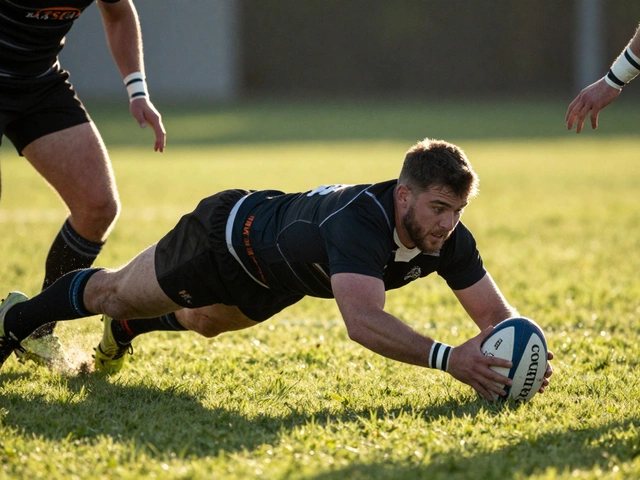
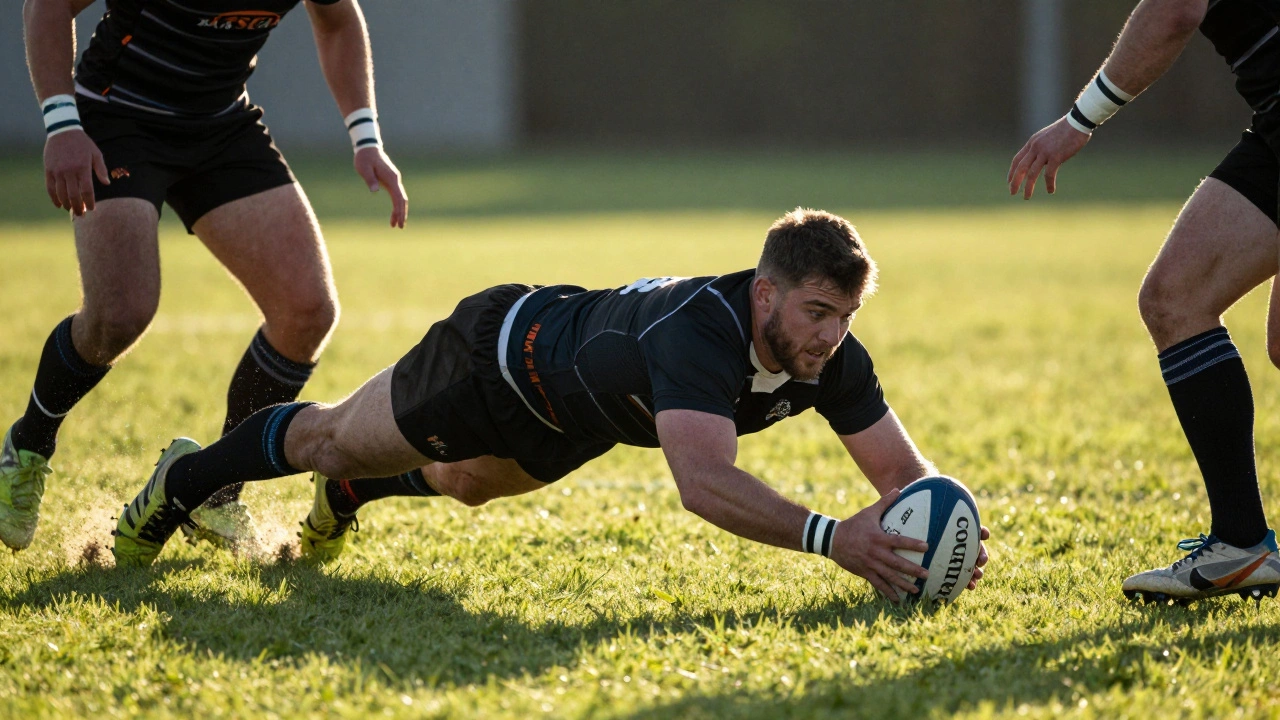
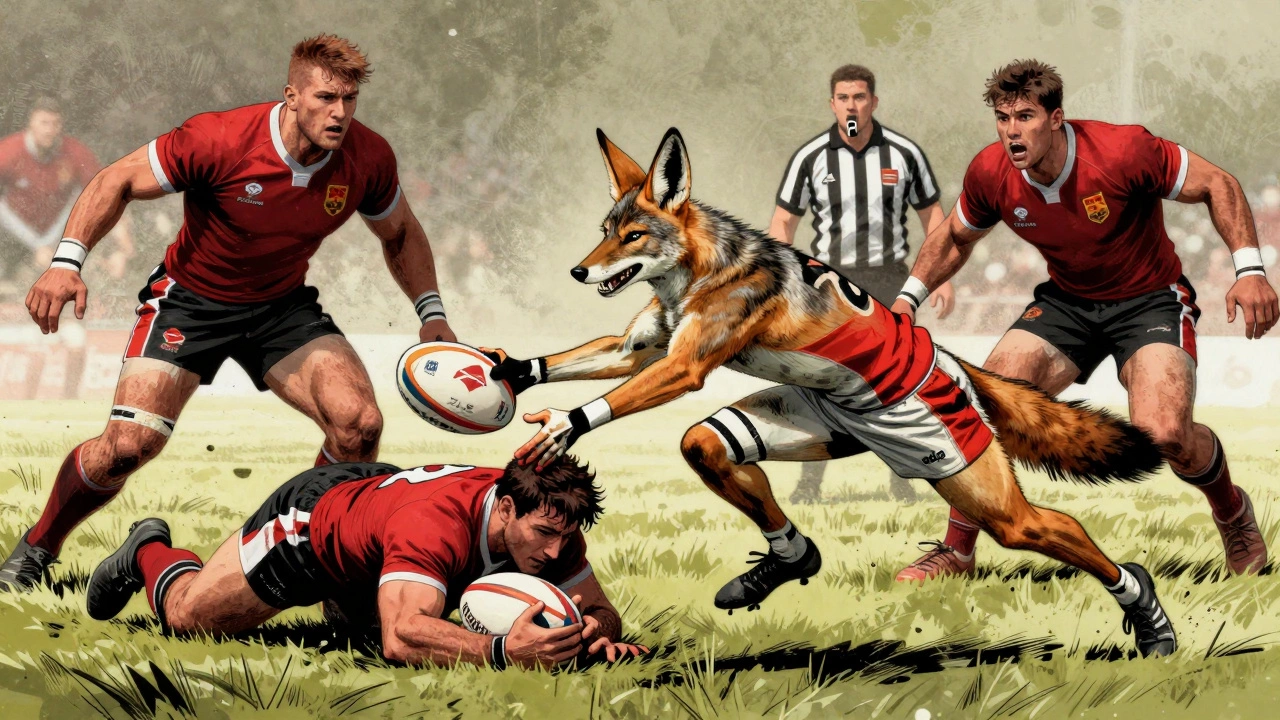
In rugby, a jackal is a player who, immediately after a tackle, gets on their feet and tries to steal the ball from the tackled player before the opposing team can secure it. The term comes from the real-life jackal-a scavenger that snatches food others have caught. In rugby, the jackal is the scavenger of the breakdown.
This move only works if the player is on their feet, hands are clear, and they don’t use their body to drive into the tackled player or the ruck. If they do, it’s a penalty. But if they do it right? It’s game-changing. A successful jackal can turn defense into offense in less than two seconds.
Think of it like this: Player A tackles Player B. Player B is on the ground with the ball. Instead of letting Player B’s teammates form a ruck and walk the ball forward, Player C-usually a flanker or number eight-dives in, gets their hands on the ball, and pulls it free. That’s the jackal.
Why Is the Jackal So Important?
Most teams want to control the breakdown. They want to slow down the opposition’s ball release so their defense can reset. The jackal flips that script. It’s the ultimate disruptor.
Teams like New Zealand’s All Blacks and South Africa’s Springboks have built entire defensive systems around the jackal. Players like Siya Kolisi and Sam Cane are masters of it. They don’t just tackle-they watch for the moment the ball is exposed and strike. It’s not luck. It’s timing, positioning, and instinct.
When a jackal works, it creates chaos. The opposing team loses possession. Their attack collapses. Momentum shifts. And suddenly, the team that was on the back foot is now attacking.
Statistics from the 2023 Rugby World Cup show that teams who won the breakdown (including successful jackals) won 78% of their matches. That’s not coincidence. It’s strategy.
How Do You Do a Legal Jackal?
Not every dive for the ball is allowed. The rules are strict. Here’s what you need to do to avoid a penalty:
- Be on your feet before you reach the ball
- Don’t use your arms or body to drive into the tackled player
- Only go for the ball-never grab the legs or body of the opponent
- Stay on your feet until you’ve secured the ball
- Don’t enter from the side-come from behind the tackle, not from the side or front
If you do any of those wrong, the referee will call it a penalty for not rolling away, collapsing the ruck, or dangerous play. Many players get penalized because they’re too eager. The jackal isn’t about aggression-it’s about precision.
Who Plays the Jackal Role?
It’s not a position you’re assigned. It’s a role you play. Usually, it’s the flankers (openside and blindside) or the number eight. These players are the first to arrive at the breakdown because they’re not involved in the tackle themselves.
Openside flankers are the most common jackals. They’re typically smaller, faster, and more agile. Their job is to be the first to the breakdown and clean out the ball. Blindside flankers are bigger and more physical-they’re more likely to make the tackle than steal the ball.
Some number eights, especially in modern rugby, are trained to jackal too. Think of Aaron Smith’s partner in New Zealand, Ardie Savea. He doesn’t just carry the ball-he hunts it after tackles.
Even scrum-halves can jackal if they’re quick enough. It’s rare, but when it happens, it’s brilliant.
When Does the Jackal Fail?
It’s not always a success. Here’s why jackals often go wrong:
- Too slow-by the time they get there, the ruck is formed
- Too aggressive-dive in early and get penalized
- Wrong angle-come in from the side, not behind
- Not on their feet-still on the ground when touching the ball
- Ignoring the referee-referees are trained to spot jackals that break the rules
One of the most common mistakes? Players think they need to be physical. They try to shove the tackled player aside. That’s not jackaling. That’s a penalty.
Another mistake? Trying to jackal every time. It’s not a free-for-all. You need to read the game. If the ball is buried deep in a ruck, don’t go for it. Wait for the next breakdown.
How to Spot a Jackal During a Match
Next time you watch a game, look for this:
- After a tackle, watch the flankers. They’ll drop to the ground, then spring up like a coiled spring.
- They’ll keep their heads up, eyes on the ball, not the player.
- They’ll use one hand to reach for the ball, never both.
- They’ll stay low and balanced-no wild dives.
Good jackals look calm. They don’t flail. They look like they’re reaching for a cup of coffee, not stealing a ball.
Jackal vs. Ruck vs. Maul
It’s easy to confuse these terms. Here’s how they’re different:
| Term | What It Is | Player Position | Ball Status |
|---|---|---|---|
| Jackal | One player steals the ball after a tackle | On their feet, behind the tackle | On the ground, unsecured |
| Ruck | Players from both teams bind over the ball on the ground | On their feet, over the ball | On the ground, secured by bodies |
| Maul | Ball carrier is held up by opponents, teammates join | Standing, bound together | In the air, being carried |
The jackal happens before a ruck forms. If the jackal fails, the ruck forms. If the ball carrier stays on their feet, it becomes a maul. These are three different phases of play-and the jackal is the only one that steals the ball.
Why Do Referees Hate the Jackal?
They don’t hate it. They hate the bad jackals.
Too many players think it’s a free-for-all. They come in late, dive into the tackle, or use their shoulder to shove the ball carrier. That’s dangerous. That’s illegal. That’s why referees are quick to blow the whistle.
World Rugby has been cracking down on jackals who enter from the side or don’t release the tackled player. In 2024, penalties for illegal jackaling increased by 22% compared to 2022. Referees are being trained to spot the difference between a clean jackal and a dangerous one.
So if you see a jackal get penalized, it’s not because the move is bad-it’s because the execution was sloppy.
How to Practice the Jackal
If you play rugby and want to get better at it, here’s how:
- Practice the ‘tackle and recover’ drill: One player tackles, another tries to jackal. Focus on getting on your feet fast.
- Work on hand speed-use a ball on the ground and practice grabbing it with one hand while staying low.
- Watch videos of top jackalers-Kolisi, Cane, Taulupe Faletau. Study their foot placement.
- Never practice jackaling into a live tackle. Use a dummy or a partner who’s lying down with the ball.
- Always get feedback from your coach. A good jackal looks effortless. A bad one looks reckless.
The best jackals don’t train to be aggressive. They train to be quiet. To be fast. To be smart.
Final Thought: The Jackal Is Rugby’s Hidden Weapon
It’s not flashy like a try or a long pass. It doesn’t make the highlight reel every week. But it’s one of the most decisive plays in rugby. A single successful jackal can kill an attack, spark a counter, or shift the entire momentum of a match.
It’s not about strength. It’s about timing. It’s not about brute force. It’s about reading the game. And if you’re watching rugby and you start noticing the jackals, you’re not just watching a game-you’re watching chess with tackles.
Is the jackal legal in rugby?
Yes, the jackal is legal as long as the player is on their feet, enters from behind the tackle, and only goes for the ball-not the player. Any use of arms or body to drive into the tackled player or ruck is a penalty.
What position plays the jackal in rugby?
The openside flanker is the most common jackal, but blindside flankers and number eights often do it too. It’s not a fixed position-it’s a role based on timing and speed.
Why is the jackal called that?
It’s named after the jackal animal, which scavenges food left by other predators. In rugby, the jackal player steals the ball from the tackle before the opposition can secure it.
Can a scrum-half jackal?
Yes, but it’s rare. Scrum-halves are usually focused on distributing the ball. However, if they’re quick enough and the ball is loose, they can attempt a jackal-though it’s risky and not common at elite levels.
What’s the difference between a jackal and a ruck?
A jackal is one player stealing the ball before a ruck forms. A ruck is when multiple players from both teams bind over the ball on the ground, making it a contest for possession. The jackal happens before the ruck.
Do all teams use the jackal?
Most top teams use it, especially in the Northern Hemisphere where breakdown speed is emphasized. Teams like Ireland, New Zealand, and South Africa train it heavily. Some teams avoid it if they lack the speed or discipline to execute it legally.
Can you jackal from the side?
No. Entering from the side is illegal and results in a penalty. You must approach from behind the tackle, staying on your feet and only targeting the ball.
Is the jackal dangerous?
It can be, if done incorrectly. Players who dive into the tackle or use their shoulder to dislodge the ball risk injury to themselves and others. That’s why referees are strict about technique.