Rugby Match Duration Calculator
Estimated Timeline
You grab your snack, find a comfortable spot on the couch, and settle in for the big rugby match. The clock says 80 minutes. You check your watch. Forty-five minutes later, the referee blows the whistle, but the game isn't over. In fact, it feels like it’s just getting started. If you’ve ever wondered why rugby matches seem to drag on or end abruptly without a clear finish line, you are not alone. Unlike soccer, which has strict stoppage time calculations, or American football, which is broken into distinct quarters with frequent commercial breaks, rugby operates on a unique timing system that can confuse even seasoned sports fans.
The short answer is that a standard rugby match lasts 80 minutes of playing time, split into two 40-minute halves. However, the actual time from kickoff to the final whistle often stretches to 90 minutes or more due to injuries, reviews, and added time. But here is the catch: this applies primarily to Rugby Union. If you are watching Rugby League, the clock behaves differently. To truly understand how long you need to commit to watching a game, we need to break down the differences between the codes, the factors that extend playtime, and what happens when the clock runs out.
Rugby Union: The Standard 80-Minute Format
When most people talk about "rugby," they are referring to Rugby Union, the code played by nations like New Zealand, South Africa, England, and France, and featured in major tournaments like the Rugby World Cup.
In Rugby Union, the structure is straightforward but rigid regarding the active clock. The game consists of two halves:
- First Half: 40 minutes
- Half-Time Interval: Typically 15 to 20 minutes (depending on the competition)
- Second Half: 40 minutes
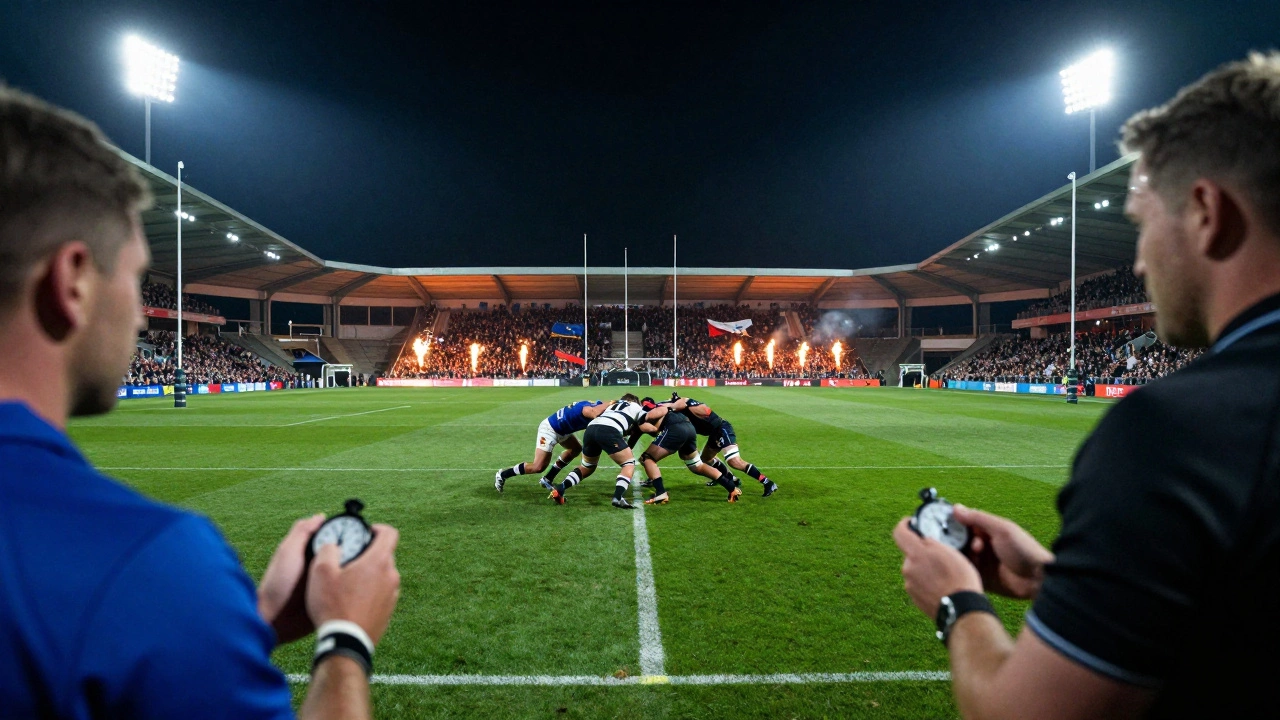
Total active playing time is exactly 80 minutes. The referee starts the clock at kickoff and stops it only for specific reasons. These include serious injuries, dangerous tackles requiring medical attention, or when the ball goes out of bounds for a prolonged period. Unlike soccer, where the fourth official holds up a board indicating added time at the end of each half, Rugby Union referees have discretion to add time back into the second half if significant delays occurred earlier in the game. This means a "full-time" whistle might blow at minute 83 or even 85 if there were multiple injury timeouts.
For casual viewers, this translates to a broadcast window of roughly 90 to 100 minutes. If you are attending a live match in a stadium, factor in pre-match ceremonies, national anthems, and post-match interviews, and you are looking at a three-hour commitment.
Rugby League: Faster Paced and Shorter Halves
If you switch channels to a Rugby League match, common in Australia, New Zealand, and Northern England, the timing shifts. Rugby League is designed to be faster and more continuous, so the total playing time is shorter.
A standard senior Rugby League match follows this structure:
- First Half: 40 minutes
- Half-Time Interval: Usually 10 to 15 minutes
- Second Half: 40 minutes
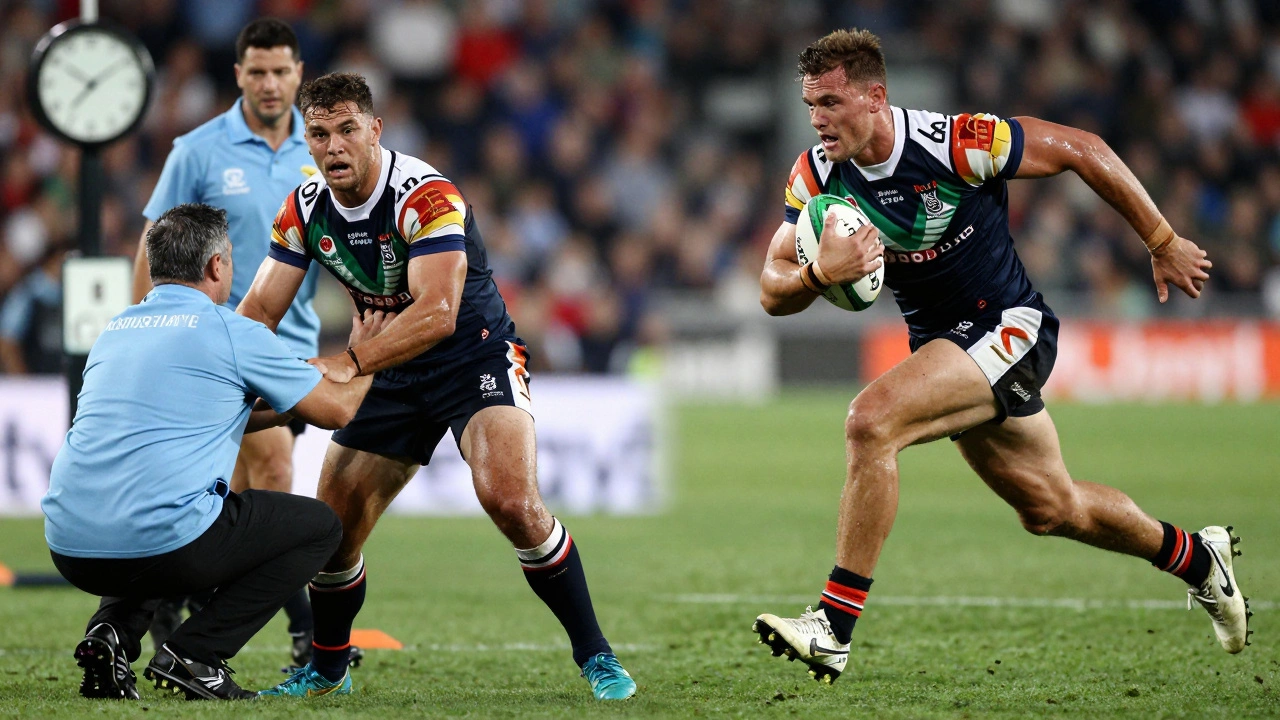
Wait, isn’t that also 80 minutes? Yes, the total active time is the same as Union. However, the *flow* is different. In League, the clock rarely stops for minor infractions. Play continues until a team completes six phases of play (tackles) or scores. Because the clock keeps running during many stoppages that would halt Union play, the actual elapsed time for a League match is often closer to 75-80 minutes total, making it slightly quicker to consume than a Union game. Junior levels and some lower-tier professional leagues may play 40-minute games (two 20-minute halves), so always check the fixture details if you are watching grassroots rugby.
What Causes Rugby Matches to Run Over Time?
You might notice that despite the 80-minute rule, matches frequently run longer. Several key factors contribute to this extension:
- Injury Time: Player safety is paramount. If a player is injured and cannot get off the field quickly, the referee stops the clock. Medical staff enter, assess the player, and if necessary, remove them. This can add 2-5 minutes per incident.
- Video Referee Reviews (TMO): Modern rugby relies heavily on the Television Match Official (TMO). When the referee calls for a review-often for try-line decisions or potential red-card offenses-the clock stops completely. A single complex review can take 3-6 minutes. In high-stakes finals, multiple reviews can add 10+ minutes to the game.
- Added Time: As mentioned, the referee adds time lost in the first half to the second half. If there was a lot of injury time in the first 40 minutes, expect the second half to run past minute 80.
- Penalty Shootouts (Rare): While extremely rare in international rugby, some domestic competitions use penalty shootouts to decide winners if the score is tied after extra time. This extends the match significantly beyond regulation time.
Extra Time and Tie-Breakers
In league play, ties are sometimes allowed, resulting in shared points. However, in knockout tournaments like the Six Nations, Rugby Championship, or World Cup, a winner must be decided. Here is how the timeline expands:
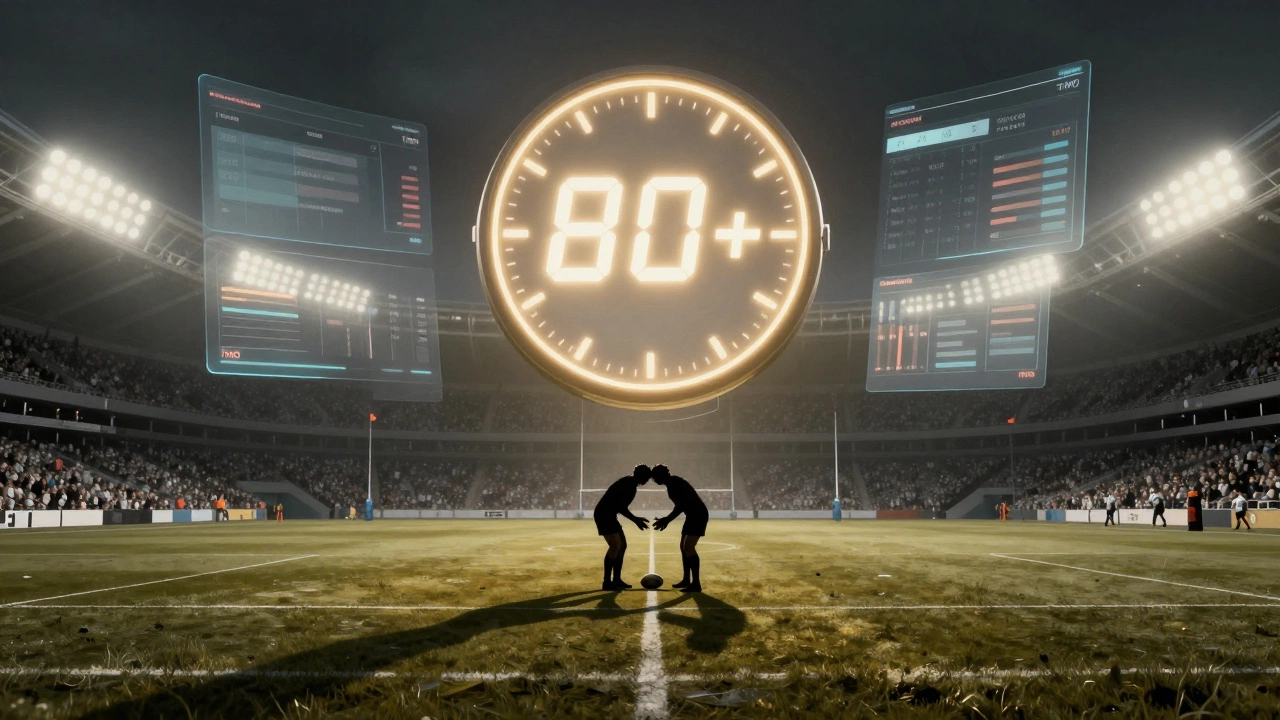
- Extra Time: If the score is level after 80 minutes, teams play two additional periods of 10 minutes each (with a brief interval). This adds 20 minutes of active play.
- Sudden Death: Some formats use sudden death extra time, where the first team to score wins immediately.
- Golden Point: Similar to sudden death, used in some domestic leagues.
- Penalty Kicks: If extra time ends in a tie, the match goes to a series of penalty kicks. This process usually takes 10-15 minutes.
So, if you are watching a crucial knockout game, prepare for a potential 100-110 minute broadcast slot.
Comparison Table: Rugby Union vs. Rugby League Timing
| Feature | Rugby Union | Rugby League |
|---|---|---|
| Active Playing Time | 80 minutes (2 x 40 mins) | 80 minutes (2 x 40 mins) |
| Half-Time Break | 15-20 minutes | 10-15 minutes |
| Clock Stops For... | Injuries, TMO reviews, ball out of play | Major injuries only; mostly continuous |
| Average Broadcast Length | 90-100 minutes | 75-85 minutes |
| Extra Time Format | Two 10-min halves + penalties | Varies by competition (often none or golden point) |
Junior and Youth Rugby Timelines
If you are watching younger players, the duration changes drastically to accommodate physical development and attention spans. Here is a general guide:
- Under-12s: Two 20-minute halves (40 minutes total)
- Under-14s: Two 25-minute halves (50 minutes total)
- Under-16s: Two 30-minute halves (60 minutes total)
- Under-18s: Two 35-minute halves (70 minutes total)
These matches rarely include extensive stoppage time or TMO reviews, making them much faster to watch. A youth match typically finishes within an hour from kickoff to final whistle.
Why Does Rugby Not Use Stoppage Time Like Soccer?
This is a common question. Soccer uses "added time" calculated by the fourth official, displayed publicly. Rugby Union handles it differently. The referee manages the clock internally. They note significant delays (like a player being carried off on a stretcher) and add those minutes back into the second half. This approach aims to keep the flow of the game smoother, avoiding constant clock checks. However, it can lead to frustration if fans feel the referee is adding too little or too much time. The lack of a public display until the end of the half means you have to trust the referee’s judgment, which can sometimes feel opaque compared to the transparency of soccer’s stoppage time boards.
Pro Tips for Watching Rugby Efficiently
If you are new to the sport and want to maximize your viewing experience without getting bogged down in downtime, here are a few tips:
- Watch the Clock, Not Just the Ball: Keep an eye on the scoreboard. If the clock is stopped, listen to the commentary to understand why. Is it a TMO review? An injury? Understanding the reason helps maintain engagement.
- Know the Phases: In Rugby League, understanding the "six-tackle rule" helps you anticipate when the clock will reset or when possession will change. In Union, watching for scrums and lineouts helps you predict pauses in play.
- Use Highlights for Casual Viewing: If you don’t have time for a full 90-minute broadcast, most streaming services offer condensed highlights that capture all tries and key moments in 10-15 minutes.
- Check Fixture Types: Before tuning in, check if it’s a league match (tie possible) or a knockout (extra time likely). This sets your expectation for potential overtime.
Does the rugby clock stop for every foul?
No. In both Rugby Union and Rugby League, the clock generally does not stop for minor infringements like knock-ons or forward passes. Play restarts quickly with a scrum, lineout, or handover. The clock only stops for significant events like injuries, dangerous tackles, or video reviews.
How long is a rugby halftime break?
In professional Rugby Union, the halftime break is typically 15 to 20 minutes. In Rugby League, it is usually shorter, around 10 to 15 minutes. This time allows players to rest, receive tactical instructions, and treat any minor injuries.
Can a rugby match end in a draw?
Yes, in league competitions, matches can end in a draw, with both teams sharing points. However, in knockout tournaments like the World Cup or Six Nations, a winner must be decided through extra time and potentially penalty shootouts.
Why does rugby seem to last longer than 80 minutes?
While the active playing time is 80 minutes, the clock stops for injuries, video referee (TMO) reviews, and ball retrieval. Additionally, the referee adds lost time from the first half to the second half, pushing the final whistle beyond minute 80. Broadcasts also include pre-match and post-match analysis.
Is Rugby League faster than Rugby Union?
Yes, Rugby League is generally considered faster-paced. The clock rarely stops, and the six-tackle rule forces quick decision-making. While the total active time is the same (80 minutes), the continuous nature of League means less dead time compared to Union, where scrums and lineouts can pause play for longer periods.